
Council approves first reading to rezone Rudy Mason site for 86‑unit development over objections (6–1)
Get AI-powered insights, summaries, and transcripts
Sign Up Free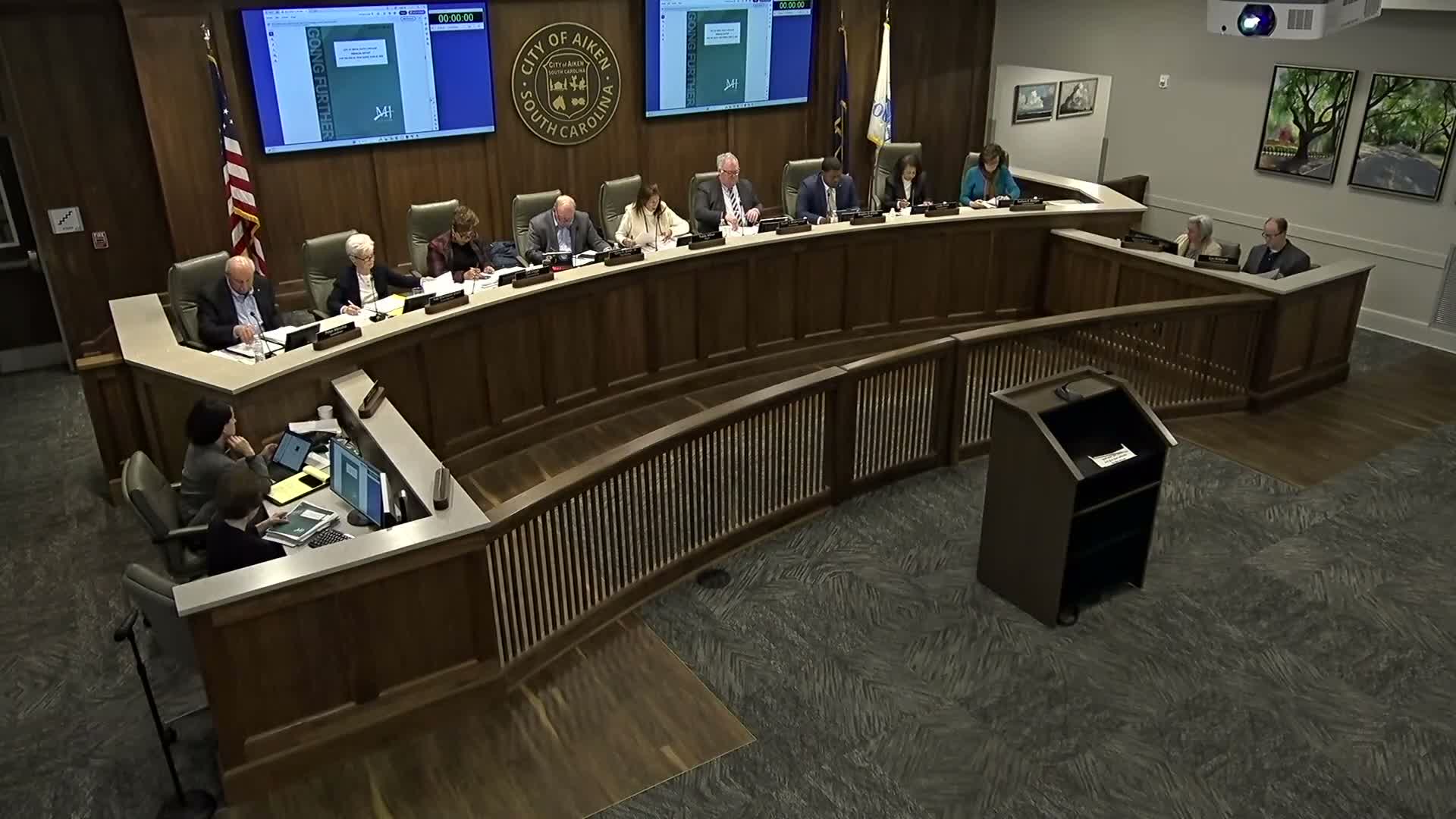
Summary
On first reading, Aiken City Council approved rezoning ~7.223 acres on Rudy Mason Parkway and Wire Road to Planned Residential for an 86‑unit multifamily development with conditions and a waiver to reduce required recreation space; the vote passed 6–1 after public comment and debate about density, parking and compatibility.
The Aiken City Council voted 6–1 on Jan. 12 to approve first reading of an ordinance to rezone about 7.223 acres on Rudy Mason Parkway and Wire Road from single‑family residential to Planned Residential with an accompanying concept plan for 86 multifamily units.
Staff told council the project would consist of four three‑story apartment buildings totaling 86 units with 136 parking spaces and that the applicant requested a waiver of the required recreation/open space (proposing 13% developed recreation space versus the 20% normally required). Planning Commission had unanimously recommended approval with conditions, including relocation of a proposed entrance sign outside a sewer easement, SCDOT and city traffic consultant review of driveway/turn‑lane improvements, and a revised concept plan submitted within 180 days.
Burton Fine, representing the applicant as civil engineer, and Ashley Bloom, the applicant/developer, described the concept plan and the rationale for the requested waivers, saying the design seeks to balance density and financial feasibility. "We're looking for this to be workforce attainable housing," Bloom said, describing market targets and rental considerations.
Public comments included support for North Side growth from Barbara Williams of the Sugar Hill Neighborhood Consortium, who urged continued investment in housing and retail on the North Side. Opponents and one council member raised concerns about compatibility and traffic: an attendee calculated the project could generate about "630 trips per day" compared with ~200 trips for single‑family alternatives and said the plan "crams a lot into a small space." The developer responded that the project aims to match nearby multifamily scale and that increased parking could be conditioned by bedroom mix.
Councilwoman Diggs moved approval for first reading and Councilwoman Price seconded. After council discussion — which included requests for a revised concept plan addressing parking and pedestrian improvements and heightened attention to school‑bus routing — the motion carried 6–1.
The approval was for first reading of the rezoning and concept plan as conditioned; developers must submit a revised concept plan and meet the Planning Commission conditions within the timeline specified. The ordinance will return for final reading and any additional conditions required by council.