
Burns Harbor council approves salary ordinances, equipment purchases, website migration and other routine measures
Get AI-powered insights, summaries, and transcripts
Subscribe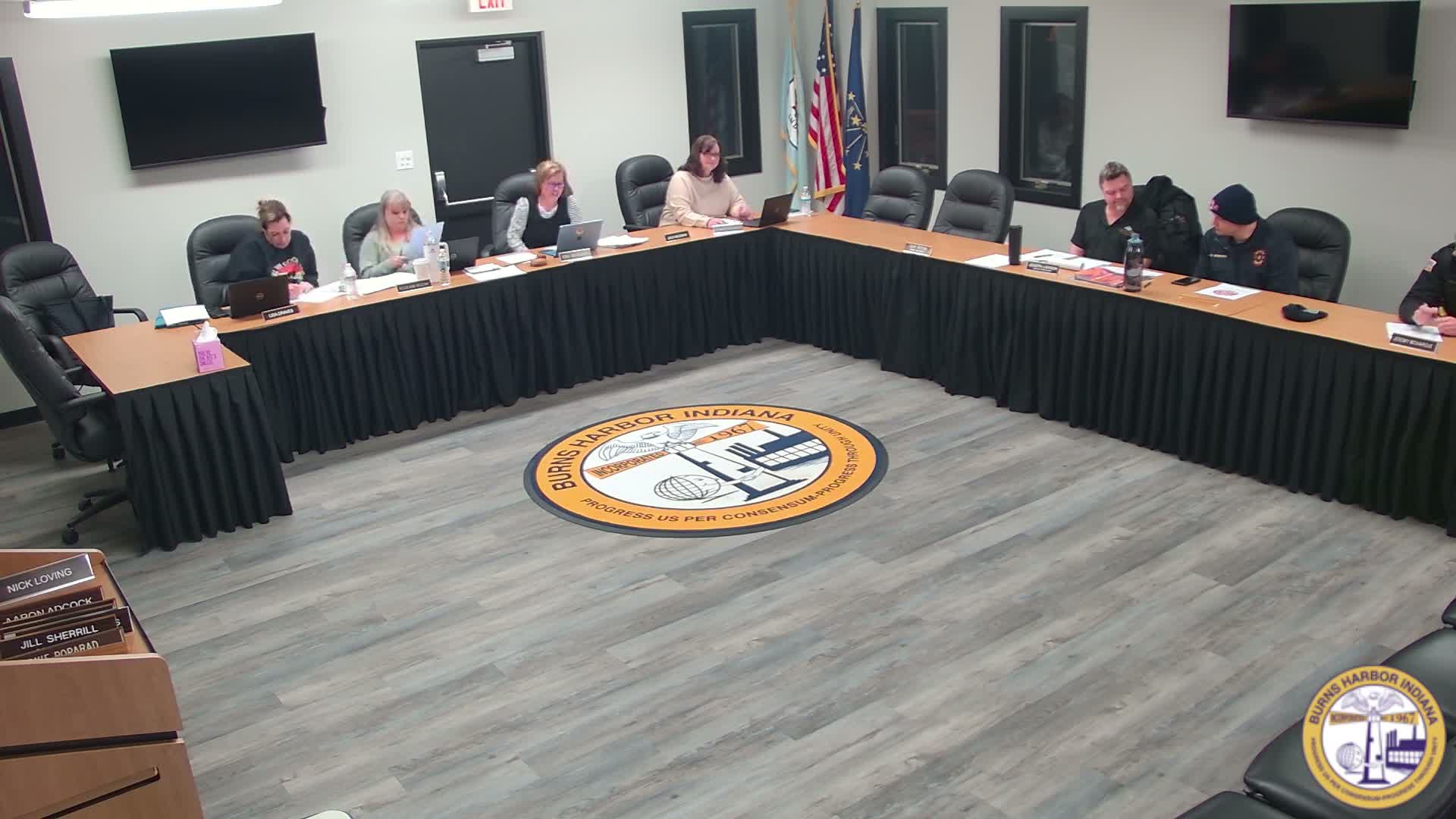
Summary
The council approved park‑department salary and correction resolutions, purchased five sets of bunker gear, authorized up to $1,000 for annual extinguisher service, approved moving the town website to in.gov, and passed multiple administrative motions including a bond not to exceed $800 and credit‑card policy updates.
Burns Harbor’s Town Council approved a slate of administrative and operational items during its meeting, including salary‑related resolutions, equipment purchases for the fire department, a website migration and other routine municipal business.
The council approved Resolution 2026‑1 establishing the park department’s 2026 salary structure and Resolution 2026‑2 making corrections to job titles and adding a pay range for the part‑time deputy clerk; Resolution 2026‑2 also added a 3.5% increase to the part‑time clerk’s hourly rate. The council approved those resolutions by roll call.
Operational actions included approving three late patent‑counsel invoices (read into the record), and a purchase order from the fire department for five sets of bunker gear totaling $18,230. The Presiding Official moved and the council approved spending up to $1,000 from miscellaneous services to contract Safety Training Services Inc. for annual fire‑extinguisher inspections.
Financial‑control and personnel items approved included authorizing a bond for Michelle through Shepherd Insurance not to exceed $800, removing Roseanne as a signer on the town checking account, and approving several handbook updates including setting a $1,500 minimum credit‑card limit and a 60‑day physical check‑in procedure for issued cards. Council members were also asked to review and return updated job descriptions by February.
Council approved a clarification on a previously passed motion: the town will waive the permit fee for the police department kitchen remodel but will still require filing of permits and required inspections. The council also approved moving the town website from CivicPlus to the state in.gov hosting platform; staff were asked to follow up on migration steps and payment‑processing options such as pay.gov.
Separately, the council approved Resolution 2026‑3, an amendment to a tax abatement for Cleveland‑Cliffs following a county audit and authorized the council president to sign related SB forms. The authority and reconciliation tables were reviewed in the meeting record.
Most items passed on voice/roll‑call votes recorded in the meeting; where the vote was called, members recorded “Yes.” The council adjourned after completing the agenda.