
Teacher and parent describe braille, assistive technology and quick material turnarounds for visually impaired students
Get AI-powered insights, summaries, and transcripts
Subscribe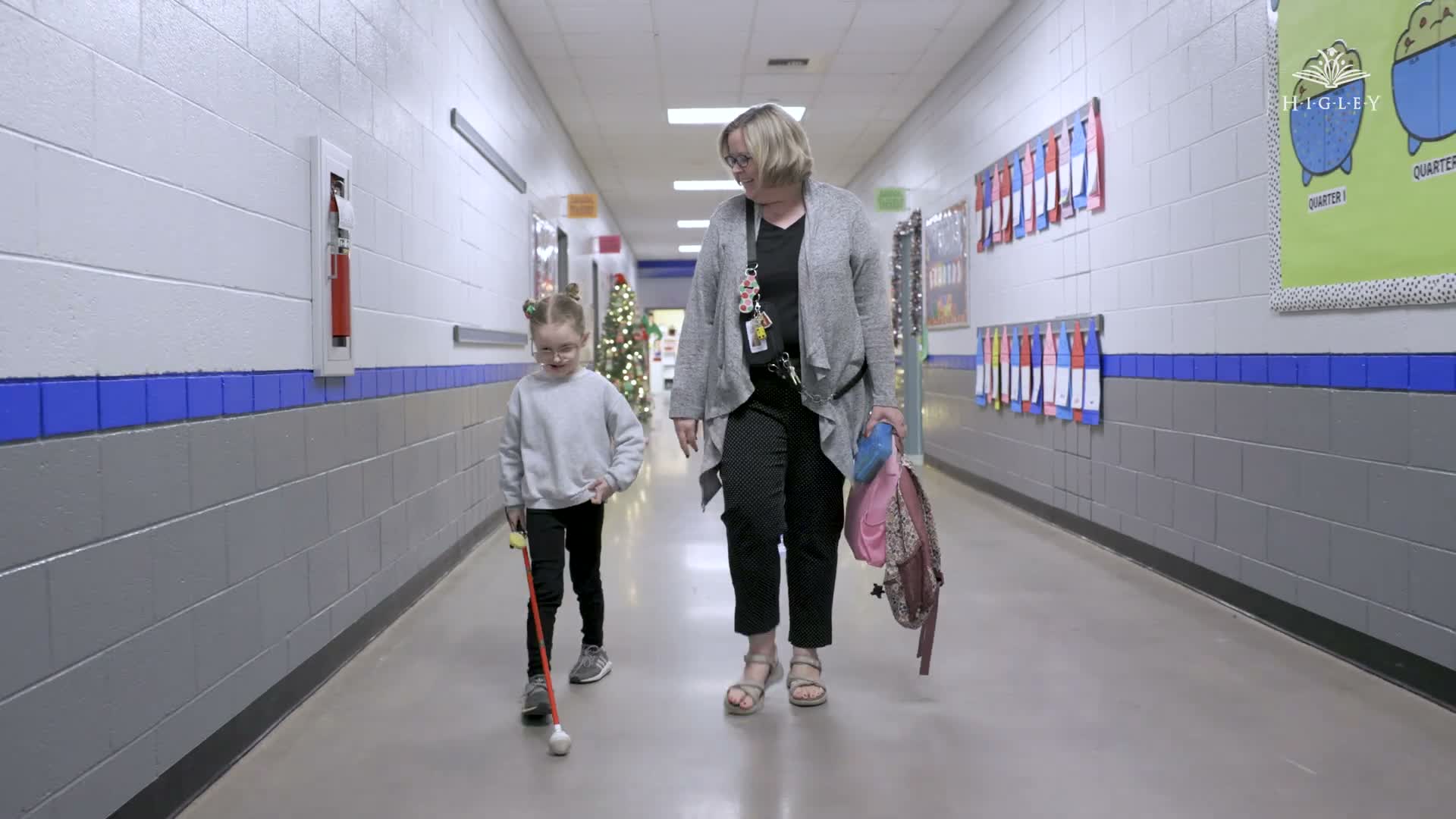
Summary
A teacher of the visually impaired and a parent described classroom accommodations — including Unified English Braille, Nemeth math code instruction and assistive technology — and said adapted materials are produced in about 24–48 hours so students can access the same curriculum as their peers.
Christine Griffin, a teacher of the visually impaired, said she has worked in that role since 2003 and that her job is to make district curriculum and classroom materials accessible to students with low vision or blindness. "My role is to ensure that students with low vision or blindness can fully access the curriculum the district has," Griffin said. She described teaching students to use assistive technology "from just a handheld magnifier to a more fancy digital video magnifier" and instructing students on computer adjustments such as enlarging fonts so they can access materials alongside their peers.
Griffin said instruction for students who are blind includes the Unified English Braille code and the Nemeth math code, which she noted is used for science as well. She told the meeting that adapted materials are typically produced with a 24-to-48-hour turnaround depending on how much adaptation is required. "As a team, we just work to make sure that materials are produced in a reasonable times, and we ask for, like, a 24 to 48 hour turnaround," she said.
A family member who spoke praised the vision services team, saying "They braille everything. They adapt everything. Kai wouldn't be able to learn or keep up with the other kids if her material wasn't in braille format." The parent added that staff are available outside the classroom for questions and support.
Griffin also gave a personal account of why she chose the field: her daughter was born blind. "When my daughter was born, she was born blind. And that just kinda solidified it to me that I was gonna be a teacher of the visually impaired," she said, and added that she fights for her students because she wants to see them succeed. "They can do anything that their sighted peers can do. They just have to do it differently," Griffin said.
The discussion focused on describing existing services and support rather than proposing new policy or budget changes. No motions or votes were recorded during this exchange. The most recent procedural note in the transcript is the teacher's statement about collaboration with teachers, families and related service providers to ensure access.