Bend‑La Pine Schools accept clean audit but adopt corrective plan after payroll overpayments
Summary
The board accepted the district's annual financial report and unanimously adopted a corrective action plan after auditors flagged significant payroll tax overpayments totaling about $6.9 million; staff say refunds have been recovered or are expected and steps are underway to strengthen controls.
BEND, Ore.
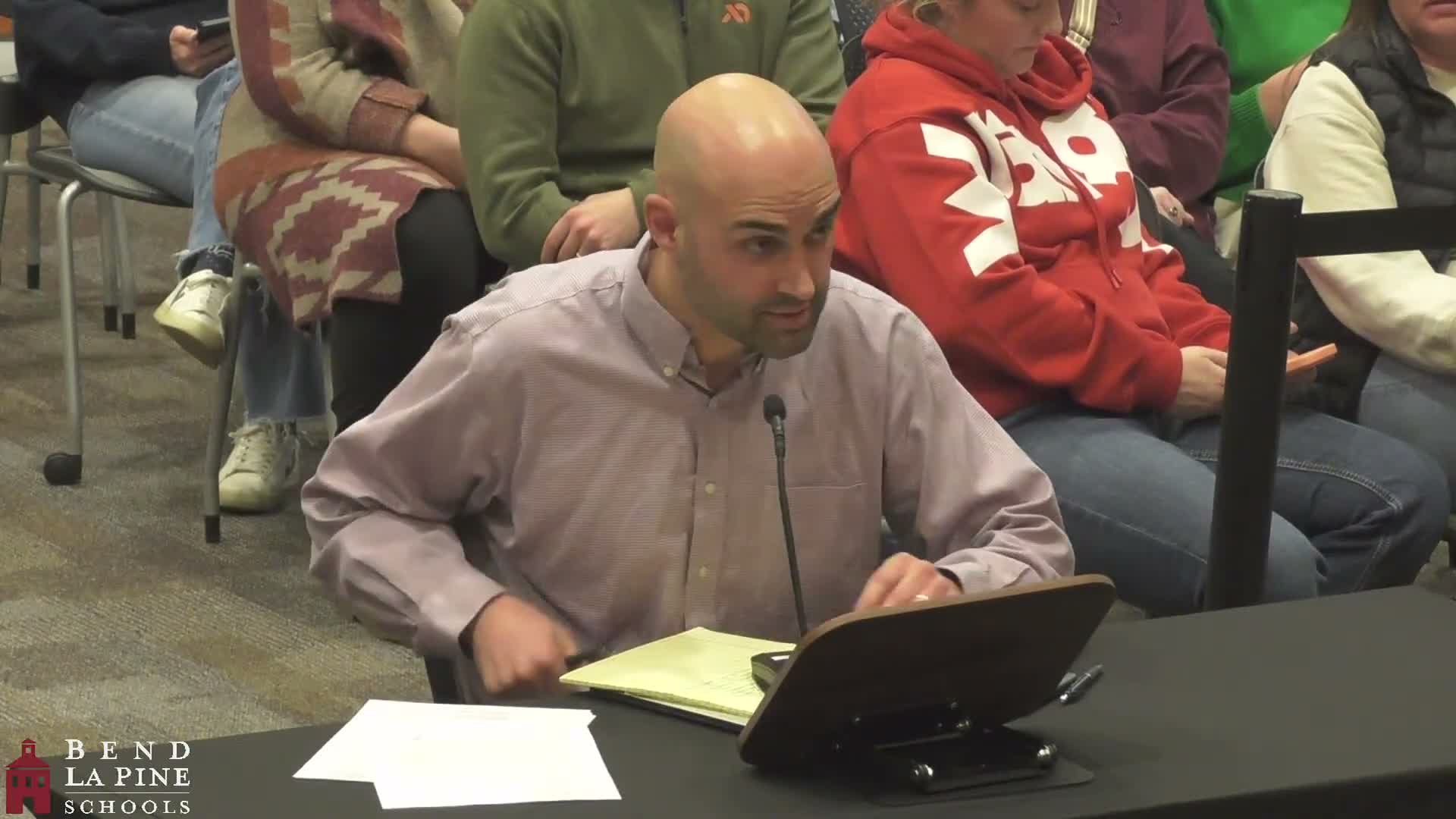
The Bend‑La Pine Schools Board of Directors on Jan. 13 accepted the district's annual comprehensive financial report and unanimously adopted a corrective action plan after auditors identified significant payroll tax overpayments. Chief Financial Officer Dan Emerson told the board auditors issued an unmodified (clean) opinion on the district's financial statements but reported a significant deficiency related to payroll tax processing.
"The district overpaid approximately $1,900,000 in payroll taxes in April 2025," Emerson said, and added that the district "recovered the $5,000,000 in June overpayment" and expects the April refund after submitting year‑end tax documentation. He attributed the errors to rapid turnover in the payroll team, insufficient training, and incomplete reconciliations.
The board heard Emerson's second‑quarter update covering actuals through Dec. 31, 2025, and a preliminary forecast for the fiscal year ending June 30, 2026. Emerson said state school‑fund estimates for the district are approximately $100.6 million (about $650,000 below budget), projected interest earnings are about $420,000 less than budgeted, and personnel expenditures are forecast at roughly $191 million (about $4 million below the adjusted budget), partly because of continuing vacancies. He projected an ending general‑fund balance near $21.4 million, down from a beginning balance near $28 million.
Emerson described steps the district is taking to prevent repeat errors: hiring additional payroll specialists, bringing back experienced former staff to coach current employees, and contracting Business Plus for short‑term payroll processing and long‑term training support. "We have the most resources we've ever given to this team," he said of the remediation plan attached to the ACFR. State‑required corrective action documentation was included in the meeting packet.
Director Sheryl Olson moved to adopt Resolution 2006, which approves the corrective action plan and requires signatures by the board chair and another member; Director Cameron Fisher seconded. The motion passed unanimously. Director Ross Tomlin then moved to accept the annual comprehensive financial report; Director Amy Tatum seconded and the board approved the report by unanimous vote.
Superintendent Dr. Stephen Cook stressed that while the audit finding was serious, the district self‑disclosed and has moved quickly to address controls and staffing. "This is why we do an external audit process—to ensure strong internal controls and transparency with public funds," Emerson said. The board scheduled a deeper budget and long‑term forecast review for its February meeting to examine assumptions and longer‑range impacts.
The board also reviewed the district's investment activity, noting $59.5 million in operational cash moved temporarily into short‑term Treasury maturities to comply with pool limits, and a capital investment portfolio market value of about $146 million tied to the 2025 bond program.
Next steps: staff will implement the corrective plan, continue recovery of the remaining tax overpayment, and present more detailed long‑range forecasts to the board at the February budget session.