Get Full Government Meeting Transcripts, Videos, & Alerts Forever!
Get email alerts on the Budget topic
No spam. Unsubscribe anytime.
Blue Valley board warns of special‑education funding gap as reserves shrink
Summary
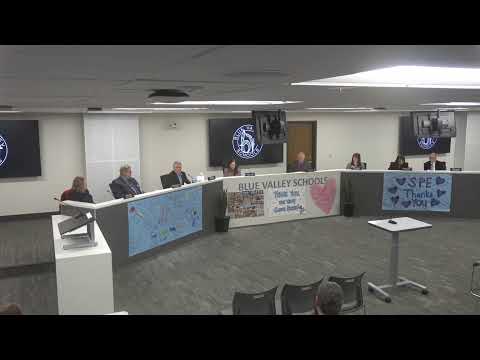
At a Jan. 12 meeting the Blue Valley Board of Education heard a midyear budget review showing an estimated $9–$10 million midyear deficit for 2025–26 and an approximate $18 million gap to reach the state’s 92% special‑education funding target; administrators urged legislative action while warning local reserves are being drawn down.
The Blue Valley Board of Education was warned Tuesday that the district faces a tightening budget that administrators say is driven largely by rising special‑education costs and a recent enrollment decline.
Jeremy McFadden, the district chief financial officer, said the district projects “roughly a 9 to $10,000,000 deficit in this fiscal year 25‑26” and estimated that about $18 million would be required to bring special‑education funding back to the state target of 92 percent. "That 18,000,000 would be the approximate amount to get us back to that 92% target," McFadden said during a midyear budget and enrollment presentation.
Why it matters: special education is a large and rising share of the district’s costs. McFadden told the board the district expects roughly $80 million in special‑education expenditures in 2025–26 against a general fund and local option budget combined of about $250 million, and that those rising costs helped push operating reserves down from a pandemic peak of about $43 million toward a projected roughly $27.5 million by June 30.
Board members pressed for details about staffing and student counts. Administrators said overall district employment rose modestly (to about 3,029 certified and classified staff) even as enrollment declined from a pre‑pandemic high of about 22,347 to an unaudited 21,580 for 2025–26. McFadden and his staff attributed the staffing uptick primarily to increases in special‑education certified staff and paraeducators required by individual education programs (IEPs).
Board member discussion focused on tradeoffs between maintaining competitive salaries to retain staff and preserving reserves. McFadden described how state base aid increases had been passed into the certified salary schedule, raising beginning and maximum teacher pay; he said the district may need to reassess staffing and compensation decisions for the 2026–27 budget cycle.
Several board members said the district has limited local avenues to close the gap and urged the community to pressure state lawmakers. Superintendent Dr. Chapman and other trustees encouraged legislative engagement, saying local options such as raising the mill levy or reallocating funds are constrained by the state funding formula and statutory limits.
What happens next: administration plans to continue budget planning in the spring ahead of the 2026–27 fiscal year, and the board signaled it will advocate to state lawmakers for increased special‑education funding and clearer distribution models. McFadden said the district will finish its enrollment audit with the Kansas State Department of Education and return with refined numbers in coming weeks.
Sources and uncertainty: figures cited in this report come from the board presentation and discussion at the Jan. 12 meeting; several enrollment and reserve figures were described as unaudited or projected.