
Public commenters accuse Inland Personnel Council and superintendent of exerting undue influence
Get AI-powered insights, summaries, and transcripts
Sign Up Free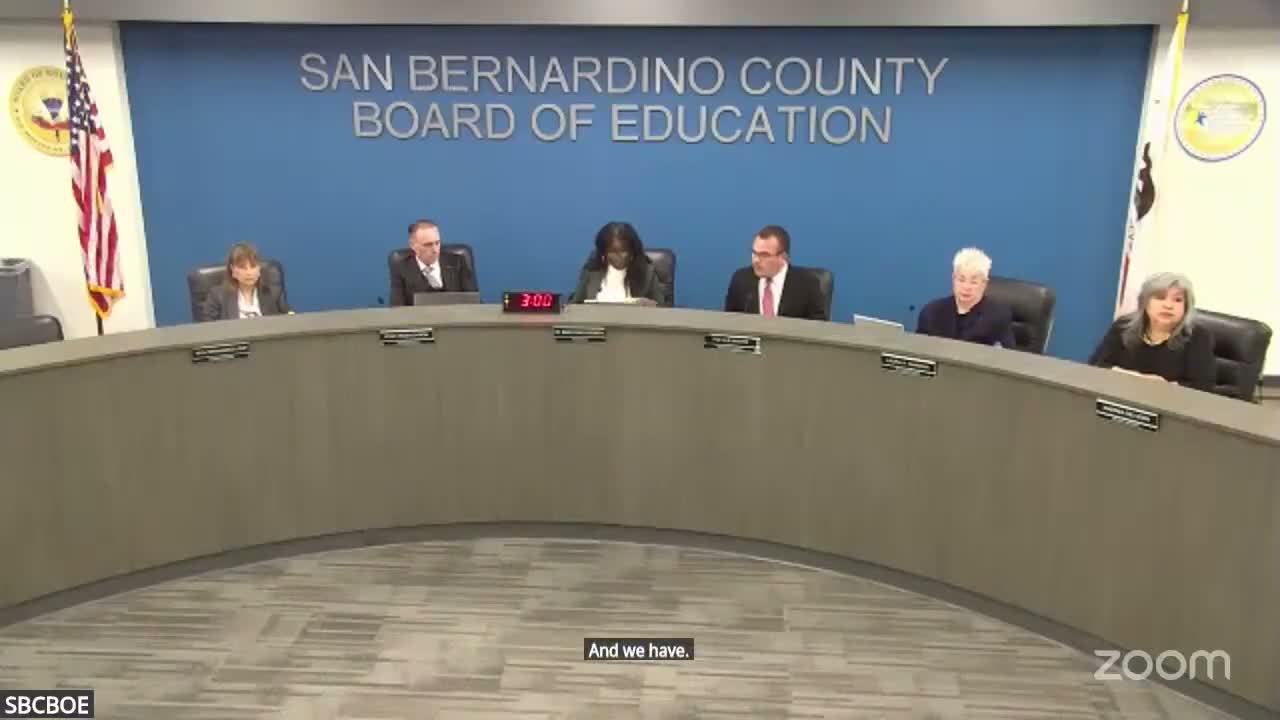
Summary
During public comment at the Jan. 12 board meeting, several speakers accused Superintendent Ted Alejandre and the Inland Personnel Council (IPC) of concentrating power in joint powers authorities and using AALRR for investigations that they say favor certain parties; the board did not open a formal inquiry during the session.
At the Jan. 12 San Bernardino County Board of Education meeting, multiple members of the public used the allotted public-comment time to allege that the Inland Personnel Council (IPC) and Superintendent Ted Alejandre exert undue influence over local school districts and joint powers authorities.
Speakers raised a series of accusations: that districts are effectively controlled through JPAs, that IPC contracts (and the law firm Atkinson, Andelson, Loya, Ruud & Romo—AALRR) are used to direct investigations in ways that favor particular officials, and that board agendas and minutes have failed to notify the public about these arrangements. Commenters cited specific examples—naming personnel and previous investigations—and urged the board to act to improve transparency and oversight.
County counsel and board members responded during the meeting by reiterating limits on the county office’s authority over locally elected boards and noting that JPAs typically contract for their own audits and governance. Counsel also said closed-session matters are confidential and directed detailed concerns about closed sessions and alleged Brown Act issues to staff for follow-up or legal review. The board did not vote to open a separate investigation at this meeting.
Board members asked staff to review the concerns and to follow up on requests to place items on future agendas (for example, an auditor presentation or review of JPAs). The meeting record shows the allegations raised during public comment remain unresolved and were not adjudicated during this session.
The board’s legal counsel noted that forensic or targeted audits would be a distinct engagement from the annual financial audit described in public business; such engagements would require a narrower scope and typically be initiated if evidence of malfeasance or particular concerns warranted deeper review.
The record contains multiple detailed allegations by named members of the public; the board’s official response in this meeting was procedural (advise staff follow-up, confirm statutory boundaries and confidentiality rules) rather than investigative.