Independent audit gives San Bernardino County superintendent clean opinion for 2024–25
Loading...
Summary
Nigro & Nigro presented an independent audit to the San Bernardino County Board of Education on Jan. 12, 2026, issuing a clean (unmodified) opinion with no findings; auditors summarized procedures, a GASB restatement tied to a new standard, and federal program testing (IDEA). Board members asked about sampling, JPAs, leases and OPEB disclosures.
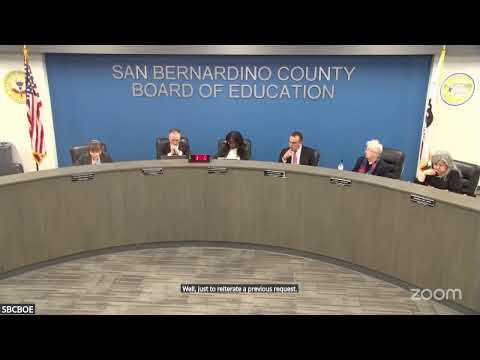
An independent audit of the San Bernardino County Superintendent of Schools for fiscal year 2024–25 drew a clean, unmodified opinion from audit firm Nigro & Nigro, the county’s auditors told the Board of Education on Jan. 12, 2026.
Jessica Miller, a partner with Nigro & Nigro, outlined the firm’s multi‑stage process: site visits for attendance testing, interim tests of controls and transactions, and year‑end verification of unaudited actuals. The firm reviewed federal programs—highlighting special education (IDEA) as a major federal program—and assessed required GASB disclosures, pensions and OPEB. The report included management’s discussion and analysis, full financial statements and explanatory notes.
Miller said the audit included a GASB‑related restatement of beginning balances to reflect a new standard (GASB 101 implementation) and that the firm issued unmodified government‑wide and fund‑level opinions and no audit findings. Board members probed sampling approaches, the extent of tests of contracts and JPAs, multiyear lease disclosures, capital additions (noted at about $14.7 million including $7.5 million in building improvements and $3.8 million in equipment), and how lease and software subscription accounting were handled.
The auditor explained that JPAs are not component units of SBCSS for financial reporting and that their audits are contracted separately. She also described sampling practices: initial small samples for controls and broader, dollar‑focused testing at year‑end. The audit report’s management discussion and analysis contains a mix of management‑provided narrative and standard auditor template language, she said.
Board members raised editorial questions about letter dates in the published report and requested clearer distribution dates for opinion letters and more granular detail on specific contract testing and leased facilities; the auditor said she would follow up with those details. Counsel and board members noted that this audit meets state requirements and that forensic or targeted audits would be a different, narrower engagement if the board sought inquiry into specific allegations.
The report will be posted as part of the official audit record; board members said they plan follow‑up questions and future agenda items to examine auditor selection and the potential scope for additional targeted reviews if concerns persist.