Recology reports strong service metrics for Mercer Island, small 2026 rate increases tied to county disposal costs
Loading...
Summary
Recology told the Mercer Island Utility Board that customer satisfaction and key service metrics improved in 2025, while King County disposal costs and CPI adjustments produce modest 2026 rate increases ($0.30 for a 20-gallon cart, $0.19 for multifamily). The company also previewed outreach and state policy impacts.
Recology representatives told the Mercer Island Utility Board on Jan. 13 that the company’s service for the city improved in 2025 but that external cost pressures will produce slight rate changes in 2026.
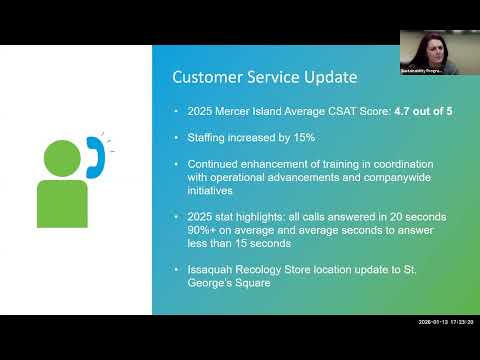
“We had an average customer satisfaction score of 4.7 out of 5 for Mercer Island in 2025,” said Alyssa Campbell, Recology’s government and community relations manager. She said the company has increased staff by about 15% and added six robotic sorters at its Georgetown materials-recovery facility to bolster recycling operations.
The report outlined several factors that feed into customer rates. Recology said the CPI adjustment for the contract’s service component was 2.715 and that King County’s disposal charges rose nearly 8% last year. Using the company’s rate formula, Recology reported a calculated increase of roughly $0.30 for the residential 20-gallon cart and $0.19 for multifamily accounts.
Board members asked for more detail on the composition of customer calls; Recology agreed to follow up with a breakdown of call categories (billing, service, missed pickups) after the presentation. Recology also reported strong call-center performance in 2025: average answer times were near 12 seconds and 90%+ of calls were answered within 20 seconds.
On operations, Recology said it opened a North Yard in Maltby, operates a Recology store in Redmond and will open another location in Maple Valley in 2026. The company also emphasized outreach: facility tours, workshops, door-hanger campaigns at multifamily sites and targeted contamination-reduction efforts. Recology said 100% of multifamily sites on Mercer Island receive recycling service and more than half have compost service.
Campbell highlighted state policy changes that will affect curbside recycling. She cited a trio of organics-management laws and the Recycling Reform Act, and said Recology is serving on an advisory council to help implement producer-funded recycling approaches. “The idea is that the curbside recycling will not be the ones responsible for how that gets paid for,” she said, describing the shift to producer responsibility in broad terms while noting details remain to be determined.
Recology also reviewed 2025 service reliability metrics: “misses per thousand” averaged about 0.4 for the year, an improvement compared with 2024, and the company reported very few escalations to its call center.
Next steps identified in the presentation include continued community outreach and data-sharing with the city as the parties prepare for the solid-waste contract renewal process (the current contract was signed in 2019 and expires in 2029). Recology and city staff said they will provide additional data requested by the board, including a more granular breakdown of customer inquiries and a year‑over‑year comparison of misses and service metrics.