
Lake Stevens attorneys brief council on ethics, open‑meetings, quasi‑judicial duties and public records
Get AI-powered insights, summaries, and transcripts
Sign Up Free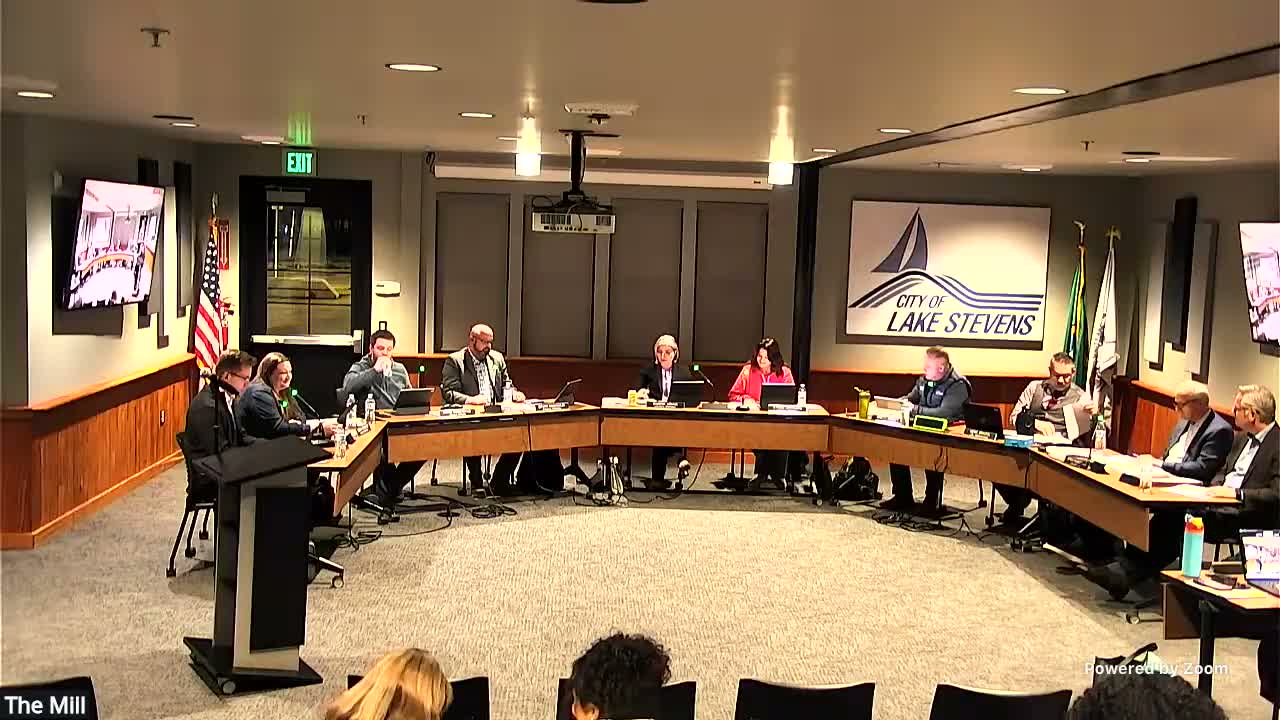
Summary
City attorneys led extended training for council on being a code city, the role of council members, RCW chapter 42.23 (ethics), quasi‑judicial hearings and the Open Public Meetings Act, and the scope of the Public Records Act — including guidance on councilmembers' social media posts and record retention.
Lake Stevens city attorneys Greg and Oscar Ray provided a focused training session to the council on Jan. 13 that covered optional municipal (code) city powers, the duties of elected council members, state ethics law, quasi‑judicial proceedings, the Open Public Meetings Act (OPMA) and the Public Records Act.
Greg and Oscar emphasized that Lake Stevens operates as a mayor‑council code city under state law and explained that, while code cities have broad powers, councilmembers have no individual authority to act outside council decisions. They urged councilmembers to treat their role as collective decision‑makers and to work through the mayor and staff for individual supervisory or operational issues.
On ethics, Oscar cited RCW chapter 42.23 and explained that municipal officers must avoid a "beneficial interest" in city contracts, disclose economic interests and, where appropriate, recuse themselves. He also warned against disclosing confidential information gained in executive sessions or via attorney‑client communications.
The attorneys walked through quasi‑judicial land‑use matters and the appearance‑of‑fairness obligations. Greg explained that some land‑use hearings are "closed record" reviews of a hearing examiner's record and that council members must base decisions on the evidentiary record; improper outside discussions or expressions of opinion can lead to disqualification and reversal.
On OPMA and executive sessions, attorneys described the limited grounds for executive session, cautioned against taking final action immediately after executive session in ways that create an appearance of predecision, and warned about serial meetings and the need to avoid informal chains of communication that include a quorum.
The session closed with an extended discussion of the Public Records Act and how it applies to council members' communications. The attorneys and city staff advised that councilmember posts and comments about city business — including posts on personal or campaign social media pages — likely qualify as public records. Staff offered to explore mechanisms to preserve and retain those records (screenshots, centralized depositary or use of city channels) to balance councilmembers’ desire to communicate with constituents against retention obligations.
Mayor (unnamed) and several councilmembers suggested scheduling a follow‑up workshop so staff could present cost and workload data on public records processing and potential technical solutions.