
Atlantic Avenue Task Force recommends $30–$35M makeover, proposes parklet-style "microcommerce" zones and parking compromises
Get AI-powered insights, summaries, and transcripts
Sign Up Free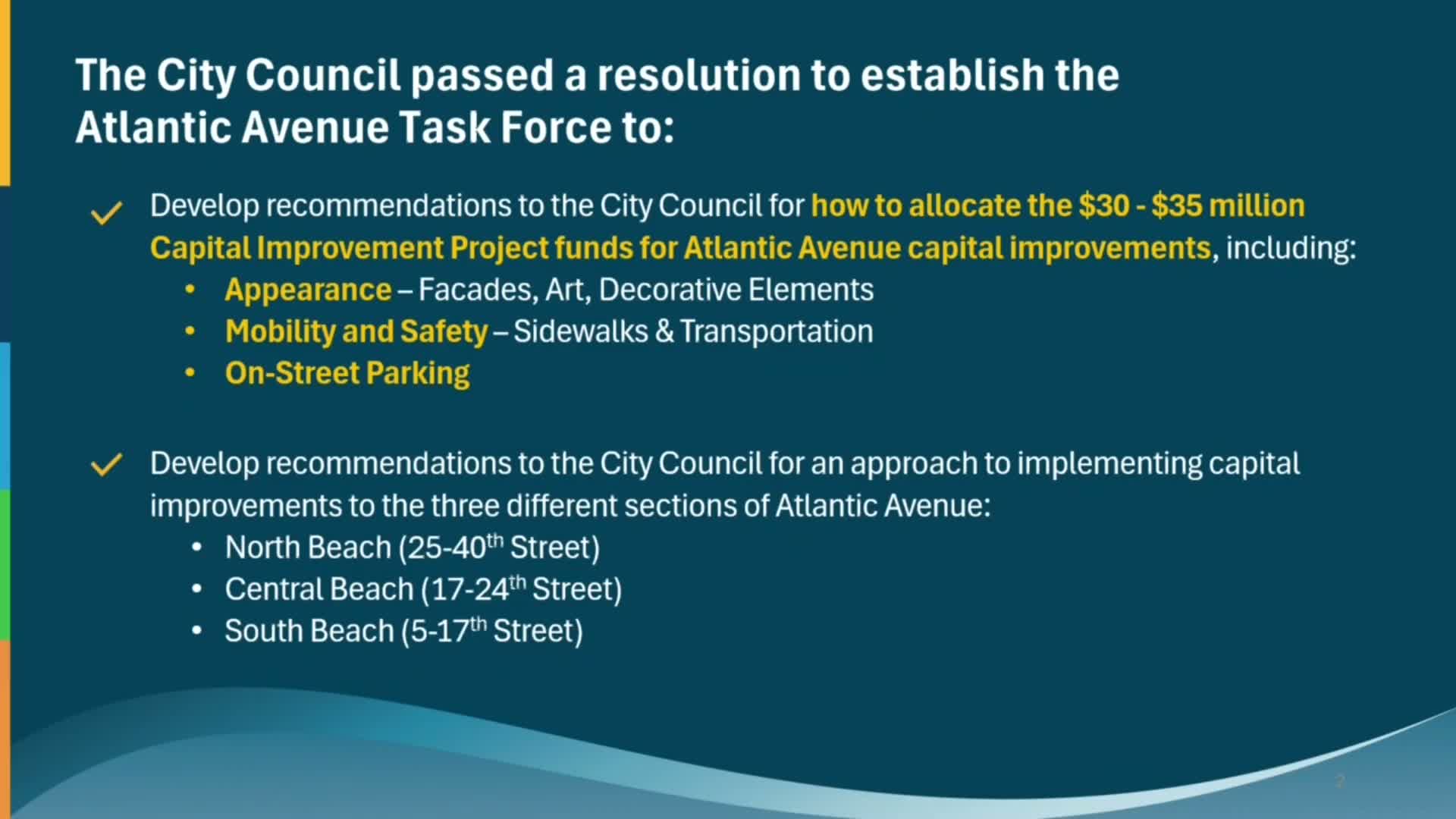
Summary
The mayor's Atlantic Avenue Task Force proposed a $30–$35 million package of streetscape improvements — milling and overlay, sidewalks, bike lanes, wayfinding, and a $1.1 million public‑art allocation — and recommended microcommerce (parklet) areas in Central Beach; council asked for one more focused task‑force meeting on microcommerce details.
Julie Brenman, a facilitator with Fountainworks, presented the Atlantic Avenue Task Force’s recommendations to the Virginia Beach City Council on Jan. 6, saying the mayor convened the group to advise on how to spend $30–$35 million in capital improvements along Atlantic Avenue. “The task force was asked to look at how to allocate the 30 to $35,000,000 in capital improvement funds for the Atlantic Avenue capital improvements,” Brenman said.
The task force recommended prioritizing Central Beach (17th–24th streets) for pedestrian improvements and a so‑called “wow factor” of public art, while proposing uniform lighting and wayfinding citywide. Mike Moch, a task-force co‑chair, outlined the core capital items: roadway milling and overlay, sidewalk and crosswalk replacement (including raised crosswalks), bike lanes on the east side, enhanced landscaping and a façade improvement grant program. “Out of the 7 members…6 voted unanimously…to move forward as we’re presenting it,” Moch said of the package, while the group recorded a 6–1 split only on the parking recommendation.
A notable proposal would repurpose the trolley lane in Central Beach into permanent-but-flexible “microcommerce” zones — parklet‑style raised platforms for outdoor cafes, permitted entertainment and busking — with first right of refusal to adjacent businesses and designated delivery/clearance areas for trolleys and emergency access. Task-force supporters said the microcommerce areas would be built at sidewalk level and include electrical service; opponents and cautious council members compared the idea to temporary COVID bump‑outs and urged stricter design, maintenance and eligibility rules.
Public‑safety concerns featured prominently in council questions. Brenman said police, fire and EMS raised access and safety issues with on‑street parking and some design elements: “For the fire department, for example, if there's a lot of on street parking, it's hard to get to the business…For the police department…it's very easy for people to hide contraband or weapons in their car,” she said. Staff told council that public safety participated in task‑force meetings and would work to ensure access if council directs implementation.
On funding mechanics, council members confirmed the $35 million figure is expected to come from tax‑increment (TIF) funding allocated to the project. For art and placemaking, the task force proposed a $1.1 million allocation and recommended a public–private approach, including partnering with the Vibe District and the Virginia Beach School System for public art and utility‑box wraps. Staff said an Atlantic Avenue façade‑improvement grant program — matching grants of $10,000–$25,000, performance‑based and eligible from 2nd to 40th Street — is expected to go live next week.
Council members generally praised the task‑force work and the emphasis on making Atlantic Avenue inviting for both residents and visitors, but several asked for more specifics on microcommerce operations, maintenance obligations and how to ensure businesses are code‑compliant before participation. The mayor and city manager supported asking the task force to hold one additional meeting limited to the microcommerce program, after which staff will package the defined parameters for council consideration.
Next steps: the task force will meet once more to finalize the microcommerce concept and staff will circulate a memo and proposed implementation package to council. No formal ordinance or appropriation was adopted at the briefing.