San Mateo council approves Cary School zoning change to build 75‑child early-learning center
Loading...
Summary
The City Council voted unanimously Jan. 12 to introduce an ordinance and approve planning permits allowing the Cary School to convert 2033 LaSalle Drive into a one‑story early childhood education center expected to serve up to 75 children and include a minimum of 10% subsidized slots.
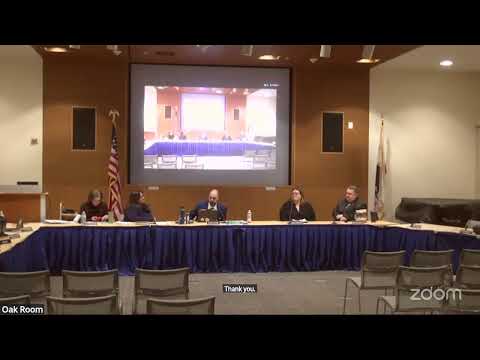
The San Mateo City Council voted unanimously Jan. 12 to introduce an ordinance and approve planning permits that will allow the Cary School to build an early childhood education center at 2033 LaSalle Drive.
Associate Planner Simin Zakhovan told the council the proposal would reclassify the 26,380‑square‑foot site to R‑1B with a Q8 qualified overlay and establish development standards for a one‑story, roughly 5,900‑square‑foot building. The applicant estimates the center would serve up to 75 students ages 2–5, employ up to 16 staff, provide 11 on‑site parking spaces and rely on an existing off‑site agreement for 15 additional spaces (26 total), and operate weekdays from about 7:45 a.m. to 6 p.m.
“We recommend the council introduce the ordinance, adopt the zoning code amendment and approve the planning application subject to the findings and conditions of approval,” Zakhovan said during the staff presentation.
Neely Norris, head of the Cary School, and architect Michelle Huber said the design places the play area and building to reduce noise impacts on nearby single‑family homes, preserves a number of mature redwoods where feasible and adds nearly 30 new trees to create a green buffer. Huber described a fence design and landscape buffer intended to conceal much of the facility from neighbor views.
The school and its consultant said a traffic analysis projects the project will generate a net increase of about 133 daily vehicle trips but that nearby intersections would continue to operate at an acceptable level of service. The applicants said they will use staggered drop‑off times, three designated drop‑off locations and staff monitoring to manage queuing and circulation.
Parents, alumni and neighbors spoke in support during the public hearing. Timothy Wong, who said he and his spouse both work full time, told the council that the proposed full‑day hours would be a “rare and much‑needed solution” for working families. Several speakers praised Cary’s existing preschool operations and the school’s commitment to socioeconomic diversity.
On financial aid, Norris said the school’s board approves aid levels each year and committed to providing a minimum of 10% of preschool slots as fully subsidized, with the program target ranging between 10% and 15% depending on the annual budget.
Planning staff told the council that several previously recommended conditions related to security lighting and cameras were removed after staff concluded the cited code section was not applicable to the proposed use. Staff did add or update conditions including the installation of no‑parking signs during peak pickup/drop‑off times as requested by the Planning Commission and Public Works.
Council Member (mover) introduced the motion to introduce the ordinance, Council Member (second) seconded, and a roll‑call vote recorded unanimous approval (5–0). The motion included findings that the project is exempt from further environmental review under CEQA common‑sense and small‑structure exemptions.
The council’s action allows the zoning reclassification and begins the formal process for the project’s next procedural steps. The applicants said they hope to complete construction within a nine‑month window and to open the center in fall 2027.