Get AI Briefings, Transcripts & Alerts on Local & National Government Meetings — Forever.
Ishpeming hears Marquette County brownfield briefing, including housing incentives and $400,000 EPA assessment grant
Loading...
Summary
Marquette County officials briefed Ishpeming officials on brownfield tax-increment financing (TIF) and eligible activities, explaining the 2023 expansion to allow housing projects and announcing a $400,000 EPA assessment grant targeting Ishpeming and Sawyer.
Marquette County officials told the Ishpeming City Council at a work session that brownfield tools can be used to help make housing projects viable and that federal funds are available to begin environmental assessments.
Jackie Solomon, introduced by the meeting facilitator as Marquette County treasurer, said Michigan’s brownfield definition is broad and can include contaminated sites, blighted or functionally obsolete buildings and even historic resources. She said the state’s 2023 change now explicitly allows brownfield tax-increment financing to be used for housing projects.
"If you're creating housing, anything to do with housing, 1 unit of housing, 50 units of housing, rehab, new construction, anything related to housing, you can use Brownfield tax increment financing," Solomon said.
Logan Mahon, an environmental consultant contracted with the Marquette County Brownfield Authority, summarized local housing need data the authority uses to assess projects. He said statewide vacancy rates had fallen from about 4.2% to 1.9%, that Michigan’s statewide housing target was cited at 115,000 new units by 2027, and that a Marquette County market analysis calls for roughly 1,400 new units by 2029.
Mahon explained the data a housing brownfield plan must include: evidence of housing need, absorption or job-growth data and alignment with local or regional housing plans. He said some eligible activities — such as site preparation that supports housing, rental rehabs, or temporary relocation while units are renovated — require income-qualified households and monitoring within the brownfield plan. He added that housing TIF can support developments up to about 120% of area median income in some cases.
The presenters described how tax-increment financing works under Act 381: a developer’s eligible cleanup and redevelopment expenses can be reimbursed over time from the increased tax revenue generated by the improved property, subject to statutory limits (the presenters said the law allows up to 30 years, though municipalities and developers often seek shorter terms).
Solomon and colleagues also highlighted previous local brownfield efforts — including a short, roughly eight-year plan that helped convert a hubcap shop into a Northern Michigan Bank & Trust branch — and noted some approved plans remain inactive until a developer advances a project.
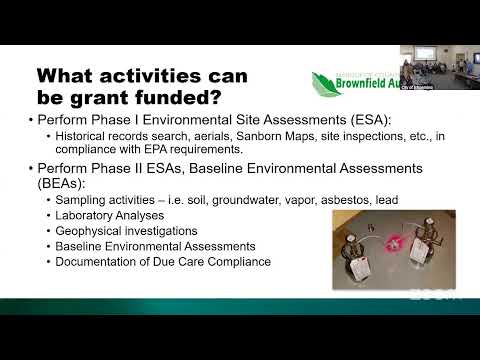
Officials announced Marquette County had been awarded an EPA assessment grant of $400,000 to fund environmental site assessments and predevelopment work, and that Ishpeming was one of two core communities targeted for that funding. The grant can pay for phase I and phase II assessments, sampling and laboratory analysis, baseline environmental assessments and planning work for brownfield/TIF plans, the presenters said.
"We have $400,000. We have two core communities that we're focusing on. One is the city of Ishpeming, the other is Sawyer," a presenter said.
Council members asked about an application for a phase I assessment on a property described as the Cliffs property; presenters said the county Brownfield Authority would take up related items at its meeting later the same day. No formal vote on a brownfield plan occurred during the session.
Next steps: the Brownfield Authority meets to review projects and any specific brownfield plans would later be presented to the city for local approval before moving through county or DDA approvals as required.