
Citizens Advisory Board dissolves three subcommittees and discusses a state bill to ease jail transfers
Get AI-powered insights, summaries, and transcripts
Subscribe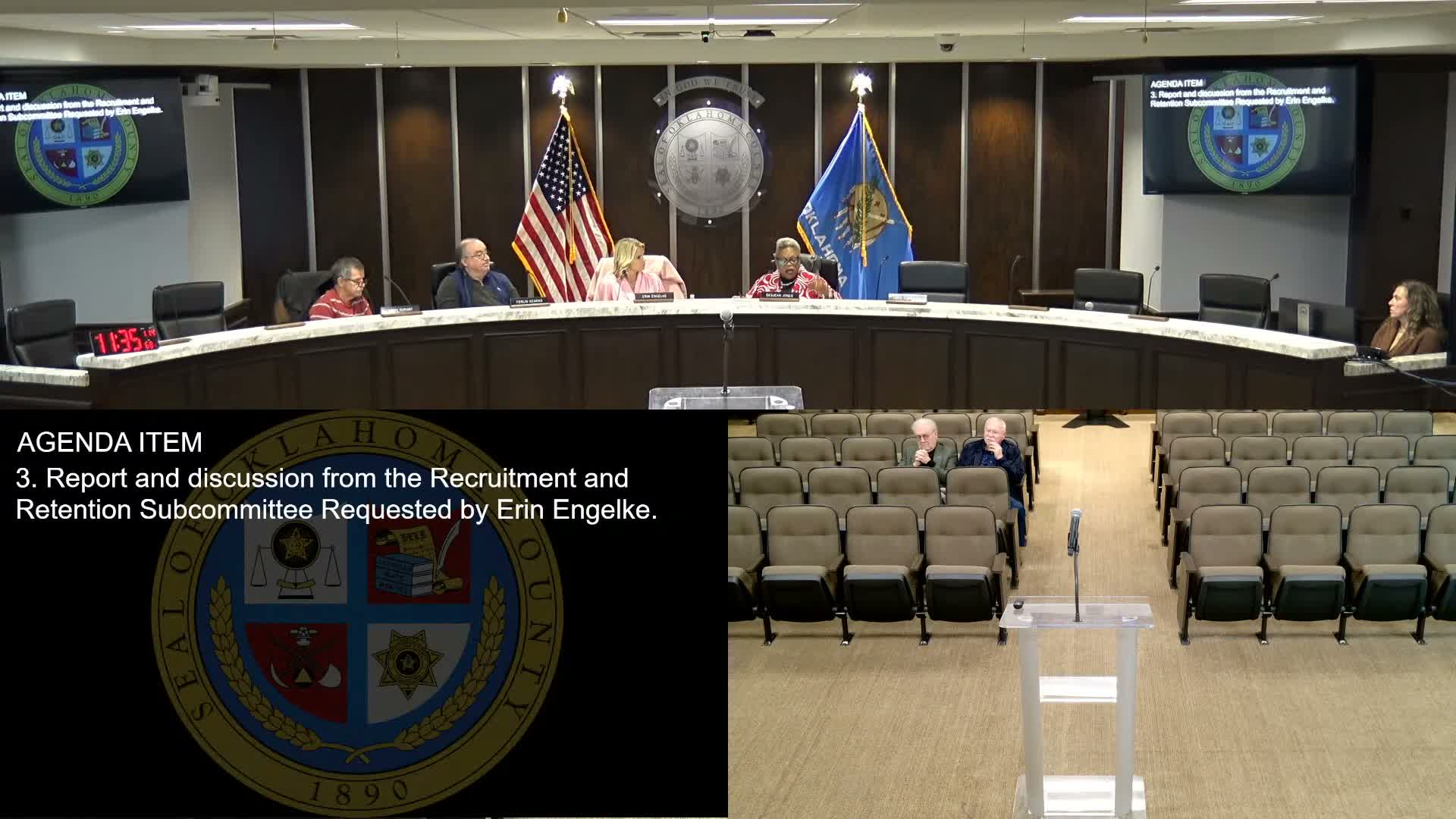
Summary
The Citizens Advisory Board voted to dissolve its recruitment and retention, policies and procedures, and finance and operations subcommittees, and discussed a proposed state bill to allow certain nonviolent sentenced inmates to self-report to DOC to reduce county jail population pressures.
The Citizens Advisory Board voted to dissolve three advisory subcommittees after members said they had difficulty recruiting members and that the formal subcommittee structure imposed open-meeting constraints.
Board member (S4) moved to dissolve the recruitment and retention subcommittee; the motion was seconded and approved by the board. Shortly thereafter Board member (S5) moved and the board approved dissolving the policies and procedures subcommittee. Later, Board member (S2) moved to dissolve the finance and operations subcommittee; the motion was seconded and approved. Members recorded roll-call agreement during each vote.
The moves followed extended discussion about the limits the Open Meetings Act places on subcommittee scheduling and the need for clerked meetings if a subcommittee is designated formally. Several members asked whether smaller discussion groups could operate outside the clerked meeting room so long as they did not reach a quorum of the advisory board; the chair explained subcommittees must be clerked and meet open-meetings requirements while informal discussion groups may meet with fewer formalities but must avoid a quorum.
During the finance-and-operations discussion, a board member described a draft bill to be filed at the state Capitol that would allow some nonviolent judgment-and-sentence (J&S) inmates who are not flight risks to self-report to the Department of Corrections rather than be processed through the county jail. "We're trying to bypass that," the speaker said, arguing the change would reduce county jail population pressures. The member said a senate author had agreed to file the bill and solicited early support, while noting potential resistance from smaller counties that rely on J&S inmates for budgetary reasons.
The finance discussion also referenced a recent Attorney General opinion that county budgets must fund constitutional mandates first and described the excise tax board’s oversight role. Board members framed the issue as both an operational and funding challenge while emphasizing that a new jail remains at least two years away, so interim funding and policy changes are urgent.
Board members said they would continue to report committee-related work back to the full advisory board and to recruit for participation even as the formal subcommittees were dissolved. The board adjourned following final procedural motions.