
CLOSE coalition outlines school-based prevention work and warns of funding cliff
Get AI-powered insights, summaries, and transcripts
Subscribe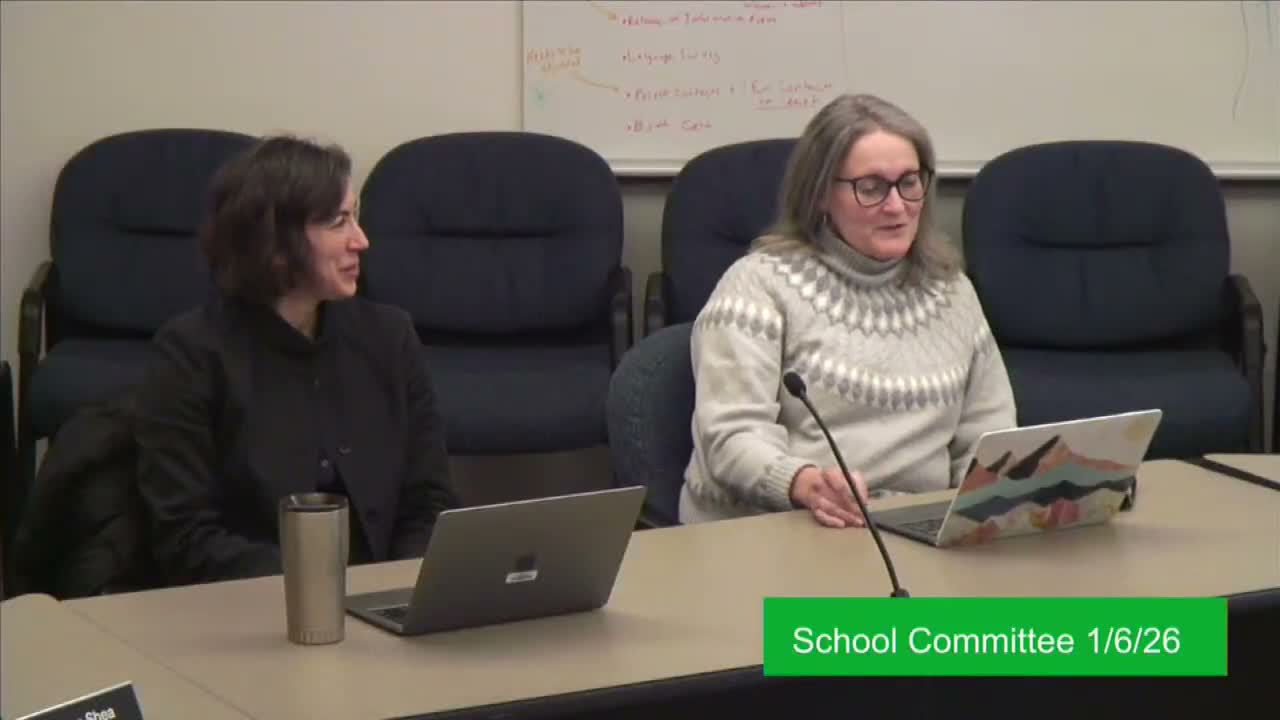
Summary
At the Longmeadow School Committee meeting, CLOSE coalition leaders and students described peer education, screening and Narcan outreach, and warned the federal drug-free communities grant funding will end next year, leaving a $125,000 annual program at risk.
Shelley Warren, the district’s substance-use response coordinator, told the Longmeadow School Committee on Jan. 6 that the district uses a tiered MTSS approach and school climate surveys to target prevention and support for students.
“Connection in community” is central to Warren’s approach, she said, explaining universal wellness curriculum, peer leadership, targeted SBIRT screening and tier 2/3 interventions. Warren said nicotine infractions trigger four mandatory sessions with her, and cannabis incidents typically require four to six sessions in addition to internal or external suspension where applicable. “SBIRT is required by the state,” she said, describing the nurse referral pathway that preserves confidentiality and avoids punitive-only responses.
Coalition director Amanda Lennox (presented in the transcript) described how CLOSE coordinates school and community work under a drug-free communities grant administered with the town as fiscal agent and the schools helping manage the award. She said the coalition’s annual budget is $125,000 and that the grant is in its ninth year; funding is scheduled to end next year. Lennox said the coalition will pursue opioid-abatement funds, CARE and RISE grants and other state sources to sustain operations.
Students from the STAND (also referenced as Stan in the transcript) peer-education group described classroom visits, a middle-school pilot, and prevention activities including a distractology driving study partnership with UMass and a planned “Stop the Swerve” prom campaign. Student leader Alina said peer sessions met middle-schoolers “where they are” with games and role-play to practice refusal skills.
Warren and coalition leaders highlighted community outreach such as a social-norming poster campaign based on an informal student survey in which about 223 students responded and roughly 90% said they would view oral nicotine pouches negatively; the coalition used that finding in school posters to shift perceived norms. The coalition also described Narcan (naloxone) distribution and training events with Tapestry and the police department and recent installations of Naloxone boxes at community locations after outreach from coalition partners.
Warren warned of gaps in adolescent treatment capacity: “As of June 2025, the last teen detox in the state closed,” she said, and added that no in-state residential adolescent treatment programs remain, complicating referrals and increasing reliance on out-of-state or private-pay programs.
Why it matters: Committee members and administrators praised the coalition’s partnership with schools, noting that prevention and peer education help identify at-risk students earlier and provide alternative supports to suspension. Several members asked the coalition to return if it seeks formal school or town support once grant funding ends.
Next steps: Coalition leaders said they will continue to pursue alternative funding and may return to the committee to request town or school support if needed.