
Commissioners warned proposed 3% property‑value cap could shift taxes and raise constitutional questions
Get AI-powered insights, summaries, and transcripts
Subscribe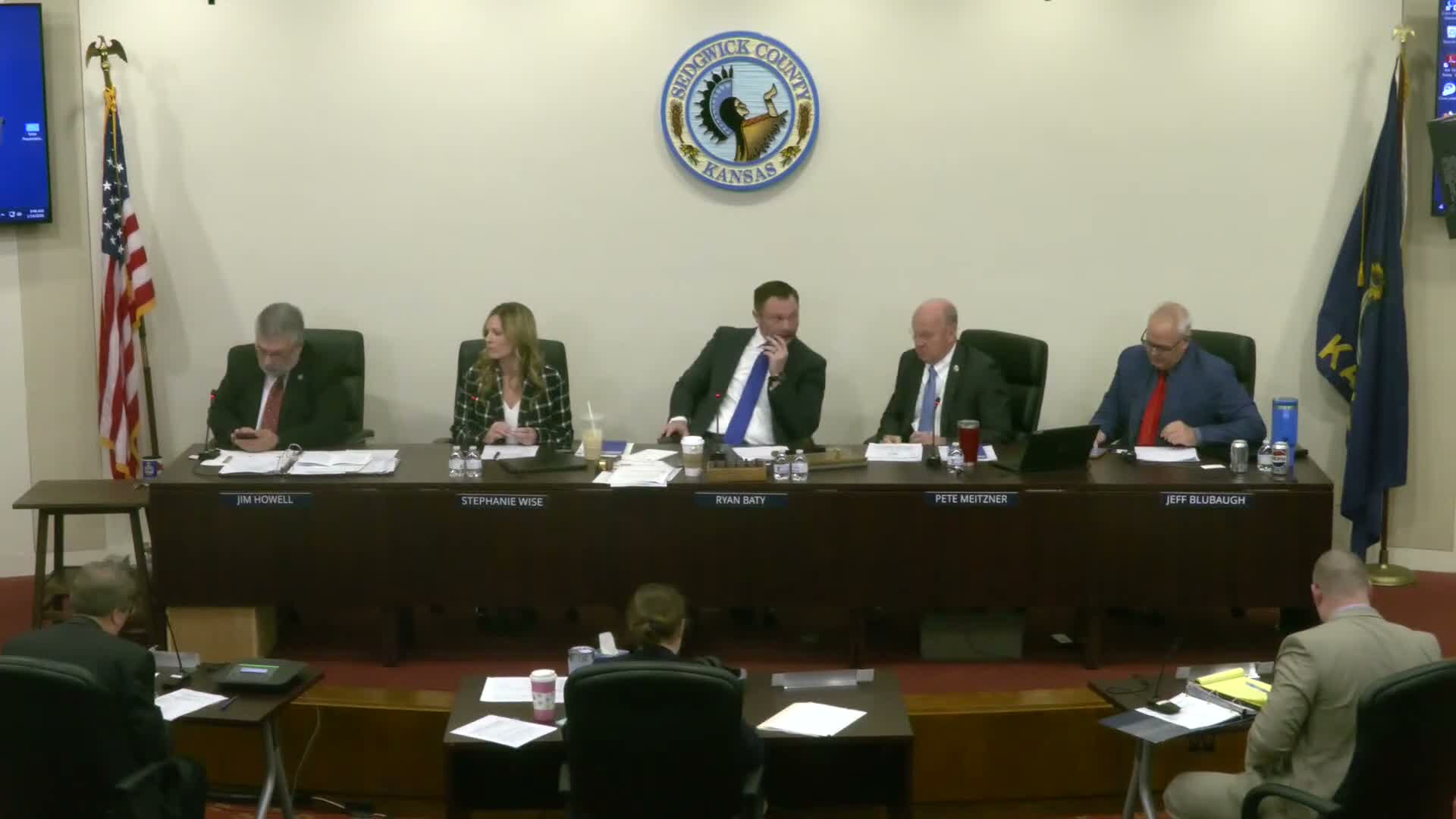
Summary
At the Jan. 14 meeting commissioners received a legislative session update and Commissioner Howe gave a detailed critique of a proposed constitutional amendment (SCR/SSCR 16/1616) to cap assessed‑value increases at 3%, arguing it could create uneven assessment rates, shift taxes to many property owners, and conflict with Kansas constitutional uniformity requirements.
Legislative staff briefed Sedgwick County commissioners on the opening of the Kansas legislative session and county platform work on Jan. 14. Tanya (county legislative staff) noted the county’s platform and a slate of bills being tracked, and reminded the commission the 2026 session is a 90‑day calendar session and the second year of the biennium.
Commissioner Pete Howe gave an extended, technical critique of a proposed constitutional amendment discussed in the Senate Assessment and Taxation Committee (referred to in the hearing as SSCR/ SCR 16/1616). Howe said the measure would limit annual increases in the final taxable assessed value of property to 3% (or a lesser percentage set by statute) and flagged two concerns: first, that statute could reduce the cap below 3%; and second, that the bill’s text uses 2022 as a reference year for calculating a 2027 cap, producing retroactive or uneven assessment effects. Assistant county counsel Thomas Henry agreed the statutory language could permit a percentage lower than 3%.
Howe argued the amendment would create unequal assessment rates across properties of the same subclass, contradicting the Kansas Constitution’s requirement for a uniform and equal basis of evaluation and rate of taxation. He presented a numerical example showing how a 3% cap could lower the jurisdictional assessed‑value growth and force either dramatic service cuts or a substantial mill‑levy increase to maintain revenues. "This is a very, very bad idea," Howe said, and cautioned that voters would likely approve a superficially attractive cap even though it may have adverse fiscal consequences.
County officials said they will monitor hearings, coordinate testimony and continue to use their legislative platform and contracted consultants to track bills affecting county operations, including property‑tax legislation.