Williston Elementary students, teachers highlight return of Accelerated Reader program
Summary
Teachers and students described the Accelerated Reader program’s return at Williston Elementary and a community-funded AR store that staff say is increasing reading motivation; staff said the program cost roughly $3,000–$5,000 and was funded this year from internal principal funds with community donations for incentives.
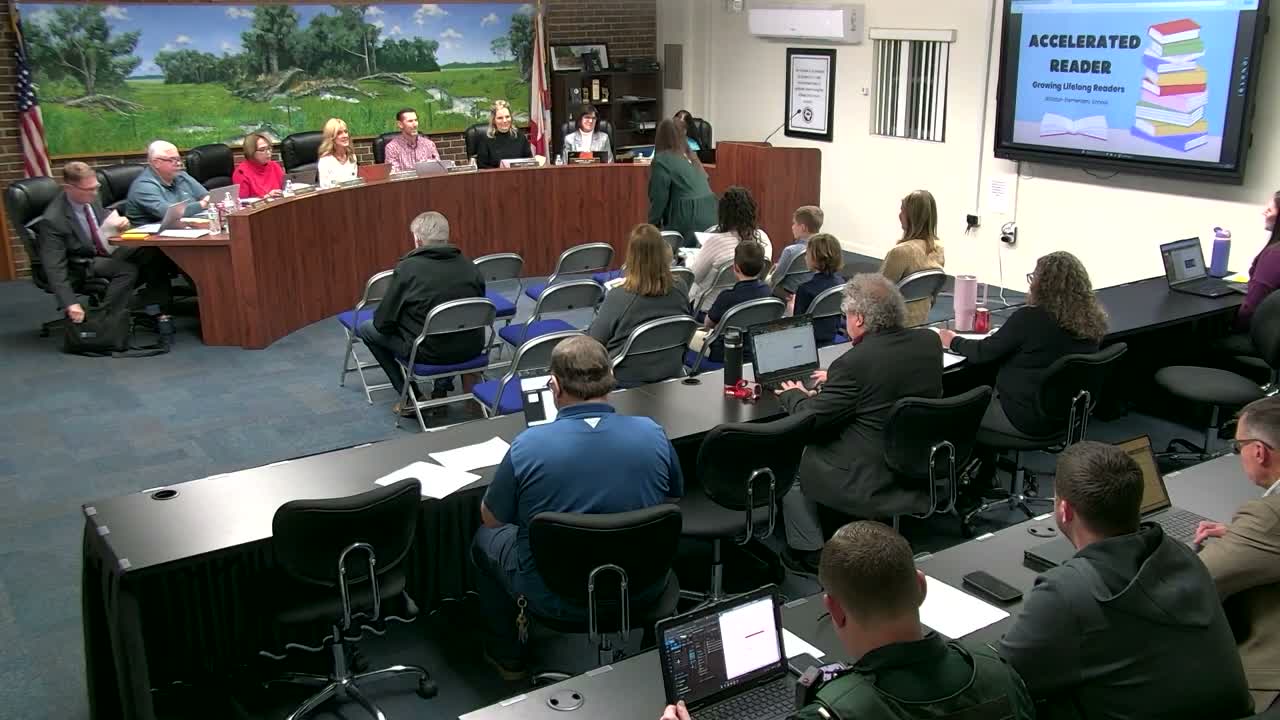
Williston Elementary staff and students told the Levy County School Board that the school has restored the Accelerated Reader (AR) program and is using it to build reading stamina and enthusiasm rather than tying AR to grades.
A school presenter described how the program was reintroduced this year and emphasized that it is intended to develop ‘‘a love of reading’’ rather than be used as a graded requirement. The presenter said students select books that match their interests and reading level and work toward weekly goals to build fluency and confidence.
Students gave onstage testimony about the program. One student said AR ‘‘makes me feel proud of myself when I reach my goals.’’ Third-grader Gabriel Nagle introduced himself and said he was ‘‘super excited’’ about the program.
Staff described an AR store of donated prizes, funded largely by the Parent Teacher Organization and local donors, where students may spend points earned from passing AR quizzes. Staff and board members said the community supplied items ranging from small prizes to larger items and that the school organized the store to reward motivation rather than grades.
During questions, staff clarified funding. They said the district purchased the program through internal principal funds this year and that program costs generally run ‘‘roughly $3,600’’ and can range from about $3,000 to $5,000 depending on student numbers and optional features. Staff said they opted not to buy the online reader option because of concerns about access and supervision.
Board members voiced broad support, with several urging other schools in the district to consider the program. The students and teacher posed for a photograph onstage before leaving the meeting.
The presentation did not propose a policy action; it was an informational item and concluded with board praise and applause.