
Teacher asks board for pay and class-size fixes as board warns of tight finances
Get AI-powered insights, summaries, and transcripts
Subscribe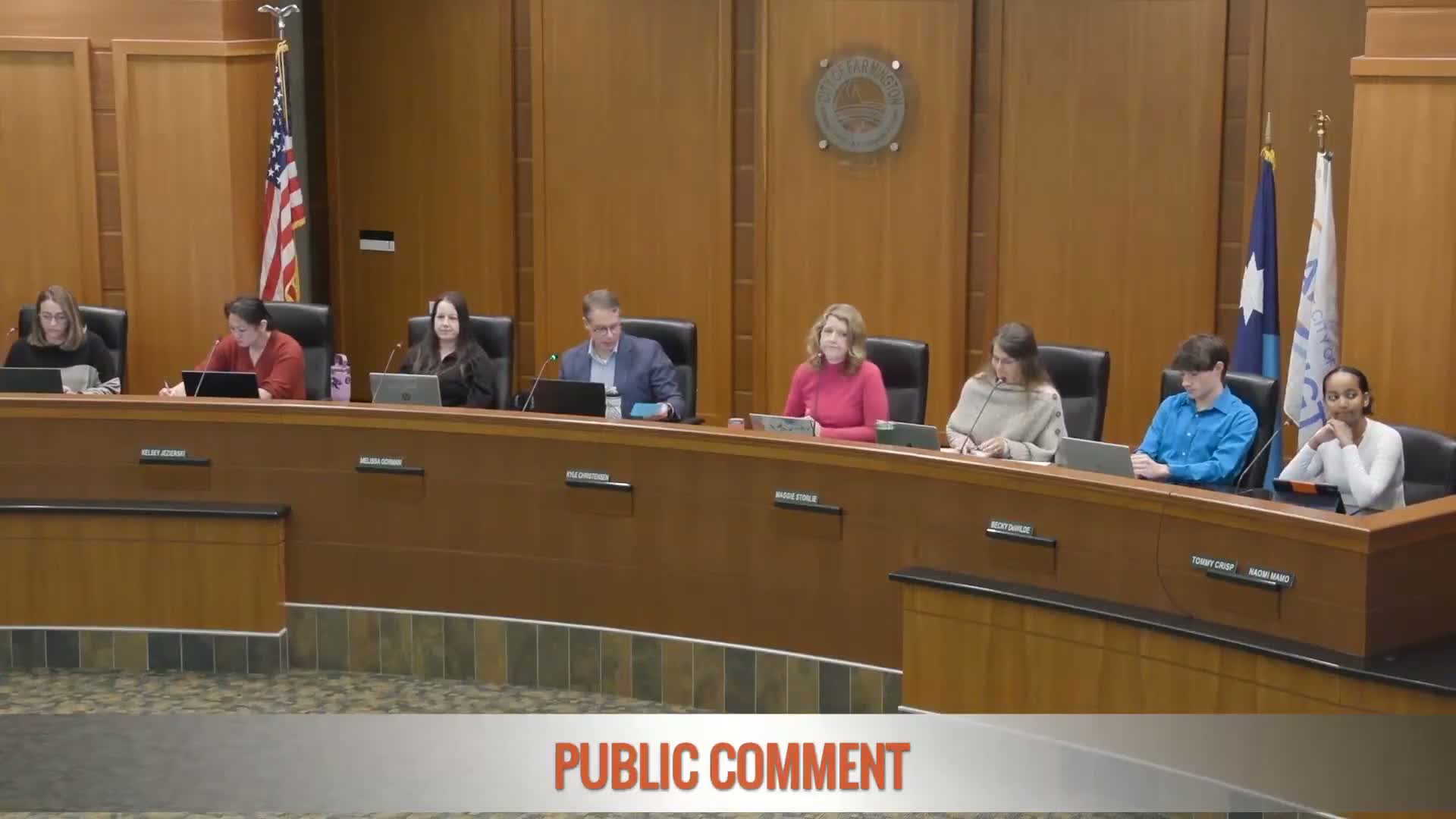
Summary
A Farmington teacher urged the school board to approve inflation adjustments and class-size language to retain staff; the board said the district faces structural funding limits, noting a 7.91% compensation offer and enrollment-driven revenue declines that constrain further raises.
Kelsey O'Dell, a teacher with 10 years in the Farmington Public School District, told the school board during public comment that teachers are asking for modest, targeted increases to cover inflation and maintain manageable class sizes.
"We are not asking for anything ridiculous," O'Dell said. "We're looking for adjustments for inflation, for cost of living, things that allow us to remain in the profession." She also urged the board to resolve outstanding negotiations, saying "it has been 195 days and we could easily get this done tonight."
The plea came as board members and the chair framed the district's fiscal constraints. Chair Kyle Christiansen summarized the district's offer in ongoing contract talks, saying the current district proposal increases teacher compensation by 7.91% while publicly reported union demands cited about 9.6% — a gap the chair said represents roughly $1 million beyond the district's budgeted capacity.
Christiansen described the broader funding context: state general-education funding has grown at an average of about 2.4% annually since 2018 while inflation averaged roughly 3.5% over the same span, and teacher compensation in ISD 192 has increased about 4.4% annually. "Every dollar committed beyond the district's offer will directly reduce resources available for upcoming negotiations with nurses, paraprofessionals, administrative assistants, and others," he said, warning that unsustainable increases could force layoffs or cuts to classroom supports.
The board did not take a formal vote related to pay during the meeting; it moved later in the agenda to closed session to discuss labor negotiations. The chair emphasized the district's limited authority to alter state funding and urged engagement with the legislature for broader change.
What happens next: the board entered closed session to continue labor negotiations and the midyear superintendent evaluation; any formal changes to compensation would be recorded in future public actions or contract ratifications.