Appeals court hears confrontation-clause challenge to gunshot-residue evidence in Robert Holland case
Loading...
Summary
At an appellate argument, defense counsel asked judges to vacate Robert Holland's murder conviction, arguing Agent Anderson improperly relayed another agent's gunshot-residue analysis in violation of the Sixth Amendment confrontation clause; the state said the issue was waived and pointed to GPS, video and the recovered firearm as dispositive evidence.
An appellate panel on Jan. 15 heard argument over whether testimony about a gunshot-residue (GSR) analysis violated the Sixth Amendment confrontation clause in the conviction of Robert Holland for a Dec. 8, 2021, murder.
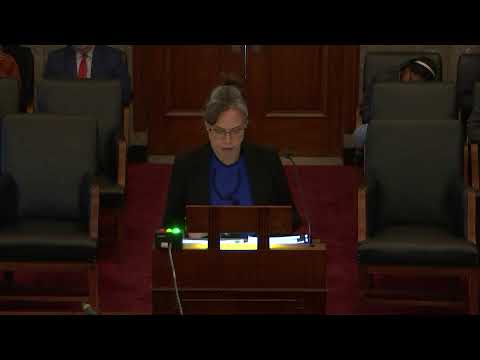
Defense attorney Mitch Raines told the court he represented Holland and limited oral argument to the confrontation-clause claim. Raines said Agent Anderson of the Tennessee Bureau of Investigation testified not from her own independent testing but by reviewing and "checking the math" from the work of another agent, Agent Davis, and that trial counsel objected when it appeared Anderson was testifying to someone else's analysis. "The objection began with trial counsel saying that it was informed that the state was going to have a pinch hitter, but the counsel was not informed that agent Anderson was strictly going to be testifying from the notes made by somebody else," Raines said in argument.
Raines argued that under Hutchison's two-pronged test (testimonial and hearsay), the GSR analysis was testimonial because its primary purpose was for litigation and it identified Holland specifically. He said the GSR finding nd Anderson's testimony about it—onstituted one of the strongest pieces of evidence tying Holland to the killing in an otherwise circumstantial case and that, even if preserved as a plain-error claim, the admission could have affected the jury's determination.
State counsel Liz Evan, speaking "on behalf of the State," urged the court to find the contention waived as a discovery-preservation issue. Evan said Agent Anderson testified about what Agent Davis had done, that defense counsel waited roughly 21 pages of testimony before seeking to show Davis's bench notes, and that the bench notes were excluded. Evan argued the trial record shows other evidence placing Holland at the scene: GPS data, video footage of flight paths, and a firearm recovered along Holland's flight path. "It was the gravy, not the meat and potatoes," Evan said of the GSR evidence, urging the court to apply the State v. Vance substantial-justice framework on plain-error review.
Raines responded in rebuttal that the objection was timely and that, in a circumstantial case with no eyewitness identifying the shooter, the GSR evidence s the only test linking residue to Holland—ould have swayed the jury. He asked the court to "grant relief to Mr. Holland, vacate his conviction, and remand this for a new trial."
The panel did not rule from the bench during the recorded argument; the court took a roughly 15-minute recess at the conclusion of oral argument.
What happens next: The judges will deliberate and issue a written opinion resolving whether the admission of Agent Anderson's testimony implicated the confrontation clause and whether any error requires reversal or a new trial. The record shows competing views on whether the issue was contemporaneously preserved and whether other evidence would render the error harmless.