Get Full Government Meeting Transcripts, Videos, & Alerts Forever!
Get email alerts on the Second Amendment topic
No spam. Unsubscribe anytime.
Tennessee appellate panel hears challenge to ban on gun possession by convicted drug felons
Summary
In oral arguments, defense counsel said Tennessee's law permanently disarming convicted drug felons violates the Second Amendment under Bruen and Heller; the state urged deference, citing historical traditions and statutory remedies including expungement and the Restoration of Rights Act.
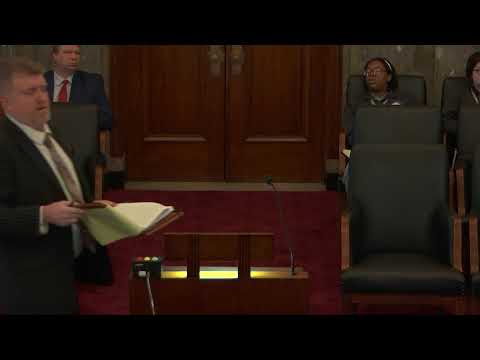
A Tennessee appellate panel heard arguments over whether a statute that bars people convicted of drug felonies from possessing firearms violates the Second Amendment.
Defense counsel argued the statute cannot survive the test set by New York State Rifle & Pistol Association v. Bruen and said the court must ask whether the government can point to historical analogues permitting permanent disarmament of people like the defendant. “The law as it exists ... just says if you've ever been convicted of a drug felony, you're not allowed to keep or bear arms,” defense counsel said, urging the court to reverse and dismiss the indictment.
The defense emphasized three legal problems with Tennessee's enactment: that it flips the usual burden of proof, that it denies defendants a jury determination of dangerousness, and that it effectively adds exceptions into the statute the legislature did not write. Counsel argued historical materials do not show a tradition of permanently disarming felons at the time of the founding and cited authorities in support of that position.
Alan Groves, arguing for the state, countered that courts have long treated felon‑in‑possession laws as presumptively lawful and that Tennessee's statute fits within a historical practice of disarming groups the legislature deemed dangerous. “The Supreme Court has repeatedly said that felon in possession laws are presumptively lawful,” Groves told the panel, and he urged the court to reject a facial challenge.
Groves also described a split among lower courts about whether a categorical disarmament statute is compatible with Bruen or whether an individualized opportunity to contest dangerousness is required (the approach adopted in some Sixth Circuit rulings). He pointed to Tennessee statutes and practice dating back to the 1970s and noted procedural mechanisms that can be used to restore rights or bring as‑applied challenges, including expungement and the state's Restoration of Rights Act. As Groves put it, convicted individuals may be able to “petition for the restoration of their rights.”
Justices questioned both sides about the trial record, the defendant's testimony and prior convictions (identified in argument as convictions involving cocaine, possession with intent to sell methamphetamine, and conspiracy to sell cocaine), and whether the record contained proof of rehabilitation. The state argued the record contained limited evidence of rehabilitation and said such gaps supported affirmance.
Neither side identified a binding precedent that has yet invalidated a drug‑felon possession statute on its face. The panel concluded oral argument without issuing a ruling and called the next case.
The court session moved on to the next matter on the calendar, leaving the appeal pending before the court.