Get Full Government Meeting Transcripts, Videos, & Alerts Forever!
Get email alerts on the Post Conviction Text Messages topic
No spam. Unsubscribe anytime.
Appellate court hears dispute over 300 pages of text messages in Owens post-conviction appeal
Summary
In a post-conviction appeal, counsel for the petitioner argued that Exhibit 13—a roughly 300-page set of text messages—shows key witnesses lied and that trial counsel failed to act, while the state said the messages do not entitle the petitioner to relief and that independent images support the conviction.
An appellate court heard oral argument about whether voluminous text messages should prompt post-conviction relief in the case of petitioner Owens.
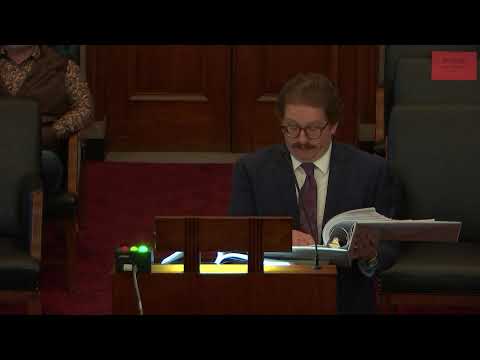
Appellant’s counsel told the court the central question is what attorneys must do when they learn of potentially favorable or exculpatory information after conviction. Counsel said Exhibit 13 comprises roughly 300 pages of printed text messages that, he argued, show two witnesses—including the trial’s critical witness—lied at trial and that trial counsel “did nothing about it.” Counsel urged the court to resolve a factual conflict in the post-conviction record about whether the prosecutor turned those messages over to trial counsel or whether the messages were never received by counsel.
The appellant’s presentation stressed both the volume and specific content of the printout. Counsel said the messages include repeated communications between the victim’s biological mother and the stepmother (the sender appears as “Angela”), and that some messages occurred while the child witness was in or near the courthouse. Counsel identified sample Bates-page ranges in Exhibit 13 he said the court should inspect, including pages he cited during argument (page 30; pages 62; 135; 160–176; 191; 196–201; 230–236; 314). He told the court the messages run from about November 2017 through July 2018 while the trial was held in March 2018 and that the binder-style printout appears to be an iMessage-style extraction.
The state, represented at argument by Lacey Wilbur, confined its reply to the text messages and urged the court to affirm the post-conviction court’s judgment. Wilbur said the post-conviction order authoritatively recites the hearing testimony and that there is no credibility dispute warranting remand for additional factual findings. She told the court that most messages are innocuous—about laundry, shoes, or holiday plans—and that the record contains only one direct text from a parent’s phone to the victim that reads, in counsel’s recital, “mommy, I’m nervous” and a parent’s response “just tell the truth.” The state argued those excerpts do not change the outcome and emphasized that the trial record independently includes images described in the record that the state says corroborate the charged conduct.
At the post-conviction hearing, trial counsel (referred to in the transcript as Mister Meeks) testified that he could not recall receiving the messages; the prosecutor at that hearing (identified in the record as Kimberly Lund) testified she believed she had given them to trial counsel after sentencing. Appellant’s counsel framed the dispute as two possible legal failures: if trial counsel never received the messages, the issue would be a Brady-type nondisclosure by the prosecution; if trial counsel did receive them, counsel argued that failure to investigate or to move for appropriate relief could amount to ineffective assistance of counsel. The court and counsel also discussed authorities governing credibility findings, identifying a Tennessee Supreme Court remand order the state counsel acknowledged in her remarks.
Appellant’s counsel argued the messages have substantial impeachment value because the victim was the only witness who directly connected the charged act to the defendant; counsel said the messages show the victim was communicating with her mother and stepmother in ways that contradict her trial testimony and that this impeachment material could have been presented or investigated in multiple ways (contacting witnesses, subpoenaing phone records, or further factual inquiry).
Wilbur told the court the post-conviction record did not prove the messages were admissible or that the messages, even if considered, would have changed the outcome. She asked the court to affirm, stating, “These text messages do not entitle the petitioner to relief in post conviction.”
The court took the arguments under advisement, thanked counsel for their briefs and oral presentations, and said it would issue a decision as soon as possible.
What happens next: The appellate court will issue a written decision; counsel on both sides asked for the court to either resolve the factual conflict in the record or remand for clearer credibility findings by the post-conviction court if the court deems that necessary.