
Appellate panel hears arguments over whether self‑defense statute and late filing bar Drennan’s convictions
Get AI-powered insights, summaries, and transcripts
Subscribe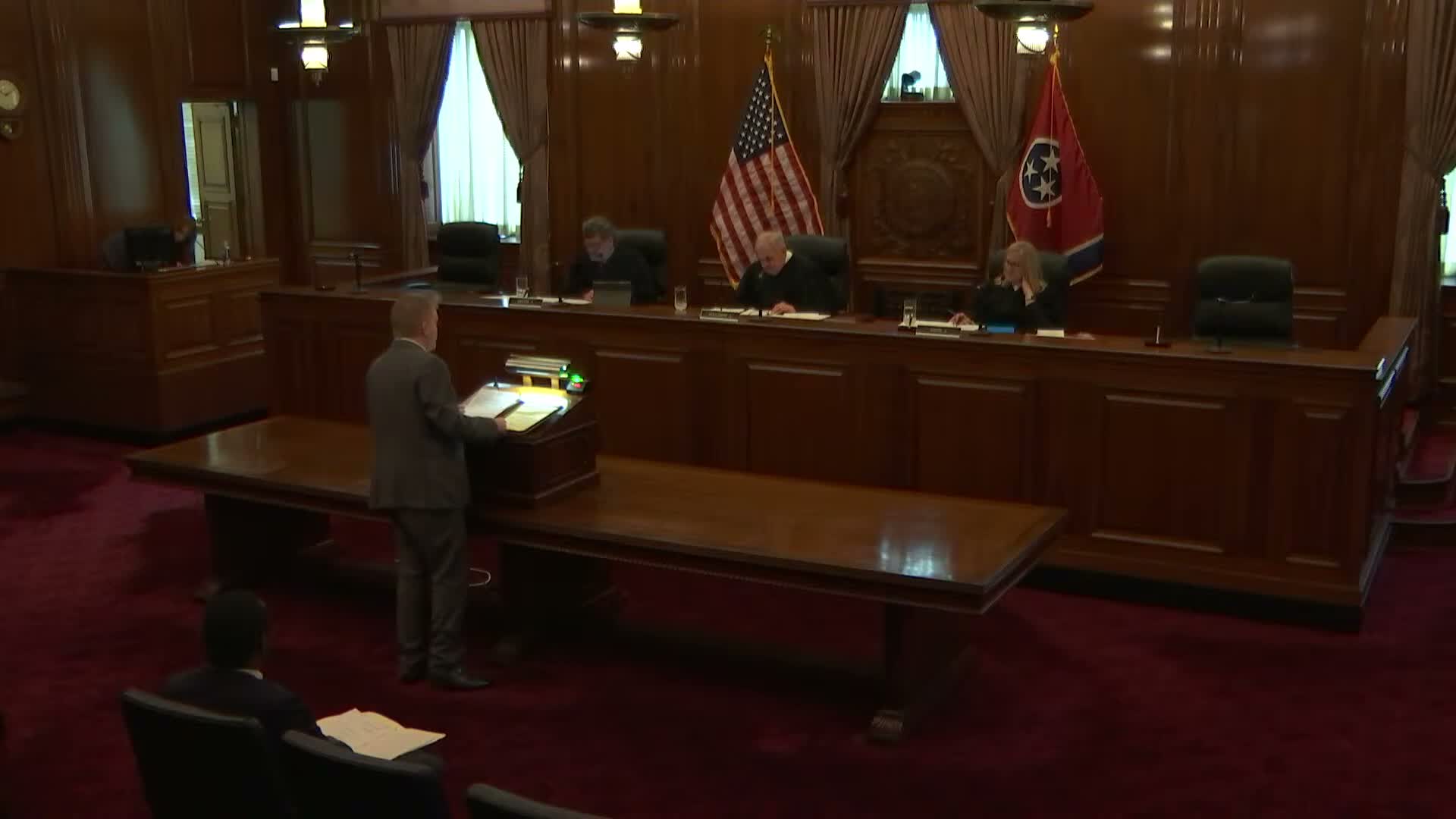
Summary
An appellate panel considered whether a trial judge should have instructed the jury under a firearms self‑defense statute and whether the defendant’s appeal should be dismissed as untimely; the court took the arguments under advisement after extended questioning of counsel.
An appellate panel heard oral argument in the appeal of Mr. Drennan, whose lawyer argued the trial court erred by failing to instruct the jury under a statutory firearms self‑defense provision and that omission prejudiced the defendant.
Defense counsel told the court that "the jury has found that he ... was justified in shooting and even killing the assailant," and argued the trial judge committed plain error by omitting an instruction tied to the statute the defense cited, which counsel quoted as saying "a person shall not be charged with or convicted of a violation of this part if the person possessed, displayed, or employed a handgun in justifiable self defense." The defense framed the omission as neither a tactical waiver nor harmless: counsel said prior trial attorneys neglected to request the instruction and that the record shows no deliberate, tactical forfeiture of the issue.
The State, represented by Will Lundy, asked the court to dismiss the appeal as untimely. Lundy said the trial court clerk entered judgment on 09/22/2022 and that the defendant's posttrial motions and notice of appeal were substantially delayed — "We're talking about a year, 9 months, and 8 days" in the prosecutor’s calculation — arguing that the record lacks an explanation that would justify tolling filing deadlines or invoking the interest‑of‑justice exception.
The panel pressed both sides about statutory text and practical consequences. Several justices questioned whether the statute's phrasing (repeated in argument as requiring action "during the commission of a crime") limits the defense to possession tied temporally to the crime, pointing out that the record indicates the defendant possessed the firearm both before and after the incident. Defense counsel countered that the statute should be read broadly, invoking State v. Tracy Clark and the rule of lenity to argue that the statute was intended to encourage rescue actions and to furnish immunity where a firearm was used in justifiable defense.
The State further argued the appeal should be dismissed or, alternatively, affirmed because the plain‑error standard requires an "unequivocal rule of law" and no controlling appellate authority requires the additional statutory instruction once a general self‑defense charge has been given. The prosecutor also summarized the State's tampering evidence, noting recorded calls, the defendant's delayed surrender, and testimony that the firearm was concealed and later returned to another person.
Counsel for both sides debated the procedural record as well: the court asked whether there is documentary evidence (for example, affidavits) explaining prior counsel's failures and whether the trial court's handling of the motion for new trial tolled appellate deadlines. Defense counsel cited State v. Martin (Tennessee Supreme Court, 1997) and urged the court to exercise its equitable authority to consider the appeal on the merits; the State said post‑conviction deadlines and jurisdictional limits weigh against such relief.
After extended questioning and rebuttal, the panel thanked counsel, took the case under advisement and recessed for a short break. The court did not announce a decision from the bench.
The next procedural development will be the court’s written disposition, which may address (a) whether the untimeliness of filings bars review or whether an exception applies, and (b) if the appeal proceeds on the merits, whether the omission of the specific statutory instruction amounted to plain error affecting substantial rights.