Fall River council updates borrowing rules after months-long debate on voter oversight
Loading...
Summary
Councilors debated whether to update decades-old dollar thresholds that trigger voter approval for bond authorizations and instead adopted a 70% statutory-debt-limit safeguard; council advanced the loan-order ordinance through second reading and ordained the amended language after heated floor debate.
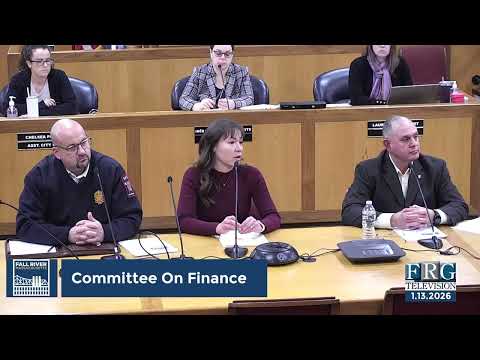
Fall River city councilors on Jan. 13 moved to modernize how large borrowing authorizations trigger voter oversight, passing second reading and moving an amended loan-order ordinance toward final ordination after hours of floor debate.
The debate centered on two approaches: raising the existing fixed-dollar thresholds (which were last adjusted in prior decades) or adopting a percentage-based trigger tied to the city's statutory debt limit. Councilor Canuel proposed updating the dollar thresholds (for example, increasing the single-authority trigger), arguing that inflation has made prior numbers out of date and that modest rises would allow mid-sized capital projects to move forward without immediate voter questions. Other councilors supported a percentage approach to preserve a long-lasting safeguard: an ordinance presented during the meeting would require additional voter approval whenever total authorized borrowing exceeds 70% of the city's statutory debt limit.
"Using a percentage amount makes more sense," Council Vice President Dion said, arguing that dollar thresholds will again become outdated as construction prices rise. Councilor Kadeem and others cautioned that any change should preserve meaningful voter oversight for very large borrowings while allowing routine capital work to proceed efficiently.
Financial staff told the chamber that the city does not hold bond cash in hand for authorized projects; bonds are typically issued when projects are expended, and short-term notes may be used during design phases. A question from school department staff indicated raising thresholds could affect upcoming capital needs; staff said a proposed $30 million ceiling would not necessarily block planned school projects but could require additional procedural steps depending on timing and funding sources.
After discussion and procedural votes, the council approved the ordinance's second reading and enrollment and then voted to pass the loan-order ordinance as amended; Councilor in seat 3 recorded a 'no' on the final ordination vote. Separately, the council adopted a resolution directing the Ordinance Committee to draft language that would require voter approval for total authorized borrowing exceeding 70% of the city's statutory debt limit, a percentage-based safeguard proponents said will avoid repeated updates.
What happens next: The ordinance will be finalized in accordance with council rules and the Ordinance Committee will draft precise 70%-threshold language for future consideration and implementation.