Sumner County ad hoc committee urges coordinator role to tackle volunteer fire staffing shortfalls
Summary
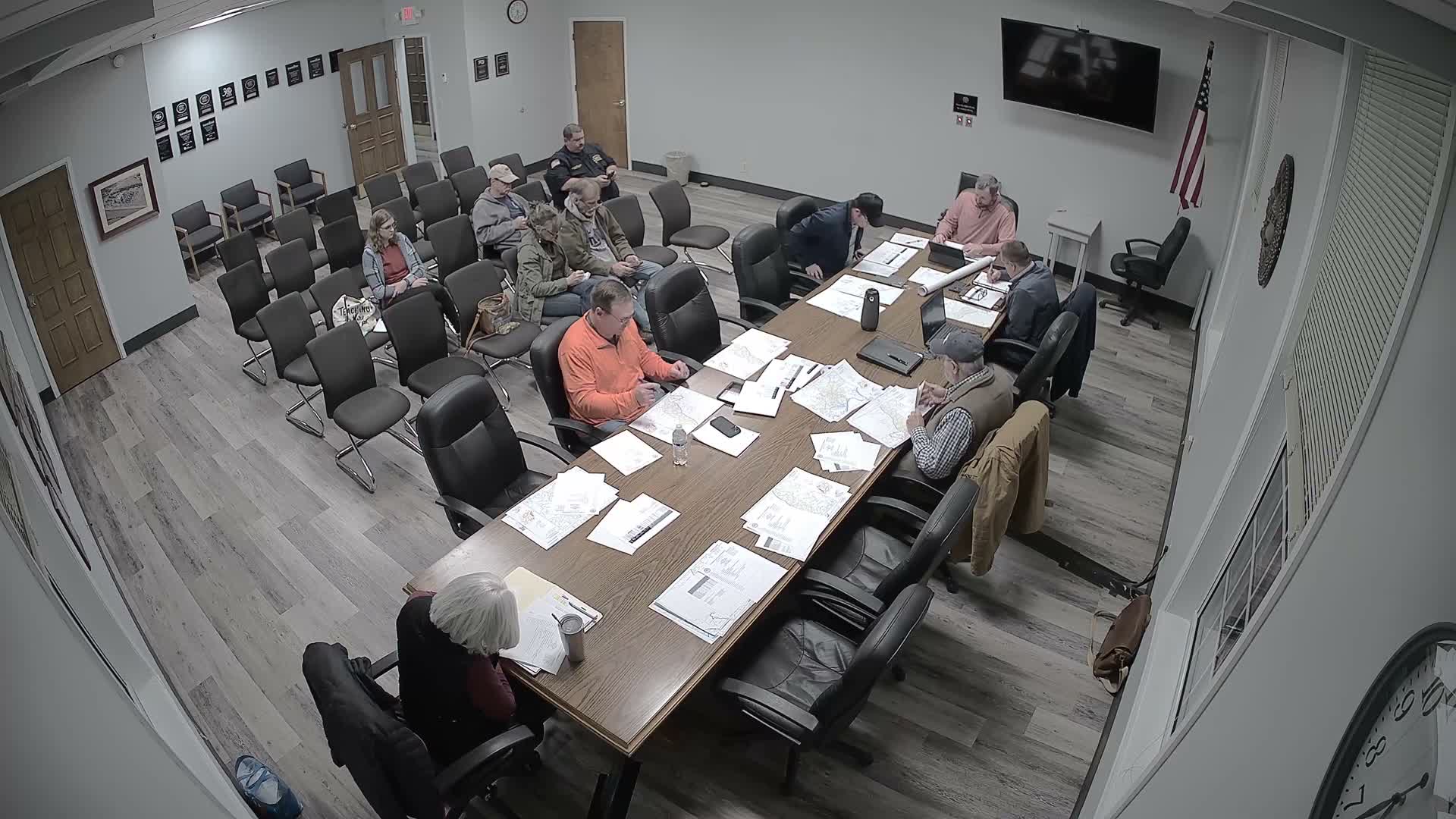
An ad hoc Sumner County committee agreed to recommend appointing a county fire coordinator/administrator and to invite CTAS for legal and funding guidance after concluding volunteer recruitment alone is unlikely to meet projected staffing needs; departments will supply roster and response data ahead of the next meeting.
Speaker 1, an ad hoc committee member leading the discussion, said the committee’s top concern is volunteer staffing shortfalls and the lack of a single verified dataset for planning. "We either have to really get to volunteering to 2x and 3x," Speaker 1 said, summarizing calculations that showed many stations would need to double or triple their active volunteers to meet coverage targets. The comments opened a multi-hour discussion of staffing formulas, funding models and governance options.
The committee considered two analytic approaches distributed at the meeting — a simple per-household calculation and a demand-index method that weights EMS calls more heavily than structure fires — and concluded both point to a substantial gap between current rosters and the county’s projected needs. The packet used population, house counts and 2024 call volumes as inputs; Speaker 1 said the materials indicate a "minimum active roster" target near 50 volunteers per station in the formula, a level many departments would need to increase two- to threefold.
Why it matters: The committee framed the problem as a combination of rising county population, uneven coverage among volunteer departments and inconsistent data sources. Speakers noted differences between controller’s office figures, census counts and local GIS exports that produce materially different staffing and ISO (Insurance Services Office) assessments. That inconsistency, members said, undermines grant competitiveness and complicates any move to contracts or a county-level service.
Funding and governance options were debated at length. Members described three primary approaches: continue with nonprofit donations and small pay-per-call stipends; contract with nonprofit departments to attach oversight and performance conditions; or create a county-run fire service. Several speakers cited Robertson and Rutherford counties as precedents: Robertson used a SAFER grant and county donations to support pay-per-call; Rutherford began with a county fire coordinator and evolved toward a county service over years. "The best thing they could tell us was they started with a coordinator," Speaker 2 said, describing Rutherford’s experience.
The committee focused on an incremental recommendation: appoint a Sumner County fire coordinator/administrator (initially unpaid or part-time or funded via nonprofit donation) to centralize data collection, coordinate training and improve grant and procurement efficiency. Proponents said a coordinator could bundle grant applications (improving ranking on call-line-based lists), standardize roster and response reporting for ISO reviews, and pursue economies of scale on consumables and capital procurement.
On next steps, the committee voted by voice to include the coordinator position in its recommendation and asked staff to invite Mark Alley of the County Technical Assistance Service (CTAS) to the next meeting to clarify legal options and funding structures under Tennessee code. Members asked each fire department to provide current roster numbers and realistic estimates of how many volunteers they can reliably put on scene and at what times of day. The committee also agreed to invite local fire chiefs to participate in the subsequent discussion.
The motion to incorporate a coordinator into the committee's recommendation was adopted by voice vote; the transcript does not record a roll-call tally. The committee adjourned after instructing staff to gather the requested data and secure CTAS participation for the next meeting.
Ending: The ad hoc group left its central question framed as a phased choice: preserve and shore up volunteer departments with limited funding mechanisms such as pay-per-call and contracts, or build toward a county-level coordinating structure that could, over time, evolve into more centralized services if local conditions and political will allow. The committee will reconvene with updated rosters, chiefs in attendance and CTAS guidance.