
Baker council adopts 1% Main Street sales tax after public hearing; member abstains
Get AI-powered insights, summaries, and transcripts
Subscribe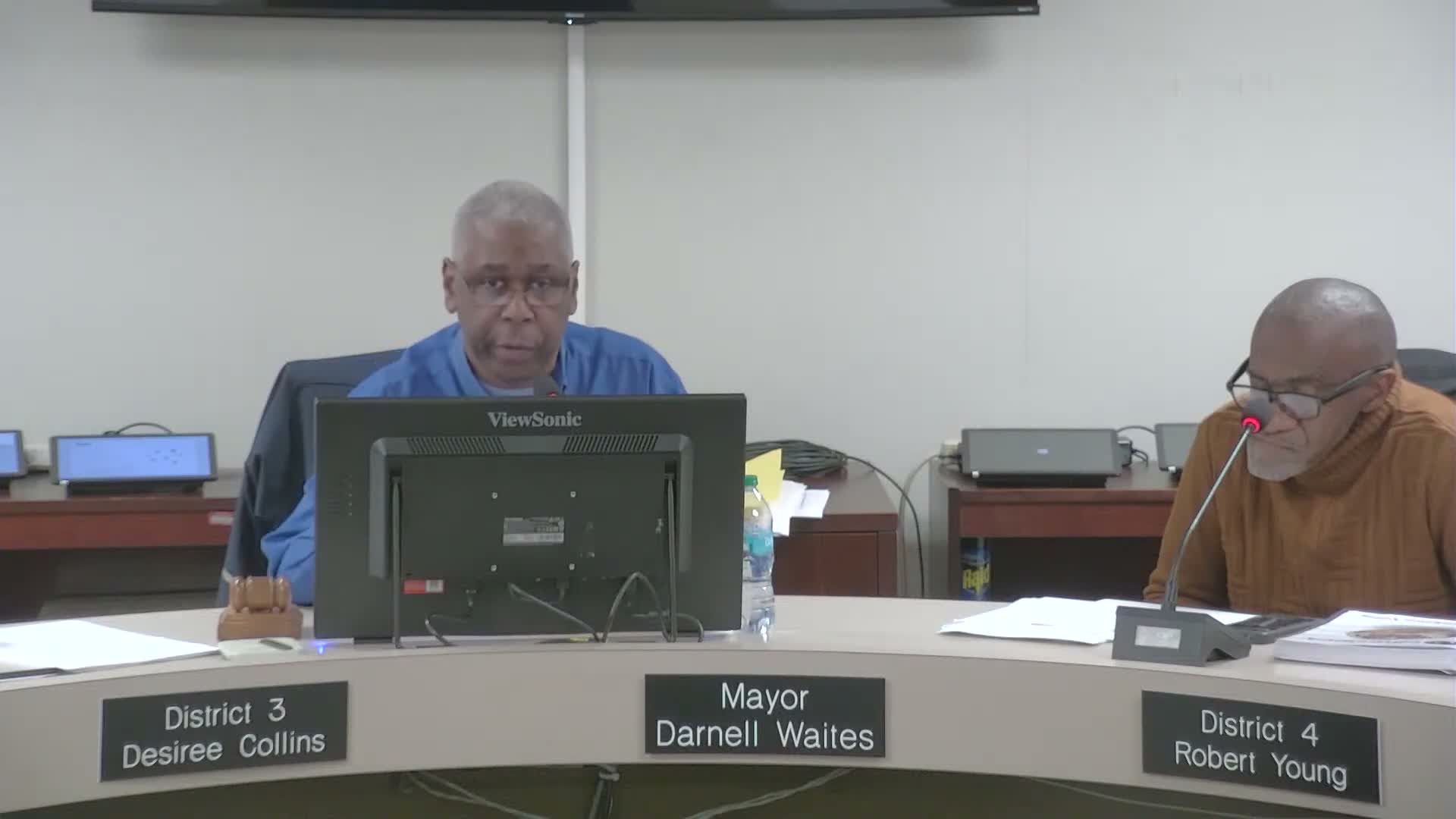
Summary
After a public hearing and community comments emphasizing transparency and clear plans, the Baker City Council adopted a 1% sales-and-use tax for the Baker Main Street Economic Development District. Council member Doctor Vincent was allowed to abstain because of his ties to a related district.
The Baker City Council voted to adopt an ordinance imposing a 1% sales-and-use tax within the Baker Main Street Economic Development District after a public hearing that included a presentation by Dante Bewell and more than a dozen public comments.
Dante Bewell, who described the EDD as "Main Street is Baker's front door," told the council the tax revenue would be dedicated to infrastructure upgrades, streetscape improvements, lighting, sidewalks, signage and business incentives along the Main Street corridor. "This is solely 1% added on to your receipt when you shop at a business along Main Street," he said, and noted the tool was created for Baker by Senate Bill 475 in 2022.
The council heard questions from residents about the EDD boundaries and transparency. One resident asked for clearer boundaries and whether the Subway location and Magnolia were inside the district; Bewell and staff clarified the district runs from Levy Lane at the Shell station north to the bridge into Zachary and said the district must produce an annual budget and disclosures. Denise Stevenson, who said she had attended EDD meetings, urged visible results and public reporting: "If you don't start seeing results . . . we're not doing our job," she said.
Several speakers urged the council to require a plan with measurable goals, timelines and budgets before approving the tax. An attendee who described herself as experienced in small-business economic development said the board had "no plan, no timeline, no budget, and no proof of result" and asked the council to table the measure until a full plan was presented.
Doctor Vincent asked to be exempted from the vote because he said he is president of the Plank Road District and that constituents had contacted him about the tax being passed to consumers. "I don't want to be double dipping or voting for taxes on both sides of the city," he said. The council moved and approved a motion to allow Vincent to abstain.
Council member Murphy moved to adopt the ordinance to levy the 1% sales-and-use tax in the Main Street EDD; the motion was seconded by Young. The council conducted a roll-call vote by district; several districts voted yes and the motion carried. The council did not provide a full roll-call by individual councilmember name in the public record read during the meeting, but recorded that the motion carried.
The ordinance as described at the hearing will limit the tax to the EDD boundaries and apply at point of sale rather than as a property tax. Bewell said funds will be reinvested into projects within the district and that the EDD board had voted unanimously to approve the plan before forwarding it to the council.
Next steps: the council adopted the ordinance at the meeting and staff indicated more detailed budget and implementation information would be available through the EDD board and the city’s published materials and annual budget disclosures. Public commenters and several councilmembers asked that the board provide clear timelines, budgets and regular reports so residents can track how revenue is spent.