
City council adopts resolution limiting lane removals for Classen Boulevard bike project after heated public debate
Get AI-powered insights, summaries, and transcripts
Subscribe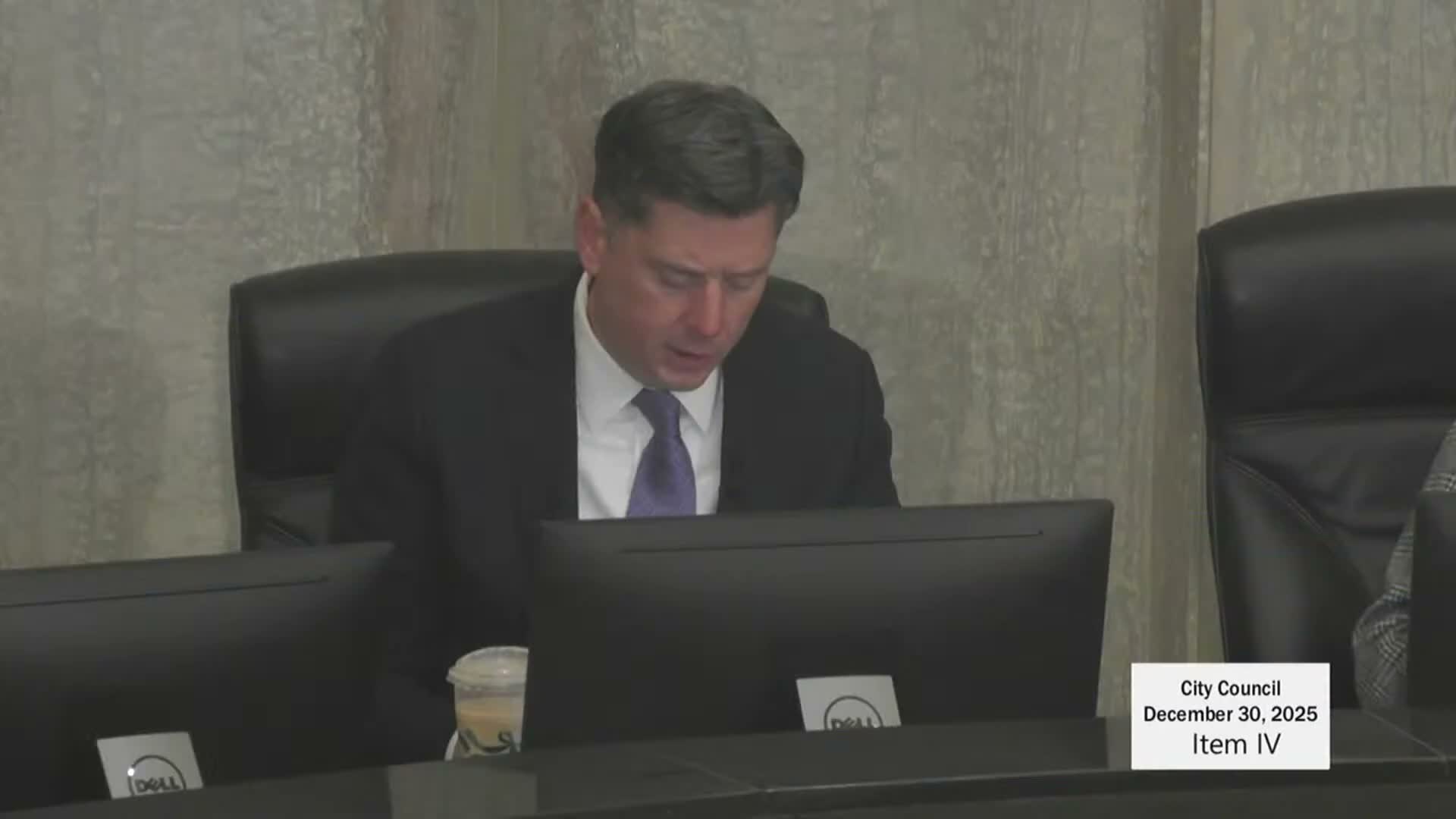
Summary
The Oklahoma City Council voted 7–2 to adopt a resolution limiting removal of traffic lanes for the Classen Boulevard bike-lane project and to pursue alternative designs; proponents and opponents offered sharply divergent safety and traffic claims during more than an hour of public comment.
Oklahoma City — The City Council on Tuesday voted 7–2 to adopt a resolution that restricts removing traffic lanes for the planned Classen Boulevard bicycle improvements and directs staff to pursue alternative designs and reporting.
The resolution, authored by council members Stonecipher, Carter, Stone and Henkel, grew out of months of debate over whether to convert travel lanes along Classen between Northwest 10th Street and Sheridan to protected bike facilities. City staff described the project as a partnership with the Oklahoma Department of Transportation and the Association of Central Oklahoma Governments and said some elements of the work — sidewalks and crosswalks — would proceed whether lane conversions occur.
“Safety for residents who walk and bicycle in our community is the highest priority goal of this plan,” Councilman Stonecipher said in remarks introducing the item. Planning Director Jeff Butler told the council that the segment’s traffic counts fall well below thresholds used by ACOG for four-lane arterials and that preliminary data supported a reconfiguration in parts of the corridor.
Public comment filled council chambers. Supporters of completing the bike-lane connection argued the gap is itself dangerous and that the project aligns with the city’s adopted Bikewalk OKC plan. "Leaving this gap in place is not neutral. It's dangerous," said Ryan Fogel, a nearby resident who said the final segment would complete a network and reduce crash risk.
Opponents, including business leaders and some neighborhood speakers, warned the lane conversion would increase congestion and cited crashes where lanes had been altered. The Greater Oklahoma City Chamber of Commerce urged the council not to remove lanes from major thoroughfares and warned of traffic impacts.
Councilmembers weighed those arguments and data from the city’s planning staff. Some members said the corridor’s lower traffic counts north and south of the central project area make a four-lane configuration appropriate after a redesign; others pressed for additional community engagement before committing to either course.
Mayor David Mayer Holt and other members pressed for balancing bicycle connectivity with traffic operations. The resolution includes direction for the city manager to report back within 60 days on feasibility, design alternatives and an implementation timeline for proposed bicycle crossings and other mitigations the council asked staff to study.
The vote followed a failed motion to defer the item for two weeks. After that motion failed, the council considered and approved the resolution 7–2. Council discussion and public testimony made clear the dispute centers on differing views of whether lane reductions increase or reduce risk and on whether more study and community meetings should be required before final design.
Next steps: staff will coordinate with ACOG, ODOT and neighborhood stakeholders on design refinements and will return a feasibility and timeline report as directed by the resolution.