Get Full Government Meeting Transcripts, Videos, & Alerts Forever!
Get email alerts on the Bond Finance topic
No spam. Unsubscribe anytime.
McAllen ISD outlines $335 million bond plan, says tax rate would not rise
Summary
McAllen ISD officials and bond consultants presented a proposed $335,000,000 bond package organized into five project categories, said the district can fund it without increasing the current 13¢ debt tax rate by aligning new borrowing with retiring debt, and outlined a timeline that would put a May 2 bond election on the calendar if the board calls it on Feb. 10.
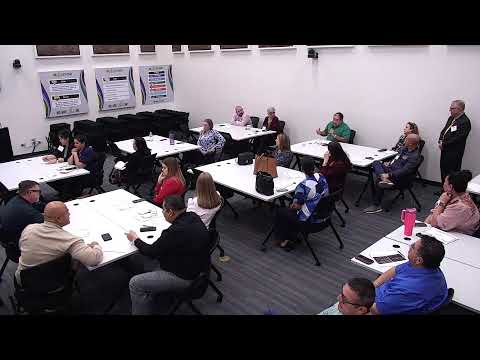
McAllen Independent School District officials and outside consultants laid out a proposed $335,000,000 bond program on Jan. 13 and answered community questions about costs, timing and voter outreach.
"No tax rate increase," said Dr. Robbie McGowan, the district’s bond consultant, summarizing the program’s financing approach and explaining that the district intends to use the existing 13¢ debt portion of the tax rate as older debt retires. McGowan said consultants estimate the district can finance roughly $335 million without raising the tax rate and stressed that the list of projects must be prioritized because the total will not cover every need.
The presentation grouped projects into five categories: modernizations and alignment; wellness, safety and security; learning beyond the classroom; district equity and growth; and capital and deferred maintenance. Pflueger Architects planner Josh Sawyer gave itemized, "all-in" cost estimates, including a $39,490,000 allocation for career and technical education (CTE) expansions, $33,050,000 for cafeteria modernizations at four campuses, $26,920,000 for elementary gymnasiums and pavilion enclosures, $35,000,000 for fine-arts space across the three high schools, $38,730,000 for classroom additions at three campuses, $45,150,000 for high-school campus refreshes, and a districtwide Priority‑1 package (HVAC, roofing, paving, LED lighting, security and controls) estimated at about $103,190,000. The presenters said those figures are rounded to the nearest $10,000 and represent total project costs, including design, furniture, technology and contingencies.
McGowan explained the likely sequence: the presentation will be repeated for the full board on Jan. 13; the board will review a draft bond resolution later in January; the board would be asked to "call" the election on Feb. 10 (McGowan said the law requires that call be filed by Feb. 13). If the board calls the election, outreach and community engagement are planned in March and April, early voting would begin in late April, and election day would be Saturday, May 2. McGowan urged committee members to attend the board presentation and to help with community education.
Community members pressed presenters on several points. One asked, "When you say you're not gonna have a tax rate increase, where are you gonna get the money?" District leaders answered that the plan relies on continuing to levy the existing debt rate (the 13¢) while retiring old debt and issuing new bonds in tranches rather than immediately borrowing the entire $335 million. The financial adviser present said bond amortizations are typically 30 years and that the district expects to issue the authorized amount over multiple years in smaller offerings to limit interest exposure and match borrowing to project timelines.
Several attendees urged clearer, concrete visuals to persuade skeptical voters. "The man in the corner over there in that little house . . . he's not gonna know about 13¢," one participant said, urging simpler messaging and professional outreach. Presenters agreed that the outreach campaign will include renderings and explanatory pamphlets but cautioned that visuals shown at the information stage are conceptual and not final designs.
Presenters clarified campaign rules: district employees and the district may provide factual information and educational materials about the bond, but they cannot use district resources or official work time to advocate for the election. Community members, board members and volunteers may campaign on their own.
On timing and construction sequencing, Pflueger staff said the full program would be implemented over multiple years (typical programs run three to five years for major build-out), with individual project schedules developed during the design phase. Presenters said multiple contracts and staggered bidding are common strategies to speed delivery and reduce reliance on a single contractor.
A number of attendees recounted a prior failed bond and urged an organized volunteer outreach effort this cycle. District leaders emphasized transparency and repeated community engagement and said materials and presentations will be posted on the district bond website and shared with principals for campus-level conversations.
The Facilities Forecast Advisory Committee meeting closed with a reminder that the presentation will be shown again at the next regular board meeting and a request for volunteers to help with public education if the board moves forward with a call for an election.