Get Full Government Meeting Transcripts, Videos, & Alerts Forever!
Get email alerts on the Annexation topic
No spam. Unsubscribe anytime.
Palatka and Putnam County begin talks on annexation, water/sewer surcharges and enclave service agreements
Summary
Officials discussed voluntary annexation, interlocal service boundary agreements and a 25% surcharge option for noncontiguous water/sewer service. Staff were asked to coordinate and consider grants and DRC exchanges to address enclaves such as Baileyville and Rolling Hills.
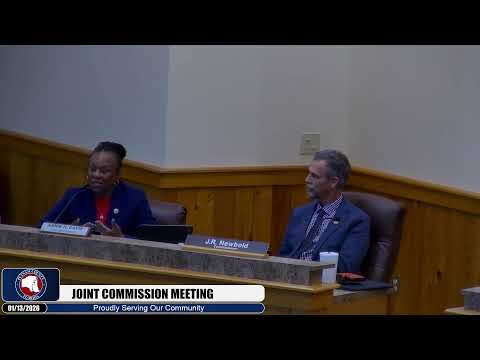
City and county officials used a Jan. 13 joint meeting to dive into longstanding municipal boundary issues—how Palatka’s patchwork annexations resulted in enclaves, who should provide water and sewer, and whether the city can attach a surcharge to noncontiguous service.
City Attorney Jane West explained the historical process of voluntary annexations under Florida law and presented a draft interlocal service boundary agreement with placeholders for annexation processes, pre-annexation commitments and options such as a 25% premium surcharge for noncontiguous parcels. "If it's a noncontiguous parcel, a premium surcharge of 25%... but they have to sign off on a pre-annexation agreement," West said.
Commissioners raised competing concerns. Some warned residents resist annexation because of perceived double taxation; others urged proactive infrastructure extension and grant-seeking to convert septic systems to sewer in neighborhoods like Baileyville and Rolling Hills. Commissioners described situations where half a single street is in the city and the other half in the county, creating response and maintenance inconsistencies.
County and city staff described existing operational workarounds: unified dispatch for emergency calls so city and county units already respond across jurisdictional lines, and examples such as master-meter arrangements near Bargeport. County planning and public works staff said the county can and has run water lines into some areas and that grant programs exist to support septic-to-sewer conversions.
Officials agreed on several practical steps: reciprocal participation in Development Review Committee meetings so both staffs learn about upcoming projects, exploratory work on grant opportunities for sewer conversions, and a staff-level process to map problem areas. The county administrator said he would reach out to the city manager and schedule staff meetings; commissioners suggested a staff return within roughly 90 days with an initial plan or options.
What’s next: Staff will evaluate the draft interlocal service boundary agreement, examine grant and funding options for septic-to-sewer projects in enclave neighborhoods, and arrange reciprocal DRC attendance to improve early notification of proposed developments. No annexation was imposed; the group directed staff-level work and community engagement first.
Sources: City attorney and multiple commissioners during the Jan. 13 joint meeting.