Putnam County and Palatka ask staff to draft impact-fee coordination agreement after disputes over transportation fees
Loading...
Summary
City and county officials agreed to have staff draft an agreement to coordinate impact fees—particularly transportation fees collected for projects that affect county-owned roads—and to return recommendations within about 90 days. City staff said the city has collected about $500,000 in impact fees, roughly $200,000 of which is earmarked for transportation.
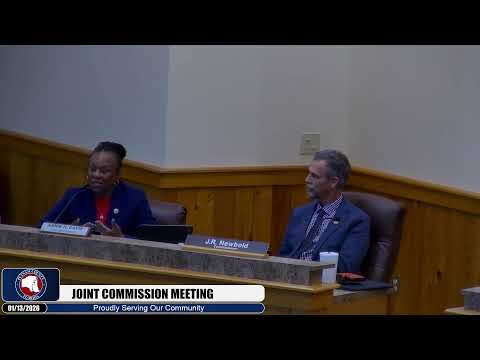
Putnam County and the City of Palatka directed staff on Jan. 13 to begin drafting an agreement to coordinate impact fees after city officials said Palatka has been collecting transportation impact fees for developments that affect county-owned roads.
The county board’s chair, the city mayor and attorneys agreed the two governments need a written understanding so they do not duplicate assessments or lose a rational nexus between fees and projects. Mayor Correa said the joint meeting was intended to prevent overlapping charges and to ‘‘sit down or ask staff to help us and sit down and come up with some, particularly, some type of agreement’’ about transportation and government facilities fees.
City planning staff said the city has collected about $500,000 in impact fees since the moratorium lifted; "about 200 and something" thousand dollars of that total is for transportation, according to the city planning director. City officials noted the Ziegler and St. John’s Avenue project had invoices but had not yet remitted fees when discussed.
City Attorney Jane West and county planning staff described the legal guardrails: per Florida statute, each local authority must keep separate trust accounts for every category of impact fee and cannot double-assess for the same infrastructure need. West noted the city's concerns that the county’s recently adopted impact fee ordinance includes charges related to government buildings and might apply to development inside the city’s jurisdiction.
Commissioners pressed for clarifications on timing and accounting. City staff explained that, by statute and practice, transportation impact fees fund capacity expansion (not routine maintenance) and are tied to an adopted level of service; a development that triggers a drop below that level can justify an expansion funded from impact fees. The planning director said impact fees are intended to be spent on added capacity, such as a turn lane or intersection improvement, and cannot be used for ongoing repairs.
After extended discussion about the St. John’s corridor and the volume of planned housing there, county Administrator Terry Suggs proposed a practical next step: county and city managers and relevant staff should meet, with legal and planning staff included, and return recommended language or a proposal. Chair Wilkinson suggested a 90-day timeline for staff to report back. No formal ordinance change or vote was taken; the direction was to develop a staff-level proposal for both boards to consider.
What’s next: County and city administrators will convene planning, legal and finance staff to draft a coordination agreement and report back to both commissions in roughly 90 days, including recommended criteria for when and how transportation impact fees collected by one jurisdiction can be applied to county-owned road improvements.
Sources: City planning director, city attorney and county administrator statements at the Jan. 13 joint meeting.