
State police: enforcement down since pre‑COVID, DREs and wrong‑way incidents rising; committees ask for 10‑year data
Get AI-powered insights, summaries, and transcripts
Subscribe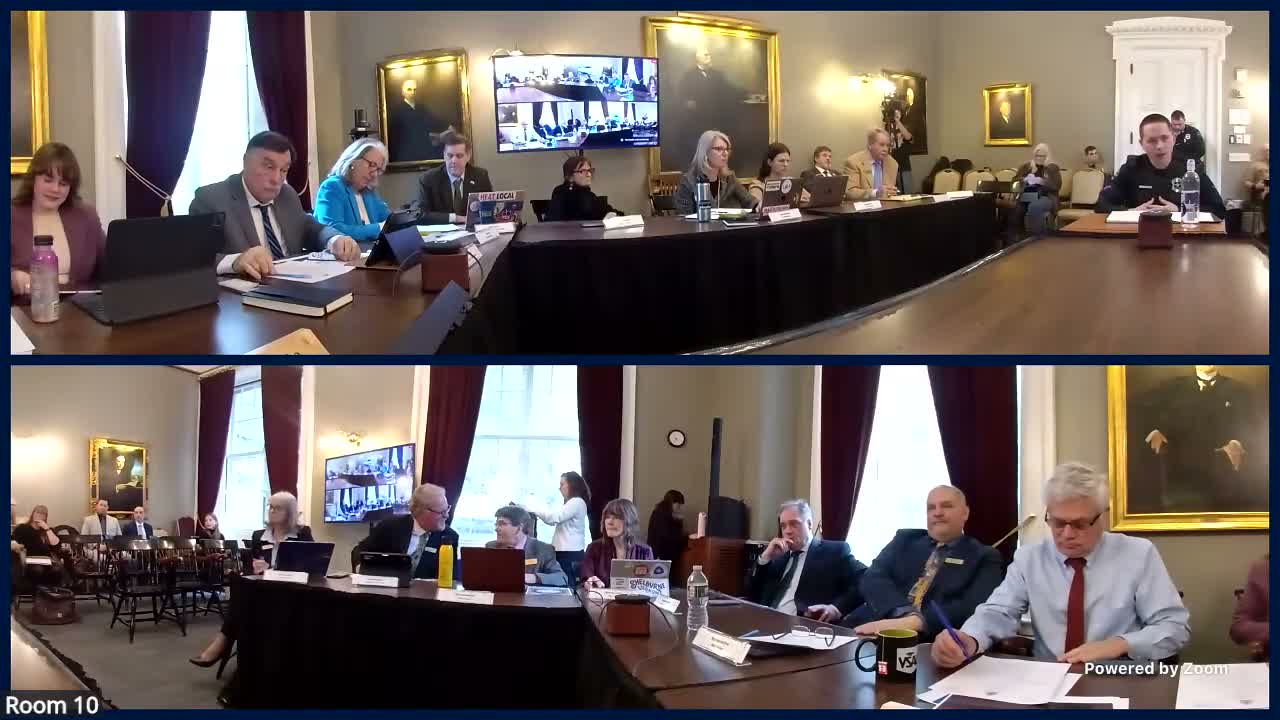
Summary
Vermont State Police and crash‑reconstruction staff told lawmakers that motor‑vehicle stops and tickets have dropped since pre‑COVID, while drug‑related impairment, pedestrian fatalities and wrong‑way driver incidents rose; committees requested 10‑year trend, staffing and grant histories.
Lieutenant Paul Grama, executive officer of the Vermont State Police special operations unit, told the joint transportation committees that pre‑COVID motor‑vehicle contacts were in the mid‑60,000 range and that interactions, tickets and enforcement activity have declined since 2018. Grama said the agency shifted into more warnings and education during and after COVID and that staffing vacancies — he cited hundreds of statewide vacancies over the period — continue to constrain enforcement capacity.
Grama said four leading contributors to major fatal crashes remain speeding, distracted driving, unbelted occupants and impairment. “When drugs are confirmed in the system, that's the number of cases that involve cannabis where drugs have been confirmed the drug was cannabis involved,” he explained while summarizing statewide toxicology patterns, and he reported that the Vermont State Police responded to 35 fatal crashes in 2025 that resulted in 36 fatalities.
Inspector Clay Knight (Department of Motor Vehicles) detailed the state’s Drug Recognition Expert (DRE) program: Vermont has about 44 DREs, three DMV inspectors serve as DREs and the state performed 506 evaluations statewide last year, the highest since 2005. Knight said stimulants (for example, cocaine and methamphetamine) have increased recently and that a DRE opinion is typically necessary in Vermont to prove drug‑impairment cases in court.
Sergeant Chris Lyon, commander of the Vermont State Police Crash Reconstruction Team, presented a 2016–2025 dataset on wrong‑way driver incidents. Lyon said his counts for the most recent full year were about 117 wrong‑way incidents and cautioned that the dataset may undercount events because some wrong‑way occurrences are corrected quickly and never reported to dispatch. He attributed the rise mainly to impairment (alcohol, drugs, cognitive issues) and noted most events occur in late evening and early morning hours.
Committee reaction and follow‑up: lawmakers pressed the witnesses for 10‑year traffic and staffing data, grant histories for overtime enforcement programs (DUI grants, occupant protection, distracted‑driving grants), and for more detail on toxicology and the pedestrian‑fatality increase. Grama and DMV agreed to provide 10‑year data where available and to attempt staffing‑hours estimates for traffic‑safety duties.
Why it matters: Committee members said understanding long‑term trends and resource allocation is necessary to judge whether reduced enforcement has produced safety tradeoffs and to identify where technology, grants or statutory changes might be needed to reduce fatalities.