Planning commission denies proposed Boxabl tiny‑home community after commissioners question durability, design and neighborhood impacts
Loading...
Summary
After a three‑hour discussion, the Las Vegas Planning Commission voted to deny a proposal to place 50 factory‑built Boxabl “tiny homes” on a 2.25‑acre site, citing unresolved concerns about durability, landscaping, mechanical screening and parking despite developer assurances about cost and rents.
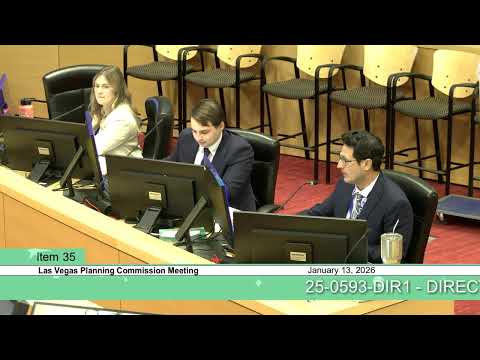
The Las Vegas Planning Commission on Jan. 27 denied a proposal to develop a 50‑unit tiny‑home community made from prefabricated Boxabl units on a 2.25‑acre site near Searls Street and 23rd Street.
Applicant representatives including Bob Groenauer told the commission the project would bring about $6,000,000 in investment and 50 studio‑style rental units of roughly 400 square feet each. The developers proposed base rents of about $1,000 per month, including utilities, and argued the metal‑panel Boxabl units are manufactured locally and are durable.
Commissioners pressed the applicant on multiple details they said remained unclear. Commissioner Schlotman said the renderings showed only front elevations and asked to see side elevations that would reveal exterior air‑conditioning units and maintenance concerns. Commissioner Rogan raised long‑term durability and whether the product would contribute to future blight if it failed to weather the local climate. Commissioner Schlottman and others asked for more robust landscaping and on‑site tree planting to mitigate urban‑heat‑island effects and soften large expanses of asphalt.
Developer representatives said the Boxabl panels are high‑insulation metal sandwich panels and that components such as appliances, the roof and HVAC would be covered by manufacturer warranties. "These units are built to exceed 50 years life expectancy," a developer said.
The chair disclosed a potential perceived conflict: "I do own shares of Boxabl," she told the room, noting the holding was not a majority stake and that she wanted the disclosure on the record.
After extended discussion of elevations, mechanical screening, parking and landscaping, a motion to deny the project was made and carried. The commission characterized its decision as final action for the Planning Commission; the applicant may pursue an appeal to the city clerk or present revised designs to City Council following that process.
What happened next: The commission’s denial ends the project at the Planning Commission level unless the applicant appeals. Developers and commissioners agreed the record should include more complete elevations, a refined landscape plan, and clearer maintenance and warranty commitments if a future application is to succeed.