Planning commission backs Title 21 changes to ease food production and commercial horticulture in Anchorage
Loading...
Summary
The Anchorage Planning and Zoning Commission voted to recommend Assembly approval of a Title 21 amendment (PCC case 20260003) that expands where and how food and beverage production, hobby farms, beekeeping and farmers markets may operate in the Anchorage Bowl. The change includes use-specific limits and directs staff to refine enforcement details.
The Anchorage Planning and Zoning Commission voted Jan. 12 to recommend that the Anchorage Assembly approve a Title 21 amendment aimed at easing zoning restrictions on agricultural and food-production uses across the Anchorage Bowl.
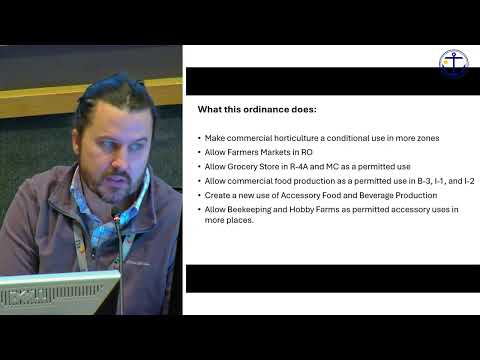
Planning Department long-range planner Daniel McKenna Foster told the commission the ordinance package would "make commercial horticulture conditional use in more zones," allow farmers markets in RO zones, permit grocery stores in R4A, make commercial food production permitted in several commercial and industrial zones, and create a new accessory "food and beverage production" use separate from home-occupation rules. He said the proposal also would "allow beekeeping and hobby farms as permitted accessory uses in more places."
The staff presentation emphasized the ordinance regulates zoning only and does not change separate public-health or alcohol-licensing requirements: "This is only about zoning," Foster said, noting that Anchorage Health Department rules, AMC 16 and state requirements would still apply. Foster told commissioners the draft includes practical limits intended to be enforceable, such as restricting delivery hours: "deliveries should only be allowed between 9 and 5." He also said the code will prohibit equipment or processes that create "noise, vibration, glare, fumes, odors" detectable by normal senses.
Local growers and the mayor's office voiced support during public testimony. Mike Mosesian, owner of Bell's Nursery, testified he has "been growing tomatoes and cucumbers in Alaska for 54 years" and urged the commission to back changes that help local producers compete with large retailers. Mosesian described market-access challenges and said on-site processing can strengthen small farms. Nolan Clauda of the mayor's office told the commission supporting local agriculture is a mayoral priority and that the accessory-use language was meant to help thin-margin commercial farms and enable on-site value-added processing.
Commissioners discussed how the new accessory use differs from existing home-occupation rules and how enforcement should work in residential neighborhoods. Commissioner Jared Gardner, who moved the recommendation, said the commission had received written comments and public testimony in favor and cited the amendment's fit with Title 21 criteria. Commissioners Scott Polis and Commissioner Ron said they intended to support the motion, noting the proposal includes enforcement language to address odors and other neighborhood impacts.
Gardner moved to recommend approval; the motion was seconded (recorded as "commissioner Pulis" in the meeting record). When the chair called for a vote, Commissioner Ron stated "Yes," and the chair declared the motion passed. The transcript does not include a full roll-call tally or recorded votes for all members.
The commission directed staff to continue refining enforcement and implementation details related to deliveries and neighborhood impacts as the ordinance moves to the Assembly. The Assembly will consider the text amendment before any change to the municipal code takes effect.