Get Full Government Meeting Transcripts, Videos, & Alerts Forever!
Get email alerts on the Governance Communication topic
No spam. Unsubscribe anytime.
School committee revisits operating protocols, clarifies member-to-staff communication
Summary
Committee members and district leadership reviewed the 2021 operating protocols, discussed boundaries for member contact with staff and deputies, agreed to route constituent emails through the secretary for recordkeeping, and emphasized limits on sharing confidential student and personnel information.
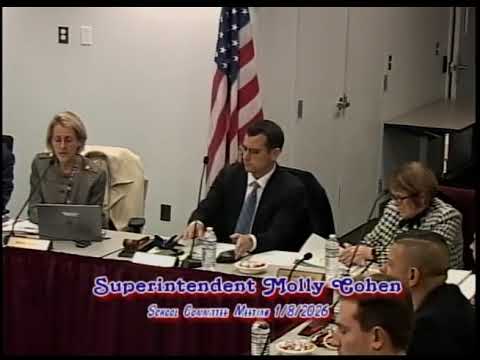
At the committee’s first regular meeting, district leadership presented the Lynn Public Schools operating protocols adopted in 2021 and invited discussion about how members should engage with staff and constituents.
The presentation—introduced as a refresher for newly elected members—outlined three core values: supporting students’ educational welfare, maintaining effective communication with stakeholders, and demonstrating professional, collegial relationships among members and staff. The presenter said the protocols are posted on linschools.org and can be revisited by the committee if needed.
Several members asked whether they may contact deputy superintendents directly about constituent concerns. The presenter and others reiterated the expectation that members route requests through the secretary or superintendent so the administration can assure equal access to information. The presenter said that when a family email includes a committee member and the superintendent’s office, the district will acknowledge receipt and work the issue, but will not disclose confidential student or personnel records in follow-up communications.
Members asked for clearer exceptions and timelier access to building conditions and emergent problems. The presenter said on-site maintenance decisions fall to the district’s ISD team and that subcommittees (for example, buildings and grounds) are the appropriate vehicle to track recurring facility issues. The committee discussed developing a standard email disclaimer and a process for follow-up confirmation to increase transparency while protecting privacy.
The discussion also covered the role of subcommittees, packet distribution practices, and methods for elevating trends that affect student outcomes. Committee members agreed to continue the conversation and to receive periodic subcommittee updates.