
Portland governance committee outlines next steps for advisory bodies overhaul
Get AI-powered insights, summaries, and transcripts
Sign Up Free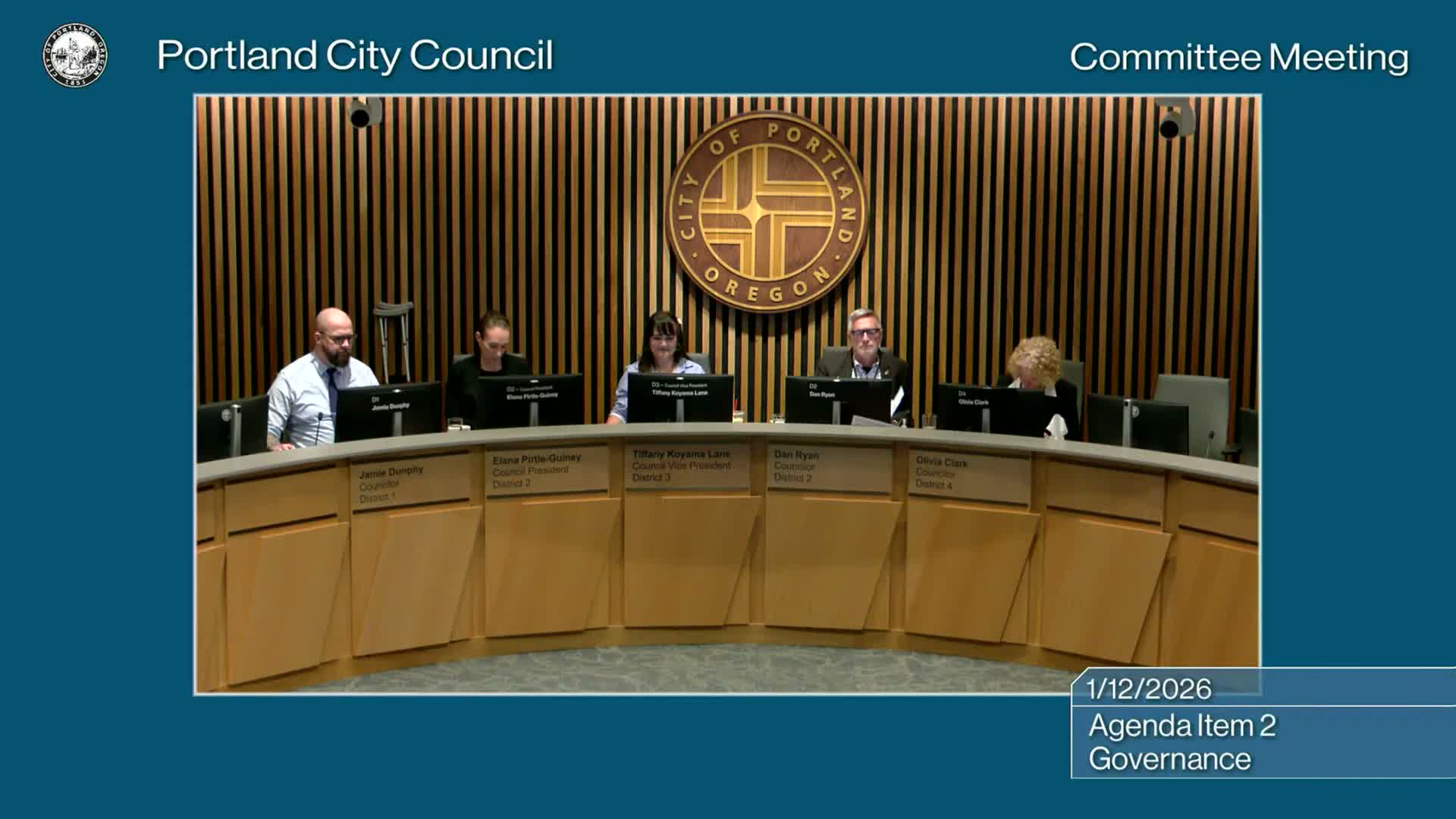
Summary
The governance committee reviewed the Advisory Bodies Enhancement Project’s next phase — code changes referred to council, proposed council procedures, and administrative rules — and members pressed staff on workload, decommissioning criteria and how liaison committees and appointments would work.
Portland’s governance committee on Jan. 12 heard a presentation on next steps for the Advisory Bodies Enhancement Project, a citywide effort to update the rules and oversight of the city’s appointed advisory bodies.
Chief engagement officer Amanda Garcia Snell told the committee the project rests on three parts: city code changes (referred to full council), council procedures to clarify how advisory bodies relate to council committees, and administrative rules the city administrator will adopt to govern appointments, membership and behavior. "The next steps include adopting a resolution to guide the relationship between ABCs and city council, as well as administrative rules to guide the relationship between ABCs and the executive branch," Garcia Snell said.
Why it matters: City staff said the reforms aim to make advisory bodies more useful and equitable — improving onboarding, training and outreach, tracking participation demographics and putting advisory bodies on a four‑year review cycle so 25% are reviewed each year.
During the presentation staff laid out an implementation timeline that aims for adoption of code, procedures and administrative rules by early 2026, followed by phased implementation, updated materials, and expanded trainings for advisory body members in the fall.
Committee concerns and exchange: Several members pressed staff for more detail. Councillor Clark and Vice Chair Ryan stressed committee workload and the practicalities of creating liaison relationships: how many advisory bodies a single council committee would be expected to liaise with, and whether annual reporting requirements would create unsustainable obligations. "If we have a committee that ends up liaising with 30 of those ABCs and they're supposed to have a meeting with each ABC every year, that's concerning," the Council President said.
Vice Chair Ryan said the city’s inventory currently lists 92 advisory bodies and urged staff to develop clear decommissioning criteria: which bodies should be retired for inactivity or redundancy and how that process would work. "So if we really think we want to go from a number of 91 or 92 to a more functional number, what does it look like when you decommission?" Ryan asked.
Staff role clarification: Several members asked whether responsibility for the program was shifting out of Civic Life. Garcia Snell replied Civic Life will continue to run the program operations — drafting administrative rules, coordinating liaisons and tracking data — while council operations would help navigate council procedures and the committee would provide policy direction.
Next steps: Garcia Snell said a resolution based on project recommendations will come to the governance committee on Jan. 26 for discussion and staff will share the council‑procedures draft and the city attorney’s suggested edits with the committee ahead of that meeting. No formal votes were taken on policy changes during the Jan. 12 meeting; the committee approved the Nov. 10 minutes by unanimous consent.
What to watch: Staff said they plan code reconciliation and a spring code cleanup to reduce or reconcile advisory‑body listings, followed by a periodic review process to ask whether each remaining body still serves a clear purpose.