
Heated public hearing on 'Promoting Community Trust Act' draws hundreds of minutes of testimony in Montgomery County
Get AI-powered insights, summaries, and transcripts
Subscribe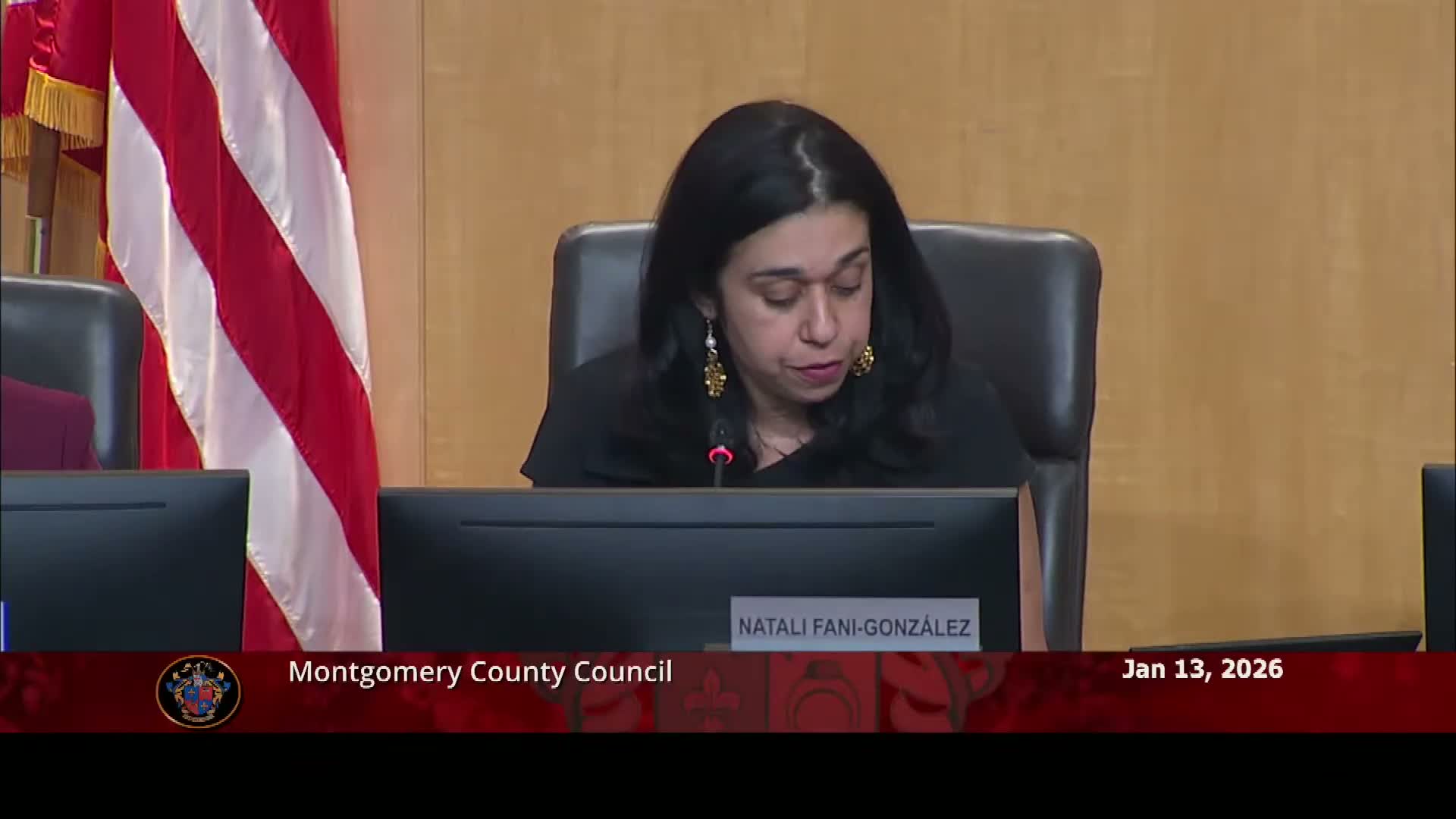
Summary
The council held a multi‑panel public hearing on Expedited Bill 35‑25 (the Promoting Community Trust Act); supporters said codifying limits on county cooperation with ICE will protect due process and public safety by increasing trust, while opponents warned of weakened information sharing and potential public safety and fiscal consequences.
The Montgomery County Council on Jan. 13 held an extensive public hearing on Expedited Bill 35‑25, known in testimony as the Promoting Community Trust Act or the Trust Act. The bill would codify and in some places expand county limits on participation in federal civil immigration enforcement.
County Executive representatives told the council the bill largely codifies existing executive‑order policy implemented in 2019 and retains narrow exceptions for cooperation on serious violent crimes and valid judicial warrants. Earl Stoddard, speaking for the county executive, said the policy aims to preserve community trust so residents will report crimes and use county services.
Proponents — including CASA legal director Ama Frimpong, the Maryland Office of the Public Defender’s Sean Link, Joanna Silver (former federal public defender), faith leaders, educators and students — testified that local residents have been detained by ICE in ways that disrupt due process, fracture families, and chill use of schools, health care and other county services. Frimpong said CASA has responded to more than 100 confirmed ICE detentions in the prior six months, affecting an estimated 350 household members. Students and youth speakers recounted family separations and emotional trauma; representatives of unions, community organizations and faith networks urged passage and emphasized public‑safety benefits from rebuilding trust.
Opponents, including some residents and other speakers, argued that the bill functions as sanctuary legislation that could hinder information sharing with federal authorities and endanger public safety. One witness referenced past criminal cases involving noncitizens and argued that cooperation with federal authorities should not be constrained. Speakers also raised concerns about fiscal and accountability implications, saying county resources could be strained.
Council President Fanny Gonzales closed the hearing after panels of in‑person and virtual testimony and noted the bill will go to a joint Public Safety and Government Operations & Fiscal Policy committee work session scheduled for Jan. 28, 2026. No votes were taken on Jan. 13.
Direct quotes in the record included both advocates’ appeals to due process and examples of harm and opponents’ warnings about legal and budgetary risks. The council preserved decorum rules for testimony and repeated deadlines for submission of materials in advance of the committee work session.