Get Full Government Meeting Transcripts, Videos, & Alerts Forever!
Get email alerts on the Cdbg Funding topic
No spam. Unsubscribe anytime.
Utica council divides CDBG funds among local nonprofits, directs remainder to library
Summary
The Utica City Council allocated community development block grant funds to local nonprofit service providers and the library after public hearings; four petitioners received small, equal shares and the balance was assigned to the library's $2,000 request.
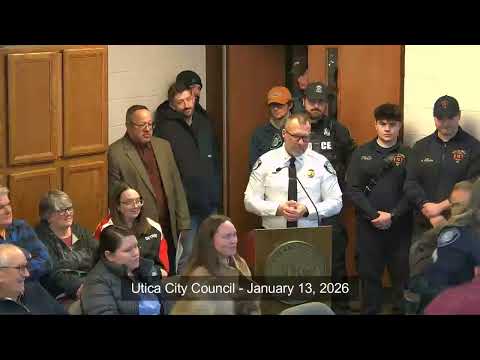
The Utica City Council on Jan. 13 approved a distribution of community development block grant (CDBG) funding after a public hearing featuring requests from local service organizations.
Councilmember Torenzi moved, with support from Councilmember O'Donnell, to award each of four petitioning nonprofits a modest, equal share of the pot and to apply the remaining CDBG funds toward the library's $2,000 materials request; the motion passed on a roll-call vote with all members present voting yes.
Speakers representing the organizations described how the money would be used. Jillian Grabowski of Turning Point Shelter asked for $1,000 to support emergency shelter services, saying Turning Point provided 40 emergency shelter bed nights to 11 Utica residents between July 2024 and June 2025 and offers crisis intervention, case management and childcare services. Nicole King, executive director of Care House, asked for $500 to support forensic interviews and advocacy, noting that Care House “has conducted over 11,800 forensic interviews since opening in 1996” and that dozens of served families last year were Utica residents. Claire Brinkman of Interfaith Volunteer Caregivers requested $675 to fund home chore and repair projects serving older adults. Kevin Markle of Samaritan House described weekly pantry and homebound services and requested $500 to support food distribution.
Council discussion emphasized local need and attendance at the hearing. Afterward, council adopted the motion that split modest amounts among the groups that appeared and directed the remaining city CDBG allocation toward the library project.
The council did not specify additional program requirements in the motion; follow-up implementation and reporting will be handled administratively through the clerk's office and the city’s CDBG procedures.
What happens next: The funding allocations take effect per the adopted motion; petitioners should coordinate with the city clerk for grant administration and disbursement details.