Get Full Government Meeting Transcripts, Videos, & Alerts Forever!
Get email alerts on the Land Transfer topic
No spam. Unsubscribe anytime.
Palm Coast staff proposes process to transfer canal bulkheads to adjoining owners; council asks contract changes
Summary
City staff proposed a policy to transfer city‑owned canal bulkhead parcels to adjoining property owners subject to inspections, surveys, easement retention for city access and seawall requirements; council asked that transfer agreements include explicit waiver language and a five‑year survivability period for nondisclosure claims.
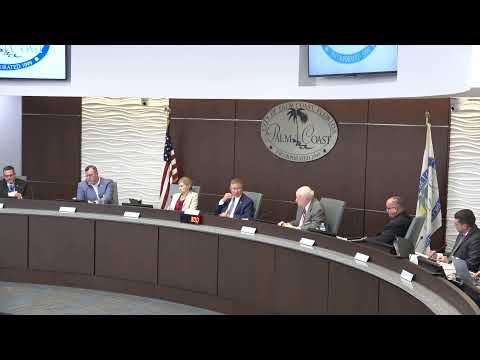
Palm Coast City Council workshop — Virginia Smith (stormwater/engineering staff) presented a proposed process on Jan. 13 to transfer city‑owned canal bulkhead parcels to adjoining residents who request them.
Smith said the city acquired many bulkheads in 2004 and retained others in 2007; staff now recommends a formal transfer process that begins with a resident request and an inspection to identify stormwater infrastructure. If no seawall exists, the city would donate the land to the requestor provided the owner grants a 10‑foot easement back to the city and constructs a seawall within two years, or the conveyance would revert. If a seawall exists, the city would value the seawall (age/condition) and transfer land through a purchase and sale agreement that includes the required easement(s).
Three requests on file and council legal direction: Smith said staff has three resident requests to purchase/receive bulkheads. Council raised wording concerns about language that said purchasers could "maintain at a higher level of service" and clarified that code requirements to maintain property would continue. One councilmember with a real‑estate background recommended explicit contract language: an express waiver of nondisclosure claims against the city and extending the contract survivability period from six months to five years to align with the statute of limitations for breach of contract. Council asked staff and legal to incorporate those changes; staff indicated consensus and will return with redlined contract language.
Next steps: Staff will revise the transfer agreement language per council direction and return to council for formal action. The policy, if adopted, would shift seawall construction and maintenance cost to property owners while preserving a 20‑foot public easement for city access and drainage.