
Revere Local board adopts fiscal year 2027 budget amid concerns about county authority under new tax law
Get AI-powered insights, summaries, and transcripts
Subscribe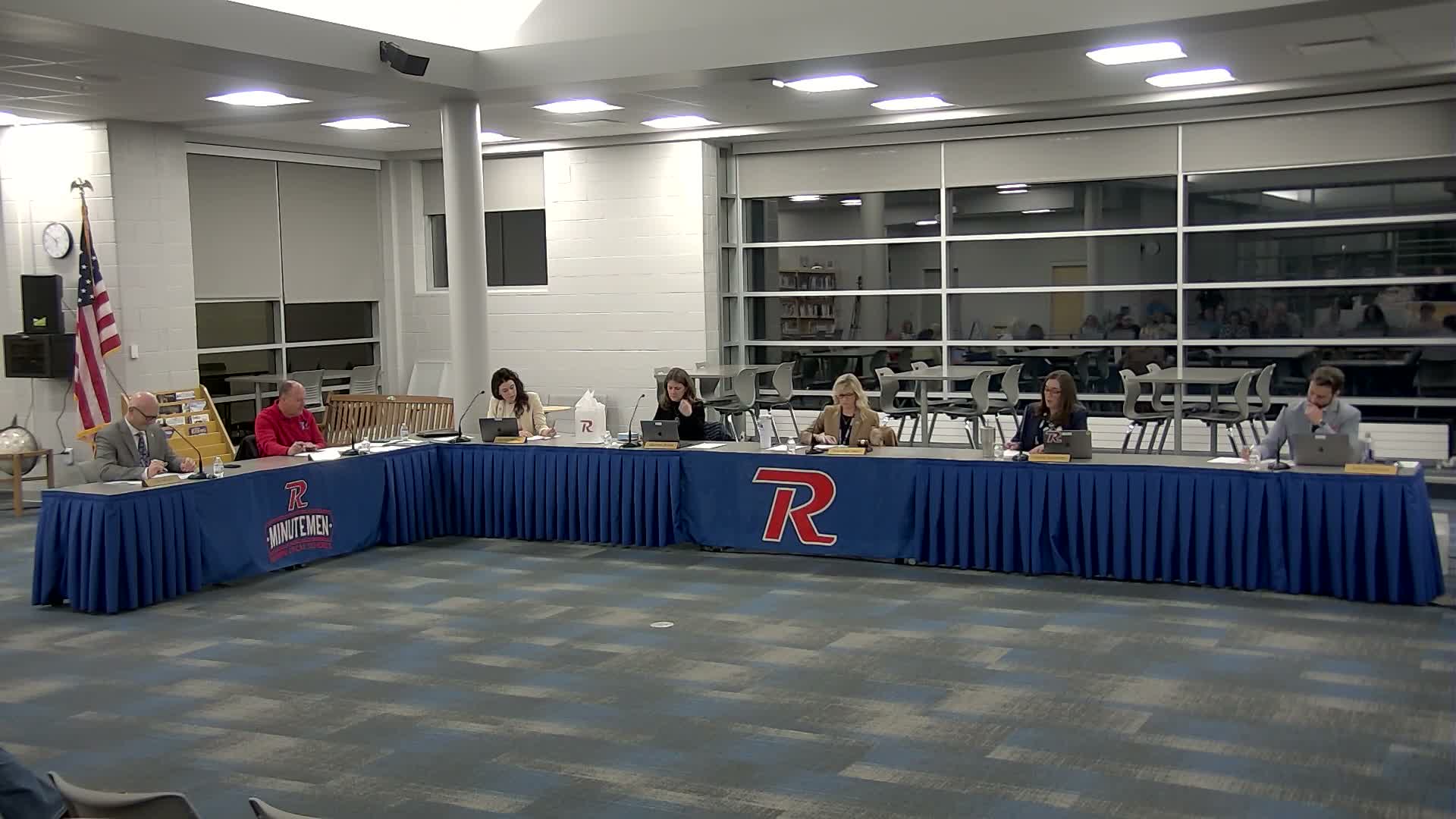
Summary
The Revere Local School District Board approved its fiscal year 2027 budget on Jan. 13 after a lengthy presentation by Treasurer Berdine, who warned that recent property tax reform could allow county budget commissions to reduce assessed millage for districts with what counties deem excessive cash balances.
The Revere Local School District Board of Education approved the fiscal year 2027 budget at its Jan. 13 meeting following a detailed presentation and discussion by Treasurer Berdine.
Treasurer Berdine told the board that, while a school budget primarily formalizes tax rates and bond millage for debt retirement, recent state property tax reform legislation has introduced a new uncertainty: "It allows these county budget commissions to reduce assessed millage amounts if...a district is carrying excessive cash balances," he said, urging the board to monitor forecasts. He described the budget package as "essentially a worthless document except for setting tax rates for bond millage..." while explaining forecasting, debt schedules and reserve assumptions.
Berdine said Summit County had not been proactive on exercising the new authority while noting other counties had been more aggressive, and he described the district's general fund reserve as below levels he currently expects would trigger county action. He said the district's forecasting software and staff are coordinating with legislative service commission analysts to model impacts and that the board will revisit the five-year forecast in coming months.
The board approved the FY 2027 budget by roll call. Berdine emphasized that the budget must provide revenue to retire bonds and that the district has taken steps to allocate spending reserves and separate funds to reduce what might be counted as cash balance under the new law.
Why it matters: If county budget commissions exercise the reduction power described by Berdine, some districts could see reduced millage capacity and altered revenue projections, making long-term planning and levy timing more complicated.
What’s next: District staff will continue forecasting work and report back to the board as more guidance from county fiscal offices becomes available.
Direct quotes in context: "This document is essentially a worthless document except for setting tax rates for bond millage," Berdine said. "It allows these county budget commissions to reduce assessed millage amounts if...a district is carrying excessive cash balances."