
Nacogdoches council hears plan to pass card-processing fees to utility customers
Get AI-powered insights, summaries, and transcripts
Subscribe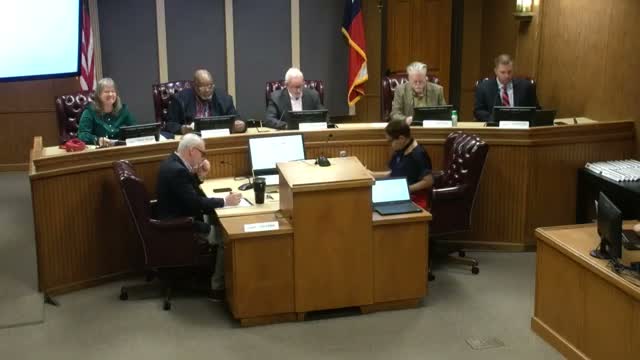
Summary
City finance staff recommended moving to a pass-through model that charges a $1.93 flat fee for utility card payments, a per-transaction 75¢ ACH fee, and percentage-based fees for non-utility card payments; council members asked questions and offered support, and staff said a formal agreement will be presented later.
Nacogdoches City Council on Jan. 6 discussed a finance proposal to stop absorbing credit-card convenience fees and instead have customers pay those charges directly.
Finance staff told council members the city paid roughly $216,000 last year in convenience fees. "Finance is recommending we move towards a flat rate model where we're passing on the convenience fee to the customers and [a] percentage base for non-utility payments," said Kevin, a member of the finance department. For routine utility card payments, staff said the fee would be a $1.93 flat charge; ACH payments would carry a 75¢ per-transaction fee. Non-utility card transactions would be charged as a percentage of the payment under the proposed structure.
Council members asked for examples and clarification. One councilmember said the $216,000 figure demonstrated the current cost to the utility fund and supported moving fees to customers, saying the amount "is a lot of money" the city currently absorbs. Kevin said the two-model approach is driven by predictability for utility billing and could cut fees substantially on average: staff presented a hypothetical $160 bill where a flat fee reduced the processing cost by about 58% compared with the existing model.
Staff said the change would be implemented as a pass-through: the payment processor would collect the convenience fee at the point of sale rather than the city absorbing and later remitting the fees. "With this, they don't touch the city's accounts," Kevin said, describing the operational difference from the absorbed model. Staff also said the change would consolidate multiple processors into a single portal, allow customers to view and pay all city bills in one place, and expand customer options to include PayPal, Venmo and other methods.
Councilmembers and staff identified lower collateral costs from the transition, including reduced printing and staff time. Finance staff estimated the city currently spends "north of 5 to 10,000" on printing bills; staff characterized that value as approximate and said e-pay adoption could lower that expense.
No formal vote was taken on Jan. 6. Kevin and the finance department asked the council for input and said a formal agreement, including thresholds and detailed terms, would be brought back to the council for consideration at a future meeting.