
Humboldt Unified board opens exploration of armed personnel and other measures in school-safety discussion
Get AI-powered insights, summaries, and transcripts
Subscribe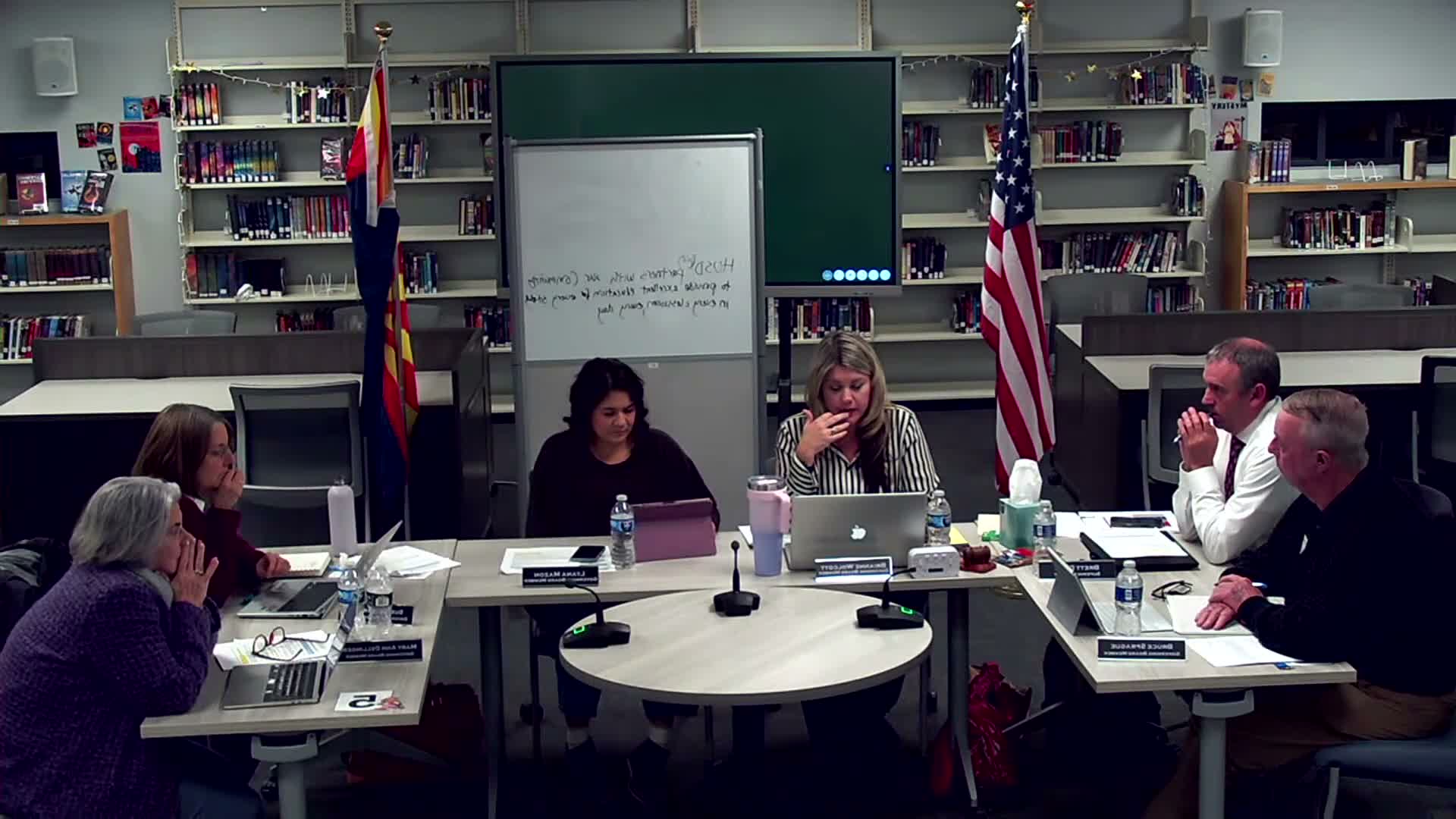
Summary
Board members opened a broad review of school-safety options, including whether district staff or vetted contractors could carry firearms under state rules. Members directed staff to research legal, insurance and training requirements and recommended early community engagement via forums or surveys.
The Humboldt Unified School District governing board used a lengthy study-session segment to begin a formal exploration of school-safety measures, including whether authorized district personnel could carry firearms on campus under state law.
Superintendent Brett Dahl and multiple board members described a range of existing safety steps—hardened entrances, emergency operations plans and SROs—and said the district has continued partnerships with local law enforcement. Board discussion then turned to a proposal to research whether staff-authorized concealed carry or contracted off-duty law-enforcement patrols would be feasible for the district.
Board member Bruce introduced the topic as an exploratory item, saying that under some district models a superintendent may authorize specific employees to carry on school property provided the district develops procedures and training. He urged a careful review of state requirements, training standards and insurance implications before any decision. “A district employee or other persons may carry firearms on school property if authorized by the superintendent,” he said, describing a model used elsewhere.
Immediate steps requested and public involvement Board members agreed on a phased approach: legal review (statute and policy options), insurance review (carrier and premium implications), a technical review of training and competency requirements, cost estimates for alternatives (additional SROs, off-duty officers, contractors) and community engagement. Several members recommended an initial community temperature-check—either open forums or a multi-option survey that asks respondents to prioritize safety measures and indicate acceptance of particular interventions such as additional SROs, trauma counselors, hardening entrances, or authorized personnel carrying firearms.
Safety options discussed - Authorized staff carrying firearms under superintendent procedures (exploratory): several members supported researching state statutes and policy models from other Arizona districts; others raised concerns about mental-health vetting, coordination with first responders and staff willingness to take on such responsibility. - Increase SRO coverage: participants noted the district currently has five SROs to cover nine schools and discussed whether budget or contracted off‑duty officers could increase active coverage. - Contracted off-duty law-enforcement or third-party security: board members suggested obtaining proposals from vendors and philanthropic partners as a possible interim tactic. - Trauma response and counseling: several members emphasized prevention and post‑incident care, including state-level proposals to fund trauma specialists.
Board caveats and next steps Members emphasized the exploratory nature of the discussion. No policy change was adopted; instead, the board directed staff to return with specific findings—statutory references, insurance guidance from the district carrier, implementation costs and a recommended public-outreach plan. The board also discussed forming an advisory committee of community members and staff to study trade-offs and to provide input that would inform potential policy decisions.
Representative quotes Bruce (board member) summarized the scope: “There’s a lot to this…training that we’d have to do, a lot of state requirements,” and offered to help collect information. President Wolcott said she was “pro firearm” and described a preference for highly trained and anonymous authorized personnel but emphasized the need for community engagement and clear procedures.
What to watch: The board will ask staff to return with legal and insurance assessments, cost estimates for additional SROs or contracted coverage, and plans for community forums or a survey that presents multiple safety options for public input.