Humboldt Unified board finalizes concise vision, frames mission and board goals in study session
Summary
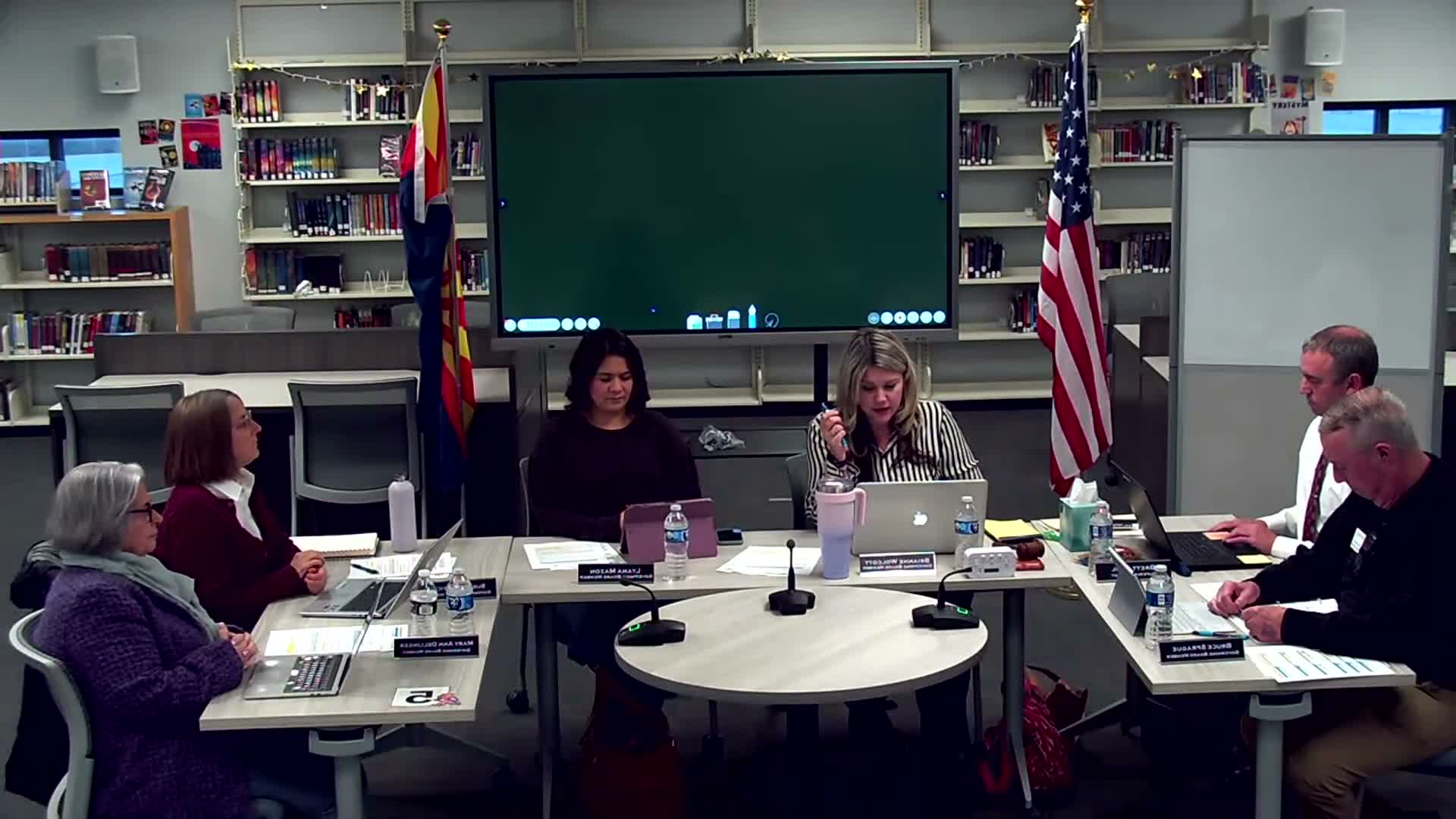
At a special study session, the Humboldt Unified School District governing board agreed on a concise district vision and drafted mission and measurable board goals—including literacy and ACT targets, educator-retention aims and an instructional-spending benchmark—while deferring some baselines pending staff verification.
Humboldt Unified School District leaders finalized a short district vision and outlined mission language and board-level goals during a special study session, emphasizing measurable targets for student outcomes and operational accountability.
The board settled on the sentence: “Humboldt Unified School District partners with our community to provide excellent education for every student in every classroom every day,” which members agreed will be used in full on formal documents while shorter taglines will be used for marketing and outreach.
The vision work, led by Superintendent Brett Dahl, followed discussion of two approaches: a concise, repeatable tagline for public-facing communications and a longer sentence appropriate for accreditation and policy documents. “Those are the important things to me as the superintendent,” Dahl said, arguing for wording that captures academic focus and community partnership.
Why it matters: Board-level vision and mission language frames policy and budget priorities, and the session produced specific, measurable goals the board intends to monitor and use to evaluate district performance.
Key goals discussed and retained in draft form - Third-grade literacy: the board discussed a goal to improve third-grade ELA proficiency from a recent baseline (about 40%) by 10 percentage points (to roughly 50%) by the end of the 2027 school year. Members agreed to phrase the objective as a 10-percentage-point increase and to use consistent terminology—“proficient and highly proficient.” - High-school college-readiness (ACT): the district’s reported composite score hovered around 17.4; board members asked staff to present five years of data and recommended converting the metric to an attainable composite score (for example, targeting an ~18 composite) rather than a percent change. - Educator development: the draft board-level human-capital goal reads, by 06/30/2027 increase certified-staff retention to at least 90% annually and reduce unfilled certified positions to fewer than 5% in the first year of employment; board members removed detailed implementation language, noting those are superintendent-level actions. - Community investment: the board considered targets (e.g., 15 new partnerships, volunteer increases) but agreed to collect baseline partnership and volunteer data before locking in percent targets; alternatives proposed included “each school establishes or re-establishes one partnership.” - Operational efficiency: members agreed to anchor an organizational-efficiency goal to the Arizona Auditor General’s instructional-spending percentage, noting current district instructional spending is roughly 56.4%. The agreed phrasing: by 06/30/2027 HUSD will equal or exceed the instructional spending percentage of its relevant peer group, with a footnote linking to the Auditor General’s peer-group definition.
Process and next steps: The board asked Superintendent Dahl to compile historical data (e.g., five years of ACT and spending data) and to bring a proposed superintendent-evaluation rubric aligned to the board goals. Members discussed scheduling a follow-up study session and possible executive-session work to finalize superintendent goals and the evaluation instrument.
Board action on agenda items: The meeting began with a formal motion to accept the agenda, which carried unanimously, and ended with a motion to adjourn. The substantive vision, mission and goal language was finalized in discussion but taken as draft board-level language to be included in upcoming consent or action items after staff provides data and final wordsmithing.
What to watch: Staff will return with past-year trend data for literacy and ACT performance, baseline community-partnership and volunteer metrics, and a proposed superintendent rubric so the board can vote on formal goals and any related policies.