Get Full Government Meeting Transcripts, Videos, & Alerts Forever!
Get email alerts on the Sorl Renewal topic
No spam. Unsubscribe anytime.
Broad public support at Brevard County workshop for renewing Save Our Indian River Lagoon sales tax
Summary
County officials and dozens of residents heard scientific updates on the Save Our Indian River Lagoon program and many speakers urged commissioners to place a renewal of the half‑cent sales tax on the ballot, highlighting septic conversions, muck removal and public outreach as priorities.
Brevard County heard a sustained push from residents and local experts on Thursday to renew the half‑cent “Save Our Indian River Lagoon” sales tax that has funded local restoration projects since 2016.
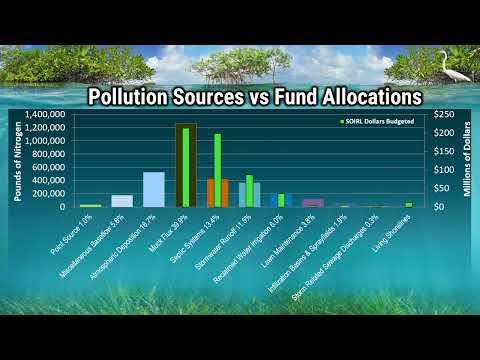
Virginia Barker, a Natural Resources Management Department presenter, told the workshop the program is organized around four priorities — reducing new pollution, removing legacy muck, restoring filter feeders and responding to new science — and that the initiative has combined local sales tax revenues with grants and partner funding to accelerate work. "We've spent almost $100,000,000 of the Save Our Lagoon tax dollars," Barker said, adding the county has secured comparable grant funding and is managing hundreds of projects in design, permitting and construction.
The program’s citizen oversight committee and independent audits were repeatedly cited at the workshop. Vinnie Torano, a long‑time oversight member, pointed to the committee’s role in annual project plan updates and public transparency, saying the ordinance that established the oversight requires both "annual project plan updates" and "public oversight and a transparent process."
Federal, state and regional partners framed the program as a model of cost‑sharing and the leverage that local funding provides when applying for state and federal grants. Dr. Duane DeFries of the National Estuary Program noted congressional authorization under the Clean Water Act and cited recent NOAA and EPA grants used for seagrass nurseries and other restoration projects.
Public commenters — residents, business leaders, conservation groups and municipal officials — overwhelmingly supported sending a renewal to voters. John Nicco, who identified himself as a North Brevard resident, warned of the consequences if the tax lapsed: "If it does expire, Brevard County will lose 58 to $60,000,000 every year that is currently being dedicated to restoring and protecting our lagoon," he said. Multiple speakers urged commissioners to put the measure on the November ballot and to consider program refinements such as prioritizing septic‑to‑sewer conversions and increasing community outreach.
Speakers also highlighted technical findings presented by county staff. Barker described a lateral smoke‑testing program in which crews examined more than 50,000 homes, "found over 1,200 leaks" and have repaired nearly all of them, a step officials said reduced rainfall infiltration that contributes to sewage overflows. She also said staff mapped more than 62,000 septic systems in the lagoon watershed and used cluster analysis and cost‑per‑pound estimates to prioritize sewer conversions.
Several commenters suggested additional or complementary measures. Bob Pickert, an environmental professional, urged exploring beneficial reuse of dredged muck amended with biochar as a potential funding and restoration pathway. Others asked for stronger low‑impact development requirements, herbicide limitations, and more visible neighborhood stormwater projects so residents see tangible results.
County commissioners responded by outlining procedural next steps. During board discussion, commissioners reiterated that staff will draft ordinance and ballot language, work with municipalities on interlocal agreements and project plans, and meet scheduling deadlines to transmit language to the supervisor of elections; the chair noted August as the latest practical deadline for referral language. No formal vote on a renewal occurred at the workshop.
The workshop organizers said the presentations and public comments would be archived on the county’s YouTube channel and that staff will continue public engagement as they prepare proposed ballot language and a revised project plan for committee and board review.
What’s next: county staff will develop draft ballot language and an updated project plan for public review and for the board to consider at public hearings ahead of any vote to place a renewal on the ballot.