Akron planning committee advances Archwood redevelopment plan amid calls for clearer community-benefit language
Loading...
Summary
The planning committee recommended approval of the Archwood redevelopment plan, which enables tax increment financing for ~176 acres east of Kelly Avenue. Community advocates asked the city to record negotiated community benefits tied to Waste Management’s investment; staff said those terms will appear later in a development agreement that returns to council.
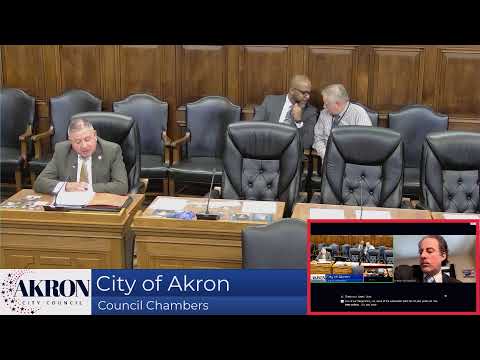
The Akron Planning Committee recommended approval of the Archwood redevelopment plan Tuesday after a lengthy public comment period in which neighborhood advocates pressed for clearer language tying community benefits to a proposed Waste Management investment.
Planning staff described the 176-acre project area east of Kelly Avenue as largely industrial and commercial, containing 156 parcels, Joy Park and nearby industrial employers. The plan, staff said, does not change existing zoning but would enable the city to use tax increment financing (TIF) under the Ohio Revised Code to support infrastructure and redevelopment in the area.
Pastor Mark Tibbs of Centenary United Methodist Church, representing the Akron Community Action Network, told the committee that residents and stakeholders had been told by the mayor’s sustainability office that Waste Management had agreed to include community benefits in a forthcoming development agreement. Tibbs said the redevelopment plan’s summary lists the development agreement but does not reference community benefits and asked whether the city would “hold Waste Management to task” to include negotiated benefits in the binding document.
Committee member Sean Vollman and other staff members responded that references to development agreements in the plan are general background for all parcels in the district and that specific development agreements and any TIF authorization would return to city council for separate approval. Vollman said the TIF creates a funding pot that can be used for community benefits but cautioned that inserting parcel-specific obligations into the redevelopment plan itself would impose requirements across every parcel in the district.
Advocates pressed for some written acknowledgement in the redevelopment plan or an addendum that community benefits negotiated with developers — including Waste Management — would be included in later agreements. Staff and several council members said the proper vehicle for directing the administration would be a resolution or waiting until the development agreement and TIF documentation are negotiated and presented to council in writing.
The committee noted prior litigation and a related settlement that included obligations on Waste Management; staff said those settlement obligations and any negotiated terms would be part of subsequent documents subject to council review. The planning committee invited speakers to return for the evening public hearing at 5:00 p.m. for further discussion.
Next steps: the redevelopment plan and any associated development agreement and TIF ordinance will be considered by full council at subsequent meetings where the development agreement terms and any community benefits will be available for review.