
Kodiak planning staff recommends similar‑use finding for Les Noy cultural center; public hearing set next week
Get AI-powered insights, summaries, and transcripts
Subscribe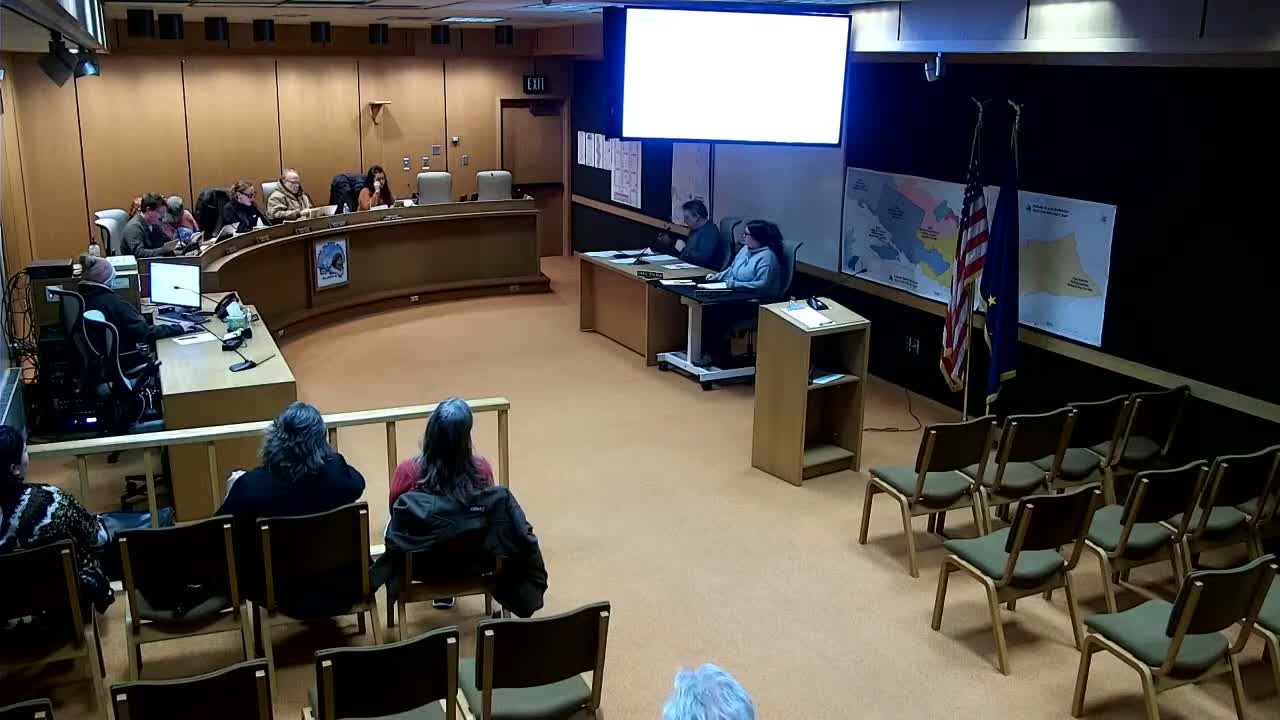
Summary
Staff told the Planning and Zoning Commission the proposed Les Noy tribal cultural center is comparable in impact and character to an institutional church use and recommended approval of a similar‑use determination; commissioners and speakers raised concerns about future commercialization and clarified size and access details. The matter is scheduled for public hearing next week.
Bronwyn, a community development staff member, told the Kodiak Island Borough Planning and Zoning Commission that staff had reviewed the Les Noy submittal and "found that the area that will host the multiuse tribal center is a 9,000 square feet section of the 8,749.6 acre parcel" and that "Staff believes that this is an appropriate determination between the 2 uses and recommends approval." The application asks the commission to determine whether the proposed cultural center is similar in impact and character to a church under Title 17 (Sea Conservation District) for the purposes of allowed uses.
At the Jan. 14 work session commissioners and staff focused on scope and guardrails. Several commissioners highlighted that the commission is comparing uses by "impact and character" — factors such as how many days per week the facility would be open, expected attendance and vehicle trips — and not the content of religious or cultural practice. Staff emphasized that a change to a commercial event venue would require rezoning or a zoning compliance permit because commercial uses are not allowed in the conservation district as currently zoned.
Tammy Taylor, representing Les Noy and the surface owner, clarified the footprint and ownership: "That's the only portion of this map that's the parcel of land that we have been able to give a contract with them, to be able to build this cultural center." Taylor and the architect explained the plans are sized to accommodate cultural ceremonies, training and intergenerational learning rather than an ongoing commercial operation. When commissioners questioned the apparent scale in packet materials, staff corrected an earlier reading of the plan: "The structure is not 24,000 square feet. It's 2,400 square feet," and reiterated the leased area is 9,000 square feet.
A tribal shareholder who identified herself as Koyana Sheenaq testified in favor of the proposal, saying the center would provide village residents easier access to ancestral lands and a place "to practice our culture or to pass on our traditions" and that "the purpose of this project, is not commercial." She urged the commission to hear the indigenous voices who will testify at the public hearing.
Commissioners expressed differing views on whether classifying the use as similar to a church was the correct label, with at least one commissioner calling it a "slippery slope" and another stressing the legal focus on character and impact. No final determination was made at the work session; staff and applicant materials will be part of the public hearing record when the matter returns for formal consideration next week.
Next steps: The similar‑use determination for case 26‑009 is scheduled for the commission's public hearing next week; staff and applicant representatives are expected to present and respond to any additional questions.