
District outlines midyear screening and interventions using 95% Group program
Get AI-powered insights, summaries, and transcripts
Subscribe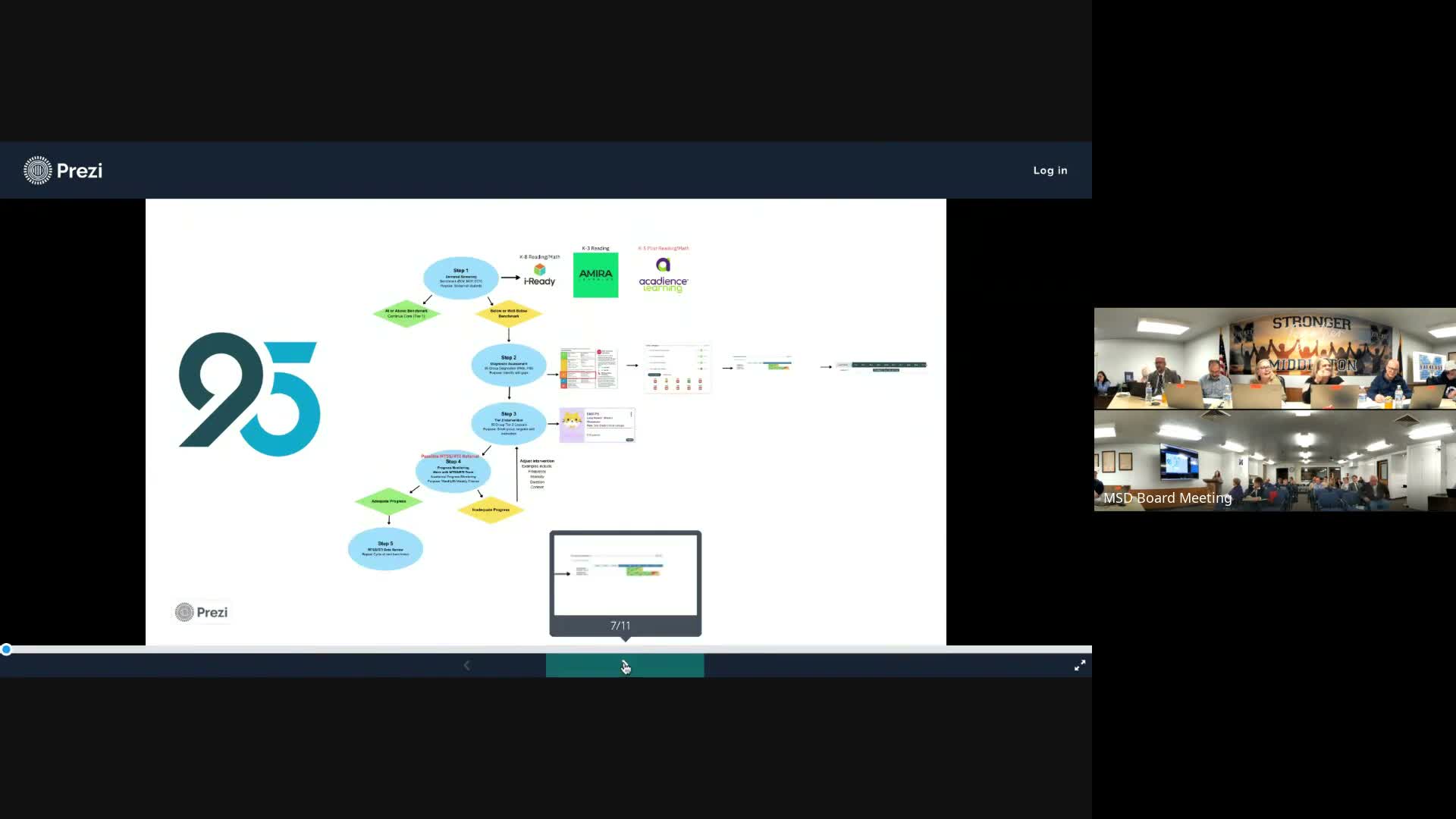
Summary
Curriculum staff described how the 95% Group screener and diagnostic system identifies skill-specific deficits and guides tier 2 small-group interventions, with data retention across schools to support students who move between buildings.
Paige Gibson (speaker S6) walked trustees through the district’s midyear intervention process using the 95% Group reading foundations curriculum. She described the flow from universal screening to diagnostic assessment, targeted tier 2 small-group instruction, reassessment and escalation to formal RTI or referral when interventions do not yield progress.
Gibson explained that the screening and diagnostic process is granular—assessing phonics skills and subscales (for example, long-vowel silent-e items and pseudo-word decoding)—and noted teachers and proctors record student responses directly in the system rather than using computer-click tasks. She said a successful implementation allows a student’s intervention history to follow them between schools so receiving schools can continue targeted work.
Why it matters: trustees asked how the data guide instructional choices and how the district ensures fidelity. Gibson said the system identifies specific subskills for targeted practice and that the district provides small-group plans tied to those skills; staff also attended a site visit to Madison School District to observe longer-term implementation. She reported examples where students moved from lower subscale levels to higher levels midyear after targeted interventions.
Next steps: staff will continue implementation monitoring and report progress; trustees praised the approach and asked for continued updates about fidelity and outcomes.