Lifetime Citizen Portal Access — AI Briefings, Alerts & Unlimited Follows
Commission approves standard conditions for Doncaster StormForge bank‑stabilization at 160 Cottage Street
Loading...
Summary
The Springfield City commission closed the public hearing and voted to issue standard order conditions for a bank‑stabilization project at 160 Cottage Street by Doncaster StormForge, which uses vegetated bio‑logs and live‑staking to arrest erosion and address a previously remediated fuel release under MCP oversight.
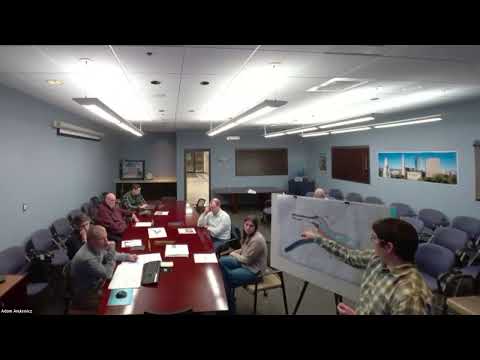
Speaker 6, presenting on behalf of Doncaster StormForge, told the commission the project is located at 160 Cottage Street in Springfield and aims to stabilize eroding banks along Port Brook while completing Massachusetts Contingency Plan (MCP) closure for a previously remediated underground fuel release. "The project is located at 160 Cottage Street in Springfield," Speaker 6 said, describing steep, wooded slopes and decades of industrial use at the site.
The applicant proposed a soft‑engineering approach rather than concrete or riprap, using stacked, fabric‑wrapped bio‑logs and live staking so that vegetation, not hard armoring, becomes the long‑term stabilization measure. "We're looking at actually using vegetation…so the purpose and really the objective is to allow that vegetation to grow, to populate, and that becomes your protective measure against any further erosion along the bank," Speaker 6 said.
Project plans include a temporary gravel access road down the steep slope, material and soil stockpiles on a flatter west side of the site, and a suite of erosion and sediment controls during construction: double silt fencing, compost filter socks, straw wattles, level spreaders, temporary dewatering dams and pumping to settling/fractionation tanks with filter bags before discharge. The presenter said contractors solicited are qualified in remediation and will follow state MCP requirements and MassDEP oversight for handling contaminated soils.
Speaker 4 summarized regulated‑resource impacts under the Wetlands Protection Act and the project filing: a wetland delineation conducted in March 2022, adjustments to bank flags as erosion progressed, about 250 linear feet of permanent impact to inland bank grading and soil lifts, about 40 linear feet of temporary inland bank impact, approximately 9,800 square feet of combined temporary and permanent impacts in the 25‑foot buffer, and roughly 2,670 square feet of permanent impact to land under water from required streambed regrading. Restoration plantings and a landscape plan were referenced to mitigate impacts.
Commissioners questioned species selection, spacing and long‑term maintenance. One commissioner recommended swamp white oak in place of red oak; Speaker 6 agreed to revise the planting list. Installation details shown on the drawings call for roughly three live stakes per 10 linear feet of bio‑log deployment, with additional cuttings or plantings staggered across rows to promote dense vegetation. The presenter said manufacturer guidance and the project’s landscape architect informed spacing and density recommendations.
On contaminated soils, Speaker 6 said reuse on‑site as structural fill is preferred where analytical data show suitability; otherwise soils will be sent to a licensed facility under MCP procedures. "It's going to depend upon the analytical data of where they get sent to, whether it's an in state or out of state landfill," Speaker 6 said. Monitoring and maintenance will be overseen by the owner with an operations and maintenance plan prepared by TRC and contractual obligations for the contractor to ensure vegetation establishment.
After questions, the chair called for a motion to close the public hearing; the motion was moved and seconded and commissioners recorded affirmative roll‑call responses. The commission then moved to issue a standard order of conditions for the project; the motion was seconded and commissioners again recorded affirmative votes. The chair said staff will prepare and provide the order to the applicant prior to bidding.
The meeting concluded with follow‑up logistics—delivery of revised plans and proof of filings—and a motion to adjourn.