
CWDB hears Inland Empire tour findings, flags healthcare and apprenticeship gaps
Get AI-powered insights, summaries, and transcripts
Subscribe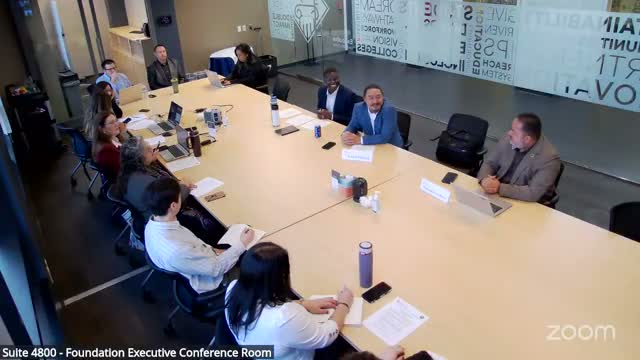
Summary
At a California Workforce Development Board ad hoc meeting, regional hosts and staff described rapid population growth in the Inland Empire, growing healthcare hiring needs and logistics-sector limits on upward mobility, and local experiments — from nursing pipelines to foster‑youth work placements — aimed at expanding career pathways.
The California Workforce Development Board convened its first ad hoc committee meeting to review findings from its Inland Empire regional tour and hear how local partners are aligning training and employer engagement to meet rapid population and job growth.
Assistant deputy director Michael Weafe (who identified himself in the meeting as Mike Muiafe), who delivered the regional staff report, said the Inland Empire "has a population of over 4,600,000 Californians" and is marked by strong logistics and warehousing growth alongside expanding healthcare demand. He and local hosts emphasized that many new jobs are low‑wage with limited upward mobility, and that regional strategies must link employer needs to stackable training pathways.
Why it matters: Board members cautioned that focusing solely on high‑wage sectors risks overlooking essential, lower‑paid occupations — for example, childcare — that enable higher‑wage workers to participate in the labor market. Members also flagged the nursing shortage and the need for grow‑your‑own strategies that pair clinical experience with creditable training.
Regional leaders described how they are responding. Jamil Datta, chair of the Riverside County workforce development board, said community colleges and employers are co‑designing short‑term certification and cohort training for roles like phlebotomy and radiology technicians to address immediate "pain points" identified by hospitals. Robert Chavez, assistant director of San Bernardino County workforce development, reported incumbent‑worker training for clean energy work and EV battery installation and coordination with large infrastructure projects such as rail‑yard work and Brightline West.
Local pilots also emerged as a priority. Brad Gates, director of a local board in San Marino County, described a county‑funded paid work‑experience program that placed nearly 100 foster youth into county departments for paid internships, giving participants hundreds of hours of on‑the‑job experience and prioritizing WIOA youth slots for foster youth.
Board members asked for replicable models. Diane Packard pointed to an LA County "grow‑your‑own" nursing pipeline that trained more than 1,000 RNs and offered to share details. Several members urged that K–16 collaboratives and Jobs First sector priorities be better aligned so that dual enrollment, articulated transfer and work‑based learning all lead into credentialed pathways.
The board closed the Inland Empire item with a commitment to deeper follow‑up on specific program models and data requests; staff said presentations and a regional dashboard would be shared with members.