Planning commission forwards Olympic Park development‑agreement amendments after lengthy debate on housing, gates and permitting
Loading...
Summary
After presentations from staff and the applicant, the commission voted to forward a positive recommendation to Summit County Council on amendments to the Utah Olympic Park specially planned area development agreement. Debate centered on parcel overlays and visibility, affordable and attainable housing commitments, back‑gate access policy, lighting controls and whether certain future actions should require a conditional use permit or a low impact permit.
The Snyderville Basin Planning Commission voted Jan. 13 to forward a positive recommendation to Summit County Council on proposed amendments to the Utah Olympic Park (UOP) specially planned area development agreement after an extended presentation and discussion with applicant representatives.
County planner Laura Plumeier summarized recent updates to the application, including a revised master conceptual development plan, an overlay map showing existing versus proposed development areas, a wildlife habitat overlay, and a letter from the Division of Wildlife Resources highlighting mitigation needs. Plumeier noted the public hearing had closed at an earlier meeting and staff had not seen significant new substantive changes that would require reopening the hearing.
Applicant representatives walked commissioners through parcel maps and 2D/3D visuals showing eight development parcels, pads for buildings, and locations for operations, hotel, conference, maintenance and athlete/workforce housing. The applicant said the pads are sized to provide flexibility for later Development Review Committee (DRC) placement and that many details would be reviewed at the DRC stage.
The applicant presented a detailed land‑use and square‑footage breakdown: about 96,980 square feet of affordable housing (including an anticipated second athlete/workforce housing building), approximately 75,000 square feet of "attainable" housing (targeted at 80–120% of Summit County median income), and roughly 139,000 square feet of Olympic Park operational support (operations building, vehicle and snow‑cat maintenance, track operations). Applicant operations staff said a phased construction approach could keep the freestyle pool open through mid‑July by performing grading, utility relocation and blasting in winter and completing building renovations in spring.
On public benefits, applicant representatives cited third‑party impact work and program metrics, saying the Olympic Park and partner venues produce substantial annual economic activity and provide youth programming, scholarships, and free museum offerings. "We offer programs in sport for all ages, all abilities," one applicant spokesman said when describing community programming.
Key public concerns and commissioner questions included visual impacts from nearby vantage points, wildlife mitigation, traffic congestion at Olympic Parkway/US‑224 and the potential Bear Cub Road connection, lighting policy and operational hours, and whether moving certain uses from conditional use permit (CUP) review to low impact permit (LIP) review would reduce public notice. Staff explained the primary differences: LIPs do not require a public hearing unless the community development director elects to escalate, while CUPs require a hearing; staff also stressed that mitigation standards (noise, traffic, lighting) apply under either permit type.
Commissioners pressed the applicant and staff to add a clear gate‑access policy into the DA redlines. Applicant read proposed language specifying that "the secondary access point shall not be used as a general public Olympic Park entrance nor shall it be used for the routine programs or general visitor traffic" and listing limited exceptions (safety, maintenance, emergency access, case‑by‑case construction access, event‑related controlled access and a limited set of residential passes for on‑site workforce housing), plus annual consultation with HOA representatives.
Commission discussion on permitting produced competing views: some said the robust public engagement to date and the constrained locations now shown on the master plan make LIP review appropriate for certain items; others argued that shifting uses from CUP to LIP reduces public noticing and that the commission and community deserve continued public review for major elements. Staff noted the development agreement already contains mechanisms to define what is a substantive versus minor change and that major changes would come back for public review.
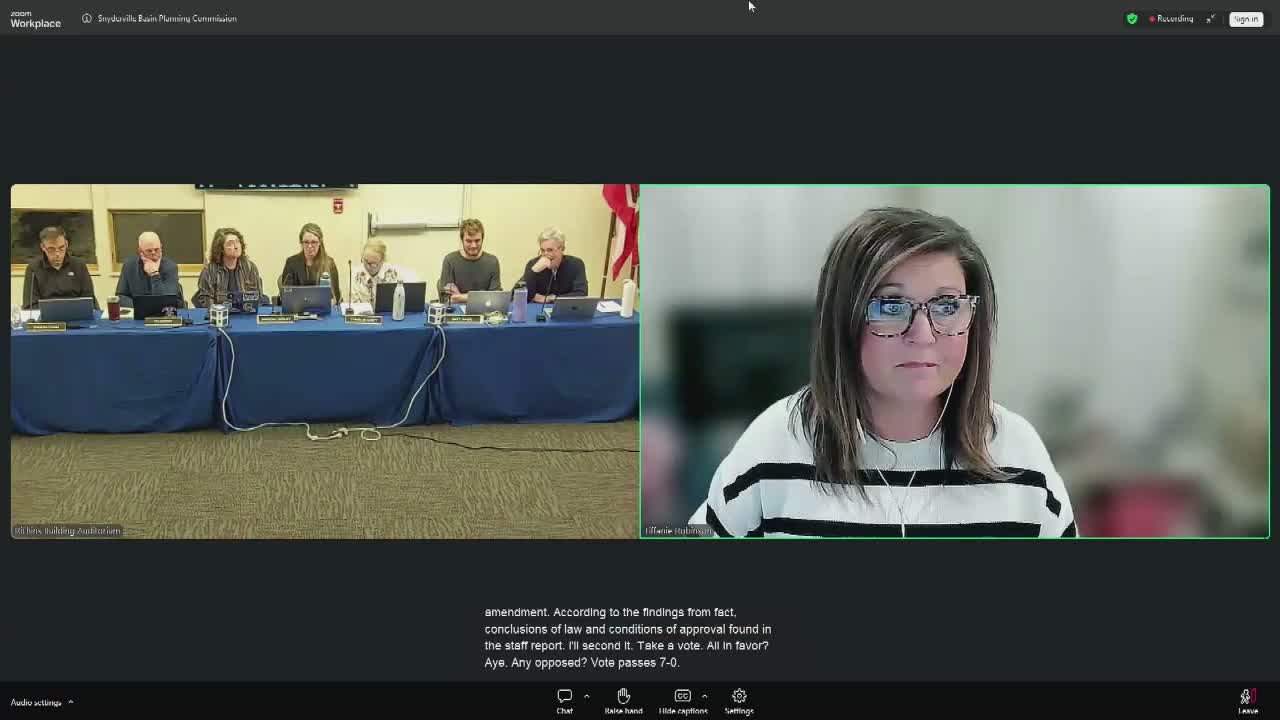
After further debate about including the gate policy and lighting clarifications in the redlined DA, Commissioner (Speaker 10) moved to forward a positive recommendation to county council on the proposed amendments consistent with staff findings and conditions. Commissioner (Speaker 1) seconded; the motion passed on recorded roll call votes. The Commission recorded that it expects the DA to include the gate policy language and clear lighting conditions in the materials forwarded to council.
Next steps are for staff to finalize redlines to ensure the gate policy and lighting provisions are included as agreed, attach updated exhibits to the council packet, and schedule the item for the Summit County Council public hearing.