Get Full Government Meeting Transcripts, Videos, & Alerts Forever!
Get email alerts on the Emergency Services Funding topic
No spam. Unsubscribe anytime.
Emergency Services GID Board Adopts ESD25‑04; Special Tax Credit Will Appear on Bills
Summary
Acting as the Emergency Services General Improvement District board, commissioners adopted Resolution ESD25‑04 to levy 2025 property taxes for the 2026 budget year and rescind ESD25‑03; Finance Director Rachel Harlow Schock said the district will show a special tax credit on receipts and that changes are administrative and small in dollar size.
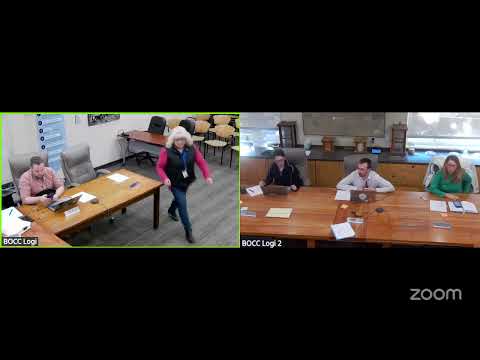
When the Board of County Commissioners sat as the Clear Creek County Emergency Services General Improvement District board on Dec. 15, it approved Resolution ESD25‑04, levying general property taxes for 2025 for the district (for the 2026 budget year) and rescinding ESD25‑03.
Finance Director Rachel Harlow Schock explained the district action mirrors the county approach: the district will maintain its mill levy while offering a special tax credit on taxpayer receipts to reflect reductions for qualified properties under the state cap process. "This will line out again on the receipts and the detail provided to taxpayers in the county," she said, adding the approach simplifies implementation between the assessor, treasury and finance.
Commissioner (Speaker 2) moved that the Emergency Services GID board approve Resolution ESD25‑04; the motion was seconded and commissioners indicated assent. The motion passed, and staff noted the meeting satisfied the deadline for adopting the levy. The transcript records the passage but does not provide a roll‑call tally tied to individual members.
Staff emphasized that this is an administrative presentation of reductions on bills rather than a new tax or a change in mill rates. The ESD's total collection was described during discussion as decreasing by $80.08 due to the credit/rounding interaction, while county collections reflect the other rounding effect previously described.