
Board adopts revised remote-participation policy after NC Supreme Court guidance
Get AI-powered insights, summaries, and transcripts
Subscribe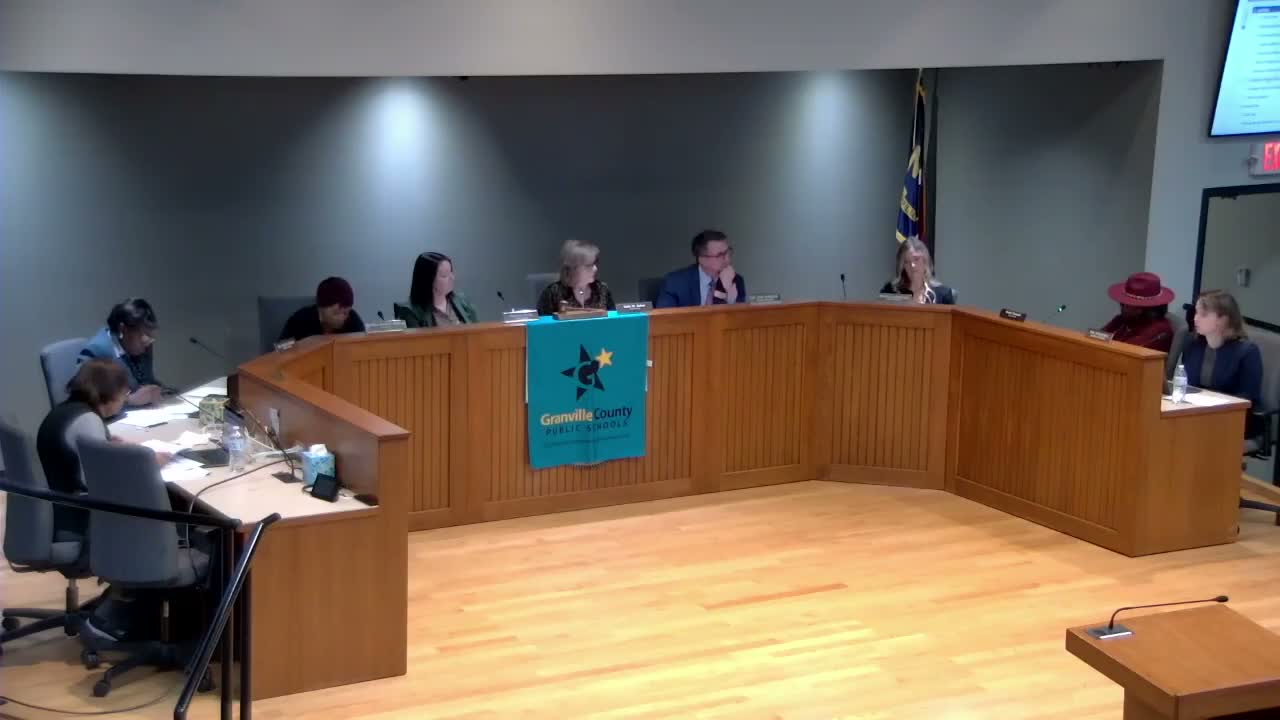
Summary
The Granville County Board of Education voted to revise Policy 2302 to align with a recent North Carolina Supreme Court order clarifying electronic participation under the state's open‑meetings law, permitting remote voting under specified circumstances.
The Granville County Board of Education on Jan. 6 adopted revisions to Policy 2302 to allow remote participation in open session under circumstances consistent with recent North Carolina court guidance.
Miss Douglasson, presenting the policy committee recommendation, said the North Carolina Court of Appeals previously raised questions about whether an in‑person quorum was required for certain governmental meetings. "Since then, the North Carolina Supreme Court issued an order that deemed that opinion without precedential value," she said, explaining the committee’s interpretation that the district can again align the policy with the wording of the general Open Meetings law to allow electronic participation.
The policy changes remove a previously specified limit on the number of remote participations for board members and update language to reflect the court development; the board moved to approve the revisions and the motion carried by voice vote.
Board members said the updated language brings district policy into alignment with current-state court direction and restores flexibility for electronic participation in appropriate cases. The policy committee recommended retaining access and transparency features in the new platform the district is adopting for agendas and meeting materials.
The board did not attach additional conditions beyond those in the revised policy; the adopted change took effect on passage.