
Kenosha County details paratransit, volunteer and regional medical rides; names new paratransit provider
Get AI-powered insights, summaries, and transcripts
Subscribe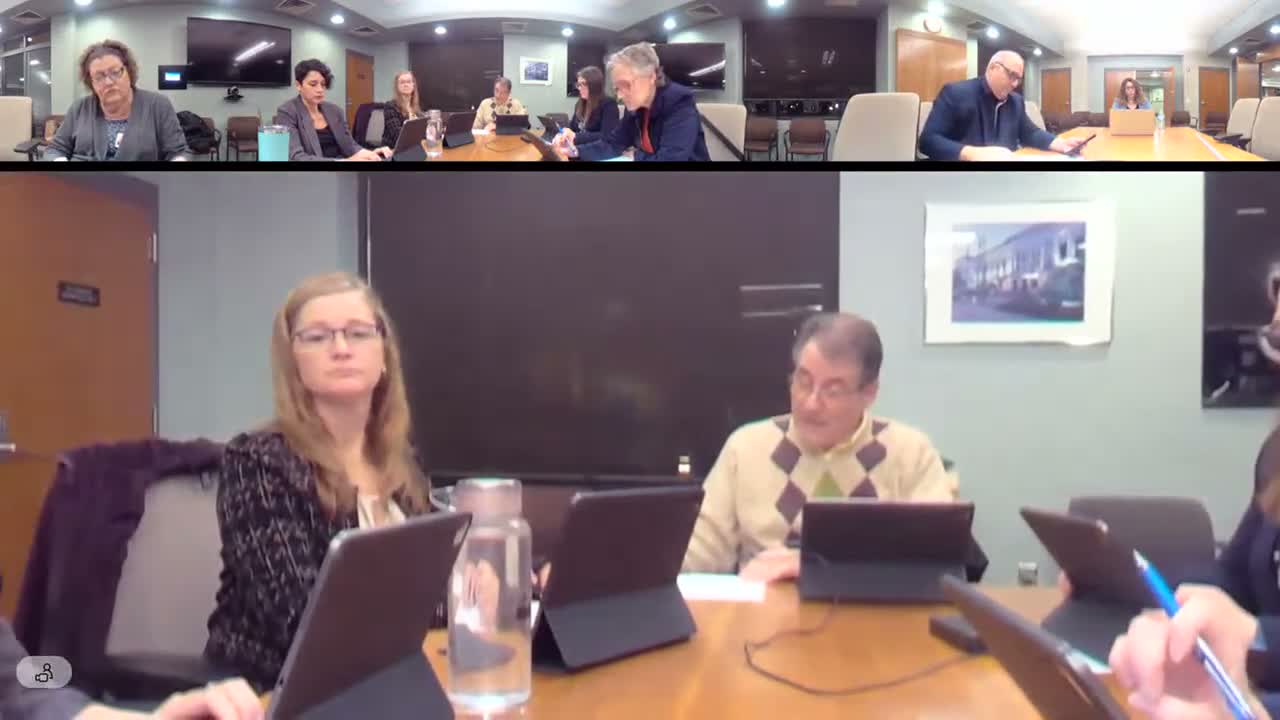
Summary
Kenosha County staff outlined paratransit, volunteer, Link Western and regional medical transportation options for older adults and people with disabilities, described fares and eligibility rules, identified grant funding sources, and named a new paratransit provider while noting early complaints during transition.
Heather Bonas, director of the Division of Aging and Disability Services, told a Kenosha County committee on Jan. 15 that the county provides substantial transportation support for older adults and people with disabilities.
"We provide over 32,001 way trips, serving about 4,000 individuals each year," Bonas said, and she described paratransit as the division's most used service. She said the county recently selected a new provider, which she named in the presentation, and acknowledged "we've had a few complaints, but, nonetheless, it's working the way we envision it to work."
Bonas described paratransit as the complementary service tied to Kenosha Area Transit east of I‑94 and said the county partners with the city to expand service beyond the federal three‑quarter‑mile requirement. She said paratransit runs during the same hours as the fixed route — 4:55 a.m. to 12:30 a.m. Monday through Friday and 9 a.m. to 4 p.m. on Saturdays — requires reservations one day in advance, and that applications (which include physician certification) are processed within 21 days. Bonas said eligibility, once approved, remains on file for three years and that the co-pay is $4 per one‑way trip.
On usage, Bonas said the program "probably closed about 20,000 trips just for that paratransit service ... through November 2025," serving about 2,800 unduplicated individuals, and that on‑time performance had trended slightly lower than prior months (around 87–88% through November, with a target near 91%).
The county also runs a volunteer transportation program, administered with Kenosha Area Family and Aging Services (KAFASI). Volunteers use personal vehicles to serve people age 60 and older and adults with disabilities. Bonas said roughly 30 volunteers operate monthly; fares are $6 flat for trips under five miles, $1 per mile for trips of six miles or more, and an additional stop costs $2.
For western parts of the county the presentation highlighted Link Western, a door‑to‑door public service that replaced a prior fixed route after a community survey during the pandemic. Bonas said Link Western charges $5 per one‑way trip for the general public and $3 for older adults and people with disabilities; hours are Monday–Friday 6 a.m. to 6:30 p.m. and Saturday 9 a.m. to 2 p.m. Transfers to east‑side services and paratransit are honored.
Bonas described regional medical rides for appointments in Racine, Milwaukee and beyond, arranged by the county mobility manager using Uber Health for ambulatory riders or First Care for non‑ambulatory trips. Riders are asked to pay a 20% copay of the total trip cost, which Bonas described as a comparatively generous subsidy relative to private fares.
The county said it financed these services through a mix of federal grants (identified in the presentation as "53 11 PTAP" for the Western service and a "53 10 mobility management" grant for the mobility manager), state allocations (referred to in the presentation as "85 21" and a smaller "85 20" allocation), passenger fares, city of Kenosha contributions for paratransit obligations, and county levy funds.
Committee members asked for printed rack cards and an electronic version for distribution through churches and senior centers; Bonas said staff would provide both to aid outreach.
The committee approved its Nov. 3 minutes earlier in the meeting and adjourned after the presentation. The minutes were approved on a motion by Supervisor Kirby, seconded by Supervisor North Indian; the adjournment motion was moved by Supervisor Brown and seconded by Supervisor Robinson.